
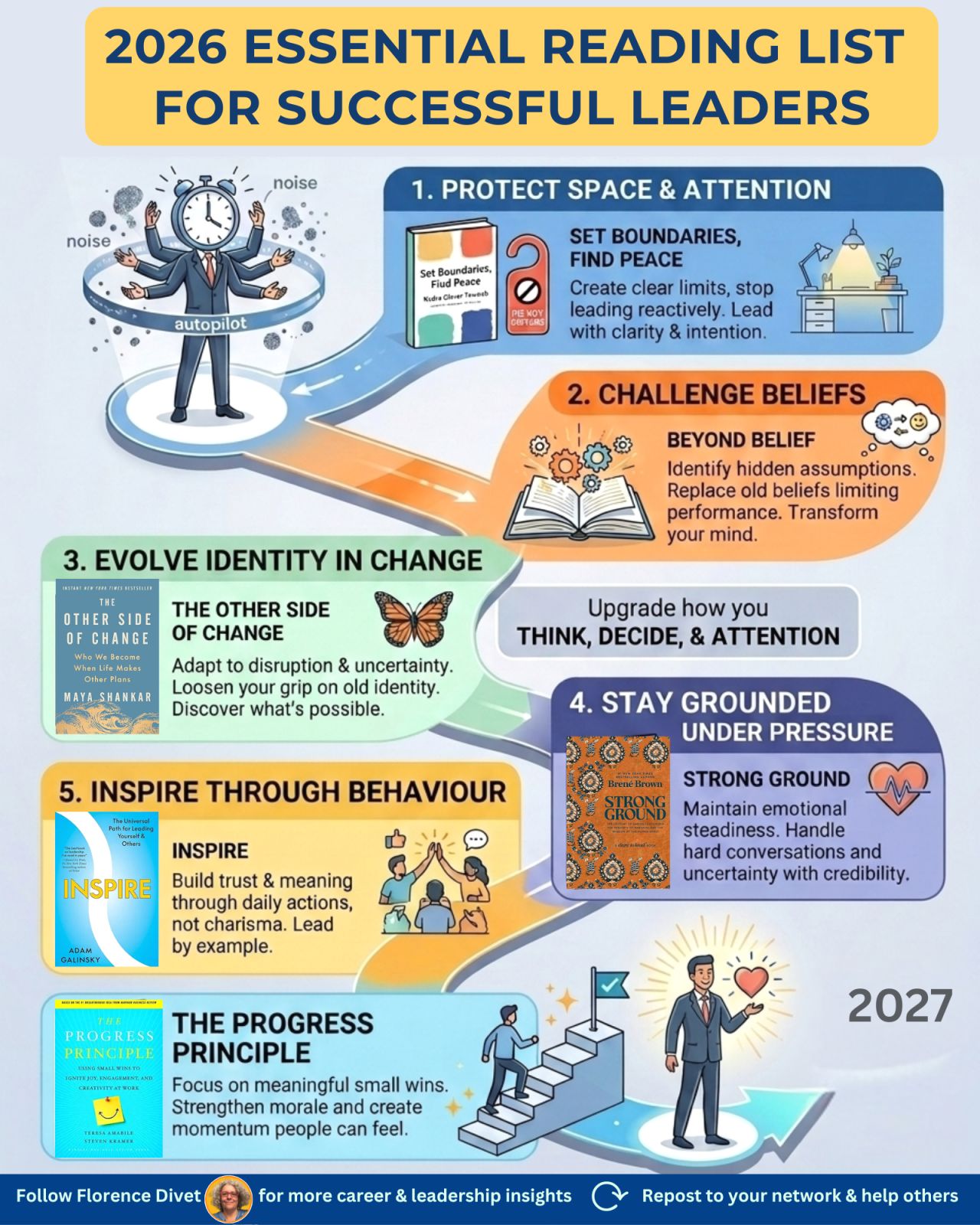
In a recent LinkedIn post, Florence Divet ☀️ explores a critical shift for leaders aiming for success in 2026, arguing that the path forward lies not in acquiring more tools, but in fundamentally upgrading internal leadership capacity. Divet ☀️ emphasizes that many current leadership challenges are not rooted in execution or strategy, but in a deficit of personal capacity—specifically, the ability to think, decide, and protect one’s attention.
Florence Divet ☀️ highlights the detrimental effect of a lack of mental space, stating:
“No space to think means leading on autopilot.”
The Core Issue: Capacity Over Tools
Divet ☀️’s analysis, drawn from three months of coaching observations, suggests that leaders who are poised for a strong 2026 are those who are investing in their internal operating system. This involves enhancing how they think, make decisions, and manage their focus. The post challenges the conventional wisdom that more technology or complex strategies are the answer to leadership hurdles.
A Curated Reading Path for Internal Upgrade
To guide leaders through this internal development, Florence Divet ☀️ recommends a specific reading list of six books, presented in a logical order for progressive learning. This curated selection moves beyond trendy topics to focus on what truly upgrades leadership from the inside out.
1. Establishing Personal Boundaries
The journey begins with establishing personal boundaries. Divet ☀️ recommends Nedra Glover Tawwab’s “Set Boundaries, Find Peace.” As Florence Divet ☀️ notes, this is crucial because:
“Leaders without boundaries get pulled into everything and lead reactively. This book helps you protect your time, energy, and focus so you can lead with clarity instead of resentment.”
This foundational step is presented as essential for preventing reactive leadership and maintaining clarity.
2. Challenging Internal Assumptions
Next, the reading list addresses the internal assumptions that can limit leadership effectiveness. Nir Eyal’s “Beyond Belief” is suggested for its ability to help leaders identify and reframe limiting beliefs. Florence Divet ☀️ argues that:
“Most leadership limits are not external barriers — they are internal assumptions left unchallenged.”
This stage focuses on upgrading one’s belief system to remove internal roadblocks.
3. Adapting to Change and Identity Shifts
In an era of constant flux, the ability to adapt is paramount. Maya Shankar’s “The Other Side of Change” is recommended for its insights into navigating transitions and evolving one’s identity. Divet ☀️ points out that modern leadership requires more than resilience; it demands the capacity to let go of old identities and embrace new possibilities, shifting from questioning ‘why is this happening?’ to exploring ‘what is possible now?’
4. Building Emotional Steadiness and Accountability
Brené Brown’s “Strong Ground” is highlighted for its relevance to building credibility under pressure. Florence Divet ☀️ emphasizes that in 2026, trust will be placed in leaders who demonstrate emotional steadiness and accountability, especially during difficult times. This book aims to strengthen a leader’s ability to handle challenging conversations and shifting priorities effectively.
5. Leading Through Consistent Behavior
Adam Galinsky’s “Inspire” is recommended to underscore the idea that true leadership influence comes from consistent, everyday actions rather than mere charisma. According to Florence Divet ☀️, this book guides leaders in fostering trust, meaning, and motivation through repeatable behaviors experienced by their teams.
6. Making Progress Visible
Finally, the list addresses the critical role of progress in motivation. “The Progress Principle” by Teresa Amabile & Steven Kramer is suggested for helping leaders recognize and make visible the small wins that drive engagement. Divet ☀️ concludes that leaders often overlook these incremental successes in favor of grander objectives, missing a key opportunity to keep teams motivated.
Synthesizing Success for 2026
Florence Divet ☀️ summarizes the essence of successful leadership for 2026 with six key actions:
- Create space.
- Upgrade beliefs.
- Evolve identity.
- Stay grounded.
- Lead through behaviour.
- Make progress visible.
The post concludes by asserting that while AI will transform the workplace, it is these core leadership skills—rooted in emotional intelligence and internal capacity—that will determine how effectively leaders navigate these changes. Divet ☀️ encourages readers to save the post for future reference and follow their profile for more insights on leadership growth.
📝 About This Content
This article is based on insights shared by Florence Divet ☀️ on LinkedIn.
📅 Originally posted on March 29, 2026 | View original post on LinkedIn →