
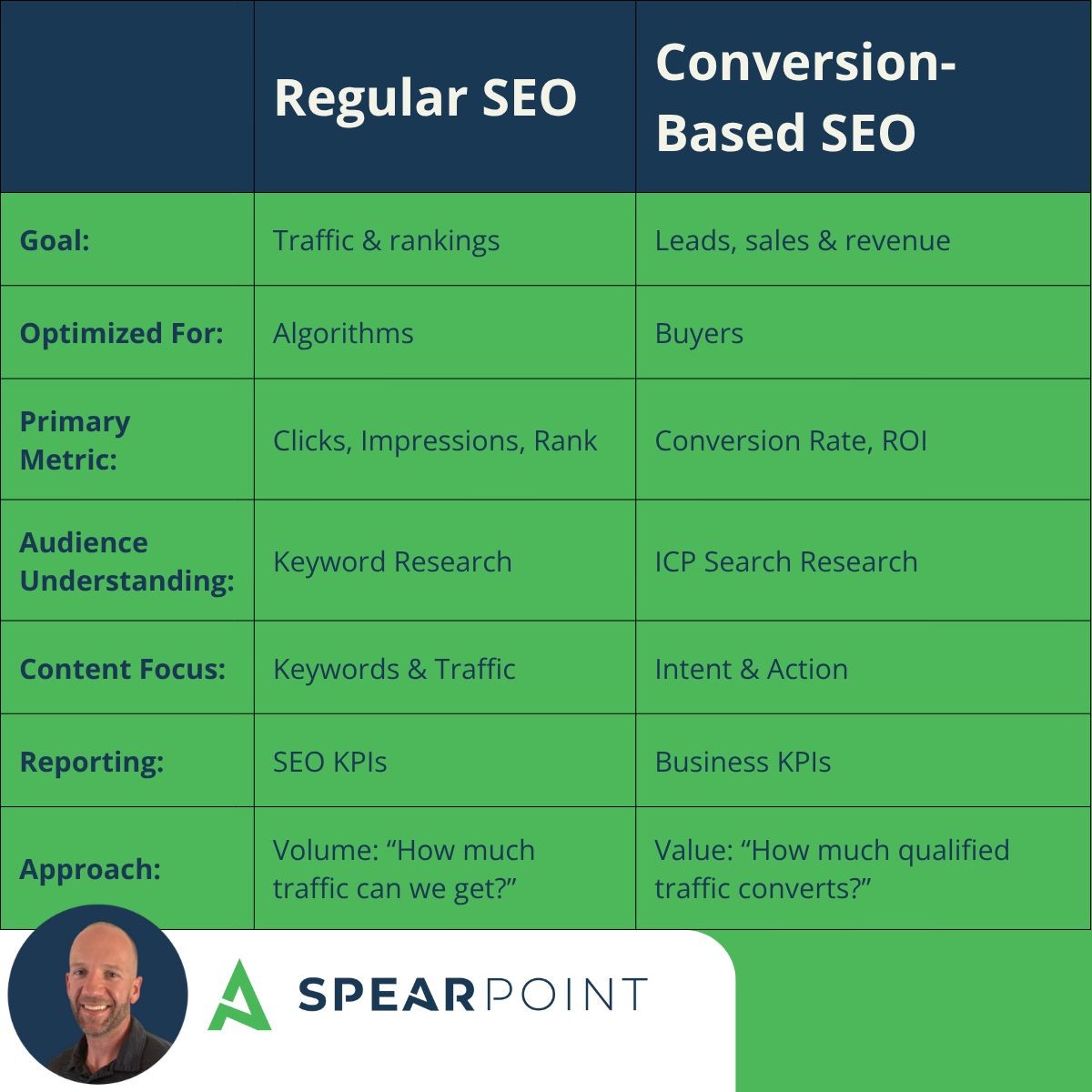
In the competitive landscape of digital marketing, many SEO campaigns are measured by a single, often superficial, metric: traffic. While attracting visitors to a website is a crucial first step, it’s not the end goal for businesses aiming for sustainable growth. This is where Conversion-Based SEO differentiates itself, shifting the focus from mere visibility to tangible business outcomes like revenue and leads.
Jesse McFarland, a proponent of this results-oriented approach, highlights the fundamental divergence between traditional SEO and its conversion-focused counterpart. Understanding this distinction is key for any business looking to maximize its return on investment from digital marketing efforts.
The Core Differences: Traffic vs. Revenue
Traditional SEO strategies often prioritize attracting a high volume of visitors. The primary metrics for success typically revolve around search engine rankings, the number of clicks generated, and website impressions. The optimization efforts are largely directed towards pleasing search engine algorithms, aiming to secure a prominent position in search results pages (SERPs).
Conversion-Based SEO, on the other hand, reorients the entire strategy around the ultimate business objectives. Success is not measured by how many people visit, but by how many visitors take a desired action that contributes to the bottom line. This means a laser focus on:
- Revenue and Leads: The ultimate goal is to generate sales, qualified leads, or other valuable conversions.
- Conversions and ROI: Success is quantified by the rate at which visitors convert into customers or prospects, and the overall return on investment from SEO activities.
- Optimizing for Buyers: The focus shifts from appeasing algorithms to understanding and catering to the needs, behaviors, and intent of potential customers.
Shifting the Question: From Clicks to Actions
The fundamental question that separates these two approaches is critical. Traditional SEO asks, “What keyword will get the most clicks?” This question is driven by the pursuit of volume and visibility.
Conversion-Based SEO, however, asks a much more impactful question: “What will make this visitor take action?” This question delves into user psychology, website effectiveness, and the entire customer journey, aiming to turn traffic into valuable business interactions.
Key Components of Conversion-Based SEO
Implementing a conversion-based SEO strategy involves a more integrated and sophisticated approach. It’s not just about keywords; it’s about the entire user experience and business impact:
Smarter Intent Mapping
This involves a deeper understanding of the *why* behind a search query. Instead of just targeting high-volume keywords, conversion-based SEO focuses on keywords that indicate a user is further down the sales funnel and closer to making a decision. This requires analyzing search intent – informational, navigational, commercial, and transactional – and aligning content and landing pages accordingly.
Enhanced Landing Page User Experience (UX)
A high-traffic landing page that is confusing, slow, or doesn’t clearly communicate value will fail to convert. Conversion-based SEO emphasizes creating landing pages that are not only optimized for relevant search terms but are also intuitive, persuasive, and designed to guide the visitor towards the desired action. This includes clear calls-to-action, compelling copy, and easy navigation.
Integrated CRO and Analytics
Conversion Rate Optimization (CRO) and robust analytics are not afterthoughts; they are fundamental components of conversion-based SEO. This means continuously testing different elements of the website (headlines, button colors, form fields, etc.) to improve conversion rates and using data analytics to understand user behavior, identify drop-off points, and inform optimization strategies.
Business Impact Reporting
Vanity metrics like impressions and raw traffic numbers can be misleading. Conversion-based SEO demands reporting that clearly demonstrates the business impact of the strategy. This includes metrics such as lead generation volume, cost per lead, customer acquisition cost, and ultimately, revenue generated directly from SEO efforts.
The Bottom Line: Conversions Pay the Bills
As Jesse McFarland aptly puts it, “Traffic doesn’t pay the bills. Conversions do.” While traffic is a necessary precursor, it is the conversion of visitors into customers that fuels business growth and profitability. By shifting the focus from simply attracting eyeballs to actively encouraging valuable actions, businesses can transform their SEO efforts from a cost center into a powerful revenue-generating engine.
For those seeking to deepen their understanding of how to implement a conversion-based SEO strategy that drives measurable business results, further discussion and personalized insights are available. Feel free to connect directly to explore how this approach can be tailored to your specific business needs.
📝 About This Content
This article is based on insights shared by Jesse McFarland on LinkedIn.
📅 Originally posted on October 14, 2025 | View original post on LinkedIn →