
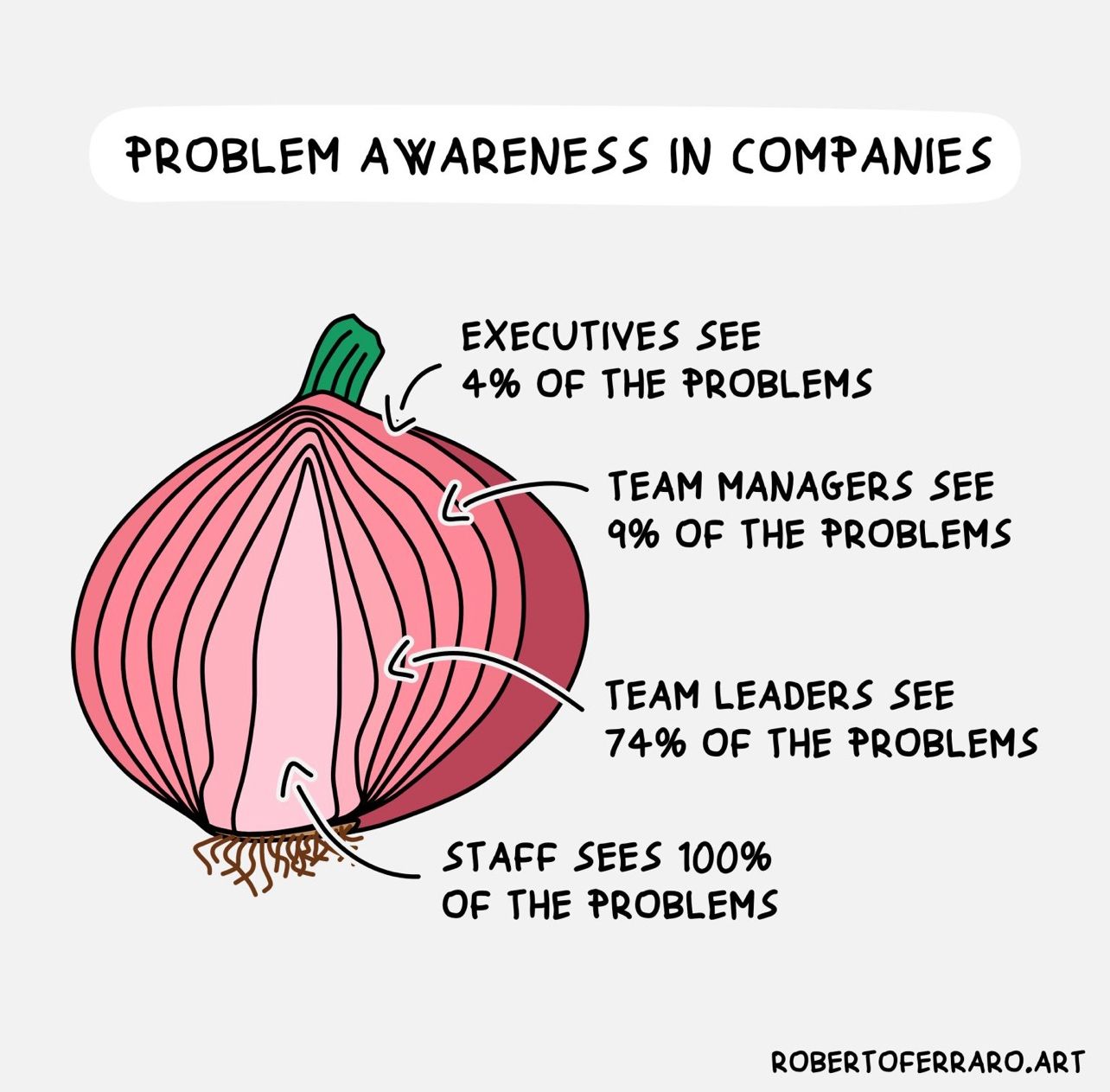
In a recent LinkedIn post, Nathan Crockett, PhD discusses a critical challenge facing many organizations: the disconnect between executive leadership and the day-to-day realities of the front lines. He argues that while executives steer the ship, their perspective can become distorted by reports and metrics, leading them to miss crucial issues that impact employees and customers.
Crockett highlights the common executive vantage point, stating:
Executives steer the ship. But sometimes, the view from the bridge is blurry. They see reports, not reality. Metrics, not morale. Targets, not trenches.
This disconnect, according to Crockett, means that the most pressing problems often go unnoticed at the top. These are the issues that affect the overworked employee, the frustrated customer, and the inefficient processes that hinder progress.
The Executive Blind Spot
Crockett, PhD elaborates on how this gap forms, explaining that executives are often insulated from the granular details of daily operations. While they focus on high-level strategy and financial performance, the qualitative aspects of work—like employee morale and customer sentiment—can be obscured by data alone. He points out that the true challenges are often found not in spreadsheets, but in the lived experiences of those on the ground.
Identifying the Root Causes
The core of Crockett’s argument is that the ‘real problems live on the front lines.’ These frontline issues, he explains, are the lived experiences of employees facing overwhelming workloads, customers dealing with service failures, and processes that create unnecessary friction. Without direct exposure to these realities, executives risk making decisions that are misaligned with the actual needs of the business and its people.
The real problems live on the front lines. The overworked employee. The frustrated customer. The outdated process slowing everything down.
Strategies for Bridging the Divide
To combat these blind spots, Nathan Crockett, PhD proposes several actionable strategies for executives. He emphasizes the importance of actively seeking out frontline perspectives to gain a more accurate understanding of the organizational landscape.
Get Grounded and Empower Voices
One of his key recommendations is for executives to ‘Get Grounded.’ This involves physically engaging with the environments where work happens. Crockett suggests practical steps such as walking the factory floor, spending time with customer service teams, and observing the daily operations firsthand. This direct exposure, he argues, provides invaluable context that reports cannot replicate.
Furthermore, Crockett stresses the need to ‘Empower the Voice of the Worker.’ This means creating channels for honest feedback, including mechanisms for reporting issues anonymously. Encouraging employees to speak up about problems, even when the feedback is critical, is essential for identifying areas needing attention.
Reward Problem-Solving and Foster Collaboration
Crockett also advocates for shifting recognition and rewards. Instead of solely focusing on traditional performance metrics like sales targets, he proposes that companies should ‘Reward Problem Solvers.’ Celebrating employees who proactively identify and resolve issues, regardless of their department, can foster a culture of continuous improvement.
Executives need a clear view to navigate effectively. By getting closer to the real work, they can steer the company towards smoother sailing.
Finally, breaking down departmental silos is crucial. Crockett argues for fostering cross-functional communication and ensuring that information flows freely across the organization. This interconnectedness helps prevent information blockages and ensures that insights from one area can inform decision-making in another.
In essence, Nathan Crockett, PhD’s insights on LinkedIn underscore the necessity for leaders to actively seek out and integrate frontline perspectives. By doing so, they can gain a clearer view, make more informed decisions, and ultimately guide their organizations more effectively towards success.
📝 About This Content
This article is based on insights shared by Nathan Crockett, PhD on LinkedIn.
📅 Originally posted on November 29, 2025 | View original post on LinkedIn →