
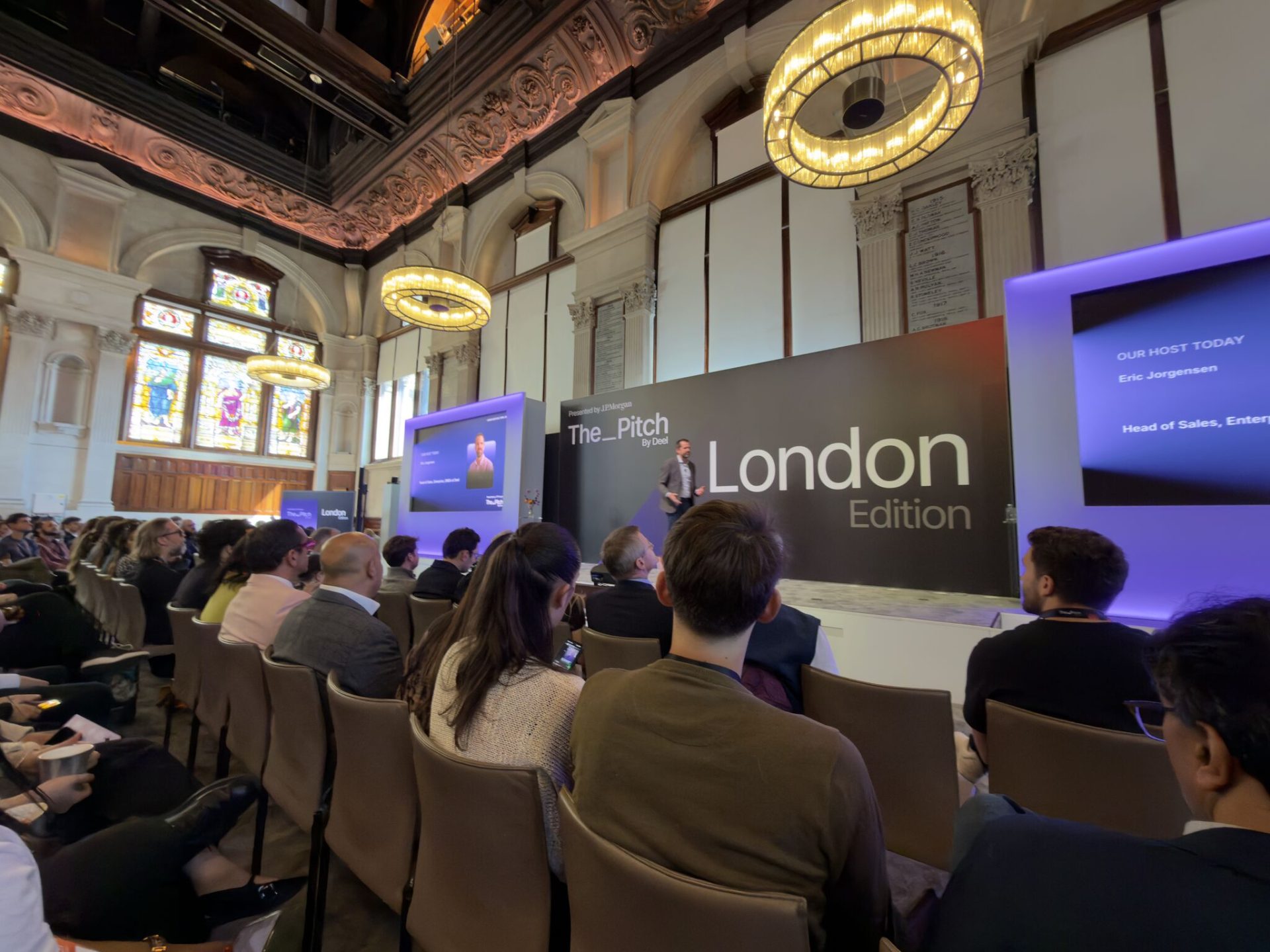
In a recent LinkedIn post, James Cox discusses the vibrant landscape of European innovation, highlighting both its immense potential and a critical challenge faced by many startups: the path from a strong idea to securing capital and achieving execution. Cox attended The Pitch event, presented by Deel and J.P. Morgan, and shared his observations on the quality of ideas and the drive of the founders.
Cox was impressed by the event, noting the abundance of ambition and the focus on real-world problem-solving. He observed a significant presence of Artificial Intelligence (AI) solutions, not as mere buzzwords, but as tangible applications with clear potential for implementation. This led him to feel optimistic about the future of innovation on the continent.
“It’s easy to walk away from events like this feeling optimistic about the future of European innovation. The talent, creativity, passion and intent are there in abundance.”
However, Cox also identified a significant hurdle for many promising ventures. He spoke with numerous founders who possessed strong concepts, credible science, and genuine market potential, yet struggled with a clear route to funding or understanding the subsequent steps required for growth. According to Cox, this gap is a primary reason why businesses stall, often not due to the weakness of the idea itself, but because the surrounding ecosystem is not adequately designed to transform potential into tangible results.
The Challenge of Translation: Ideas to Execution
Cox’s reflections centre on the crucial need to improve the translation process between distinct stages of business development: ideas, capital, and execution. He posits that while the raw ingredients for successful innovation are present in Europe, the mechanisms for nurturing these ideas through the funding stages and into successful market execution are not always robust enough.
As James Cox points out:
“There was however another side. I spoke to multiple founders with strong concepts, credible science, and real market potential but no clear path to capital or what comes next. That gap is where most businesses stall, not because the idea wasn’t good enough, but because the system around it isn’t built to convert potential into outcomes.”
This observation underscores a systemic issue that requires attention from investors, accelerators, and policymakers alike. The focus, in Cox’s view, should not only be on generating innovative ideas but also on building the infrastructure that supports their journey to market.
Spotlight on Life Sciences and AI Innovation
The Pitch event featured a notable presence of life sciences businesses, with two such companies among the winners. Cox specifically congratulated BolderAI, led by Guillermo Pepe, for their work in radiology, leveraging AI to provide on-demand radiologists and deliver high-quality medical imaging reports swiftly. He also highlighted Evolve Neuro, co-founded by Pete O’Mara-Kane, for their focus on brain health, aiming to measure, optimise, and improve cognitive performance.
Cox extended congratulations to all the winners and wished them success in the global finals, emphasizing the tangible impact these innovations could have. As he noted:
“It was great to see a number of life sciences businesses pitch and two represented among the winners.”
Cox’s analysis provides a valuable perspective on the current state of startup ecosystems, advocating for a more integrated approach to foster the growth of promising European ventures from conception through to successful market penetration.
📝 About This Content
This article is based on insights shared by James Cox on LinkedIn.
📅 Originally posted on April 29, 2026 | View original post on LinkedIn →