
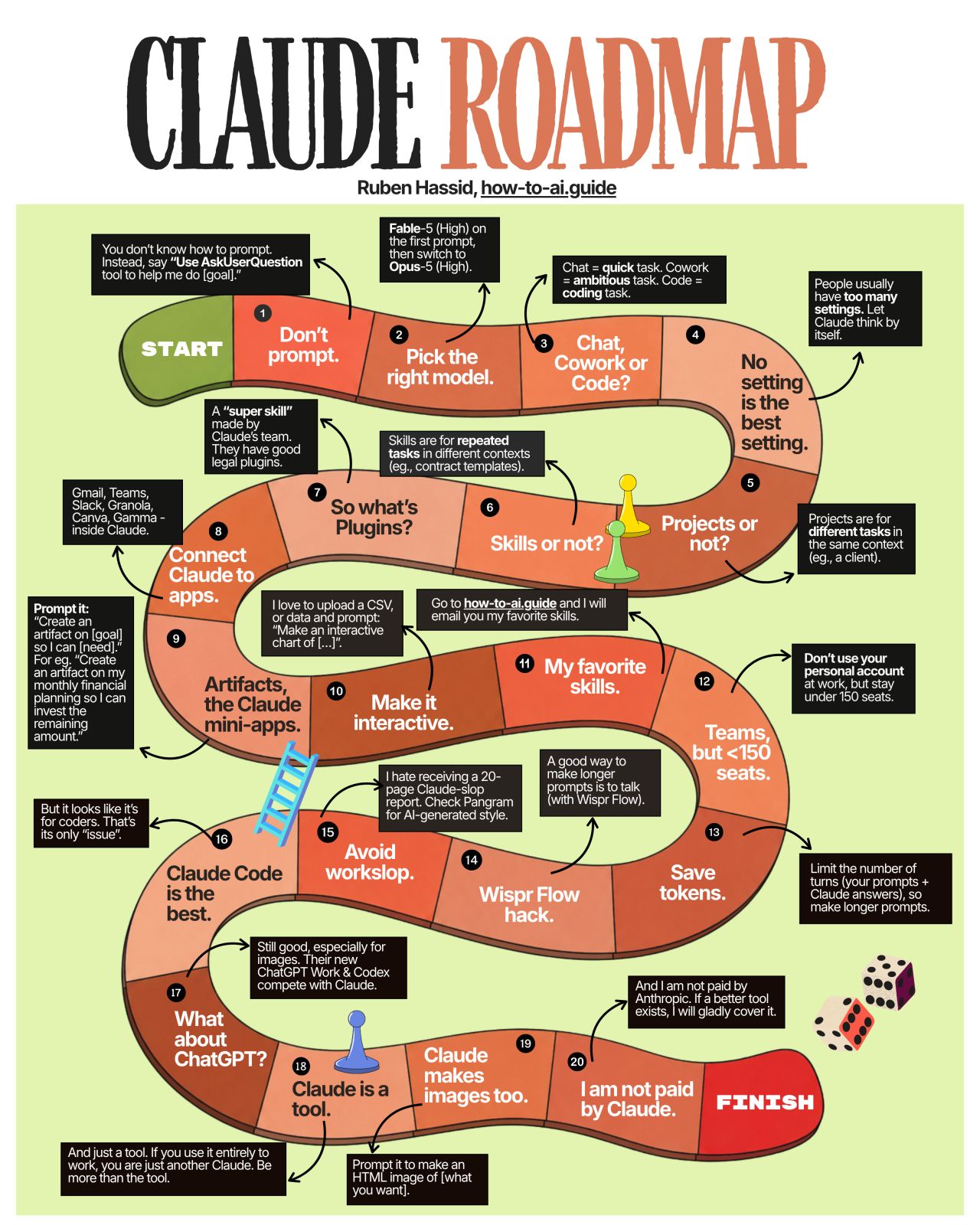
In a recent LinkedIn post, Ruben Hassid explores a novel approach to leveraging AI, suggesting that users can build functional applications in a matter of minutes, bypassing traditional coding barriers. Hassid frames this process not as a game of chance like Monopoly, but as a tangible outcome achievable tonight with the right tools and techniques.
Hassid begins by addressing the common pitfalls of free AI tiers, specifically recommending against the free version of Claude. “Claude free tier is just bad,” he states, advising users to opt for free ChatGPT if cost is a concern, or to invest in paid versions if serious about AI integration. For professionals and businesses, he emphasizes the modest $20 per month cost for more robust capabilities.
The “AskUserQuestion” Strategy for Enhanced AI Interaction
A core element of Hassid’s strategy involves a unique prompting technique. Instead of directly asking an AI like Claude to perform a task, he advocates for initiating a dialogue using a specific structure. “help me do [X] for [Y], use AskUserQuestion first,” is the prompt he suggests. This method prompts Claude to ask clarifying questions, effectively gathering necessary context from the user.
Hassid highlights the significance of this approach, noting that it immediately differentiates users from many who feel overwhelmed by AI. He further advises users to bypass pre-set answer options provided by the AI. “Do not click the answer options Claude gives you. Choose the “Something else” option,” he instructs. This allows for the input of crucial job-specific or client-related context that might otherwise be missed.
Building a Functional App with Claude in Under Five Minutes
The practical application of Hassid’s method is demonstrated through the process of building a booking app. He outlines a clear, step-by-step guide for users to create a functional web page for scheduling appointments.
The process, as detailed by Hassid, involves navigating to the Claude app, selecting the ‘Code’ tab, and enabling ‘Bypass permissions.’ He reassures users about the ‘scary name,’ explaining it as a trust mechanism. The prompt for app creation is straightforward: “build a page where people book a 30 min call with me, ask me questions first”.
Dark mode? Click. Calendar or email? Click. Four minutes later it’s built, and it works.
Hassid emphasizes the speed and ease of this process, noting that the app is functional within minutes. He then introduces an often-overlooked follow-up step: converting the web app into a mobile-friendly version.
Then send the follow-up almost nobody sends: “make this an app I can put on my phone.” It does that too, and it’s on your home screen.
The significance of this achievement, for Hassid, lies in its accessibility. He proudly states, “I never coded. Still can’t. That’s sort of the point of the whole board,” underscoring that the ability to create functional applications is no longer exclusive to those with traditional programming skills.
Leveraging Claude Skills for Weekly Productivity Gains
Beyond app creation, Hassid introduces another powerful feature: Claude Skills. He describes a ‘skill’ as a pre-configured, long prompt that the AI runs autonomously when a task aligns with its setup. This eliminates the need for repetitive instructions.
Hassid shares that he has developed several custom skills and offers them to his audience. He directs interested individuals to how-to-ai.guide to receive the skills he personally uses, ready for direct import into Claude. This sharing initiative, according to Hassid, is what “changed my week the most.”
In his analysis, Hassid positions these AI tools not as abstract technologies, but as practical instruments for immediate productivity and creation, accessible to individuals regardless of their technical background.
📝 About This Content
This article is based on insights shared by Ruben Hassid on LinkedIn.
📅 Originally posted on August 12, 2026 | View original post on LinkedIn →