
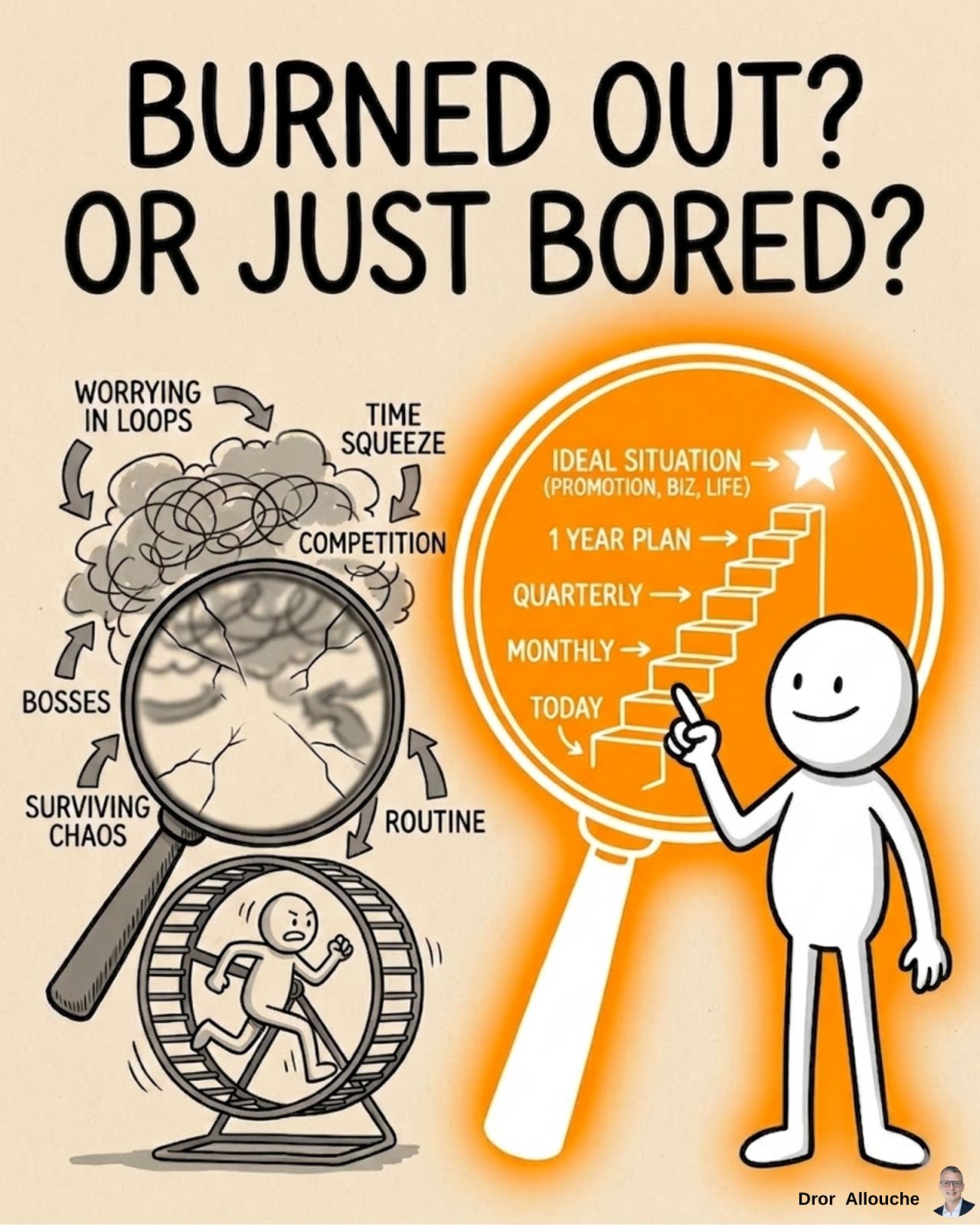
In a recent LinkedIn post, Dror Allouche discusses the pervasive issue of burnout, proposing that it stems less from job demands and more from a lack of perspective. Allouche challenges the common perception that overwork alone causes burnout, suggesting instead that a feeling of being trapped in a perpetual, complex routine is the primary driver.
The post highlights the cyclical nature of worry and rumination that can accompany challenging work environments. As Dror Allouche notes:
“The job is complex. Lack of time. Competition. Colleagues. Bosses. Routine… It feels perpetual.”
According to Allouche, this perception of an unending struggle leads to constant worry and repetitive thought patterns. However, the author offers a constructive alternative to succumbing to these feelings.
Shifting from Worry to Reflection
Dror Allouche advocates for a deliberate shift from reactive worrying to proactive reflection. The core of this approach involves dedicating specific, uninterrupted time for self-assessment and strategic planning. Allouche outlines a structured 60-minute process designed to help individuals regain control and find meaning in their professional lives.
Defining an Ideal Future State
The first step in Allouche’s proposed process is to clearly define an ideal future situation. This exercise extends beyond immediate job-related goals, encouraging individuals to consider their broader life aspirations.
“Define your ideal situation… A promotion? A change of industry? Starting your business? Whatever you want. But don’t do it only for your job. You are much more than your work. Think about your relationships, health, finances, passions…”
This holistic view, as presented by Allouche, is crucial for grounding one’s professional ambitions within a larger context of personal fulfillment. It emphasizes that true satisfaction comes from aligning career goals with overall life well-being.
Constructing a Path Forward
Following the definition of an ideal future, Dror Allouche details the creation of a project plan to bridge the gap between the present and the desired future. This involves working backward from the vision to establish actionable steps.
“Work backward from that ideal vision to build your plan. ↳ What do I need to do a year from now? ↳ A quarter from now? ↳ A month from now? ↳ Today?”
This backward-planning technique, according to Allouche, transforms overwhelming aspirations into manageable tasks. It provides a clear roadmap, making the journey towards the ideal situation feel achievable.
The Power of Direction and Meaning
The final phase Allouche describes is the ‘excitement phase,’ achieved once a clear direction and plan are established. The author stresses that the ultimate achievement of the specific goal is secondary to the shift in daily perception.
“What matters is that you will perceive your day-to-day differently. You stop surviving the routine, and you start finding meaning in what you do.”
In Allouche’s view, this newfound perspective reframes daily work from a mere survival exercise to an activity imbued with purpose. By actively engaging in planning and reflection, individuals can transform their experience of work, mitigating feelings of burnout and fostering a sense of engagement and meaning.
📝 About This Content
This article is based on insights shared by Dror Allouche on LinkedIn.
📅 Originally posted on August 11, 2026 | View original post on LinkedIn →