
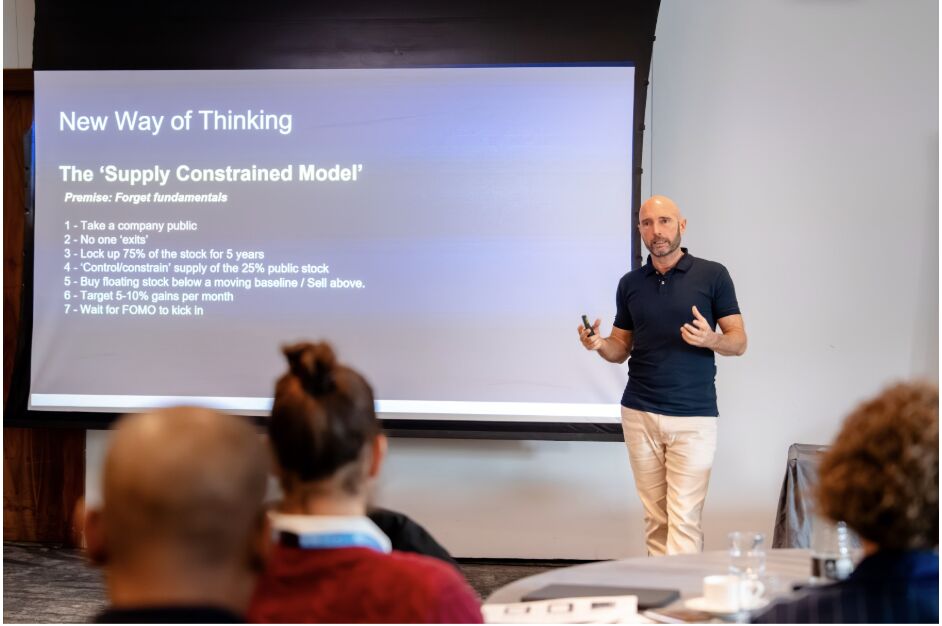
In a recent LinkedIn post, Callum Laing discusses a recurring observation from over two decades of building communities and networking events: the distinct behavioral types within groups, particularly highlighting the difference between ‘whingers’ and ‘winners’. Laing, who has spent his career bringing together individuals with common interests, categorizes attendees into three groups: those who express gratitude and share opportunities, the engaged but silent majority, and a vocal minority focused on complaints.
The Impact of ‘Whingers’
Laing’s post details how the ‘whingers’ often cause the most disruption, not always due to legitimate issues. He notes that complaints often revolve around subjective matters like room temperature, food choices, or perceived social awkwardness, and sometimes are not even direct problems for the complainant but rather issues they feel compelled to report on behalf of others.
“This last group was of course the ones that caused the most problems. We would do our level best to try and sort out the problem, but I noticed that often they weren’t even ‘real’ problems.”
Initially, Laing found this group frustrating. However, his approach evolved from reacting to actively questioning them. By asking what solutions they proposed or what it would take to resolve their issues, he discovered that many complaints did not require action and were merely voiced for the sake of it. He also observed that these individuals were often unaware of the disruption their complaints caused, believing they were being helpful.
Applying the ‘Whinger’ vs. ‘Winner’ Dynamic to Board Membership
The core of Laing’s message extends to professional leadership roles, particularly board membership. He strongly advises against being a ‘whinger’ in the boardroom, stating that identifying problems requires little skill, whereas contributing to solutions is where true value lies.
“Don’t be the whinger! It takes no skill to see there is a problem, the real value lies in the solution. If you think that you can add value in the board room just by pointing out problems, your career is going to be short lived (but in the meantime you will cause all sorts of unnecessary work).”
According to Laing, individuals who solely focus on highlighting issues without offering solutions risk a limited career trajectory and create unnecessary work for others, including executives.
Supporting CEOs and Executives
Laing further suggests that board members can be valuable by supporting CEOs and executives who are already dealing with a constant stream of complaints from clients, staff, and suppliers. Instead of adding to the noise, such individuals can remind leadership that not every issue requires immediate attention.
Focusing on ‘Winners’
The alternative to being a ‘whinger’, as highlighted by Laing, is to focus on ‘winners’. He posits that while many are trained to focus on problems, celebrating successes and amplifying the stories of high-achievers is a more productive strategy for organizational growth and morale.
“Most of us have been trained over the years to focus on the problems, but what I have discovered in every community I’ve ever been a part of is that it is far better to celebrate your winners and inspire others with their stories, then get absorbed by the whingers.”
In Laing’s view, directing focus towards positive contributions and achievements fosters a more inspiring and effective environment than dwelling on negativity. He concludes by inviting discussion on this dichotomy, emphasizing the finite nature of attention and the strategic advantage of focusing on positive outcomes and individuals.
📝 About This Content
This article is based on insights shared by Callum Laing on LinkedIn.
📅 Originally posted on August 12, 2026 | View original post on LinkedIn →