
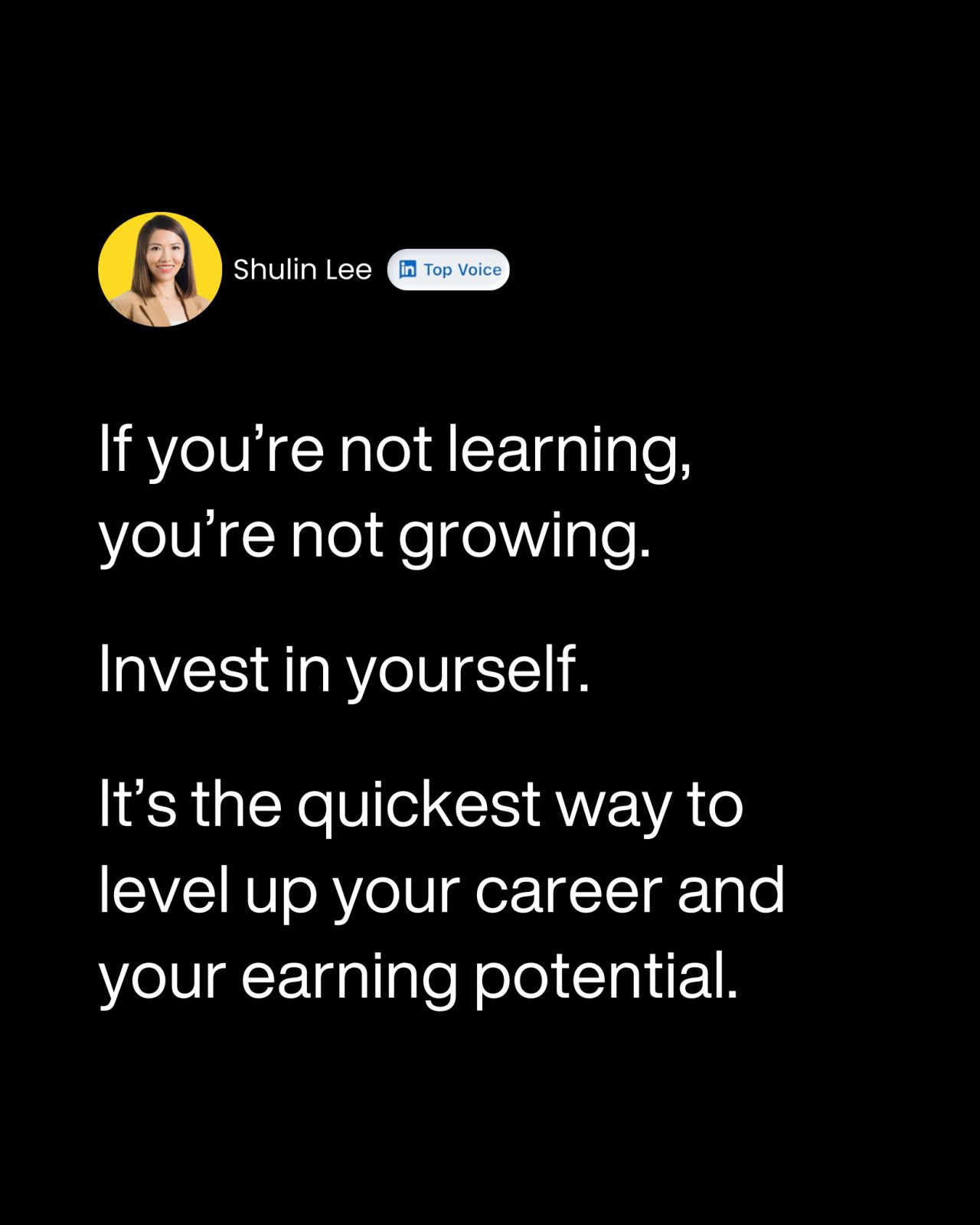
In a recent LinkedIn post, Shulin Lee explores the common reasons behind career stagnation and argues that individuals bear the primary responsibility for their professional growth. Drawing on over 15 years of experience in recruiting, Lee observes a recurring pattern among those who feel “stuck,” underpaid, or overlooked in their careers.
The Disconnect Between Complaining and Action
Shulin Lee points out a significant disconnect between the complaints voiced by many professionals about their careers and the actual effort they invest in them. According to Lee, individuals who express dissatisfaction often fail to take proactive steps towards improvement. Lee highlights this observation:
“The people who complain most about their careers invest the least in them.”
This sentiment is echoed throughout the post, as Lee details the common scenarios observed over years of conversations with job seekers and professionals. Lee notes that when asked about their efforts to change their situation, many fall silent, preferring passive activities over genuine professional development.
Investing in Growth vs. Complaining About Stagnation
A key theme in Shulin Lee’s post is the reluctance of some individuals to invest in their own development, even when seemingly small opportunities arise. Lee provides a stark example:
“I watched someone turn down a $200 course last year. ‘Too expensive,’ they said. Then spent 12 months complaining about being underpaid by $20,000.”
This anecdote underscores Lee’s central argument: the perceived barriers to career advancement are often self-imposed. Lee asserts that expecting external entities like companies, bosses, or the economy to unilaterally drive one’s career forward is a flawed perspective.
The Individual’s Role in Career Development
Shulin Lee strongly advocates for personal accountability in career management. The post emphasizes that neither an employer nor the broader economic climate is primarily responsible for an individual’s professional trajectory. As Lee puts it:
“Your company isn’t coming to save you. Your boss isn’t lying awake thinking about your development. The economy doesn’t care about your potential.”
Instead, Lee posits that the onus is entirely on the individual to take ownership. The gap between one’s current position and desired career state, according to Lee, is not a matter of inherent talent, luck, or connections, but rather a reflection of one’s willingness to take action, especially when unobserved.
Action and Effort as the Differentiators
The core message from Shulin Lee is a call to action, urging professionals to move beyond passive desires and engage in active self-improvement. Lee challenges readers to consider their own efforts and willingness to step outside their comfort zones.
The Question of Doing vs. Deserving
Concluding the post, Shulin Lee reframes the common question of whether one deserves more in their career. Lee suggests that the more pertinent question is:
“It’s whether you’re doing more.”
This perspective encourages a shift in focus from entitlement to effort, emphasizing that tangible progress stems from consistent, deliberate action. Shulin Lee’s insights serve as a reminder that proactive engagement and a commitment to continuous learning are crucial for navigating and advancing one’s career in today’s competitive landscape.
📝 About This Content
This article is based on insights shared by Shulin Lee on LinkedIn.
📅 Originally posted on February 22, 2026 | View original post on LinkedIn →