
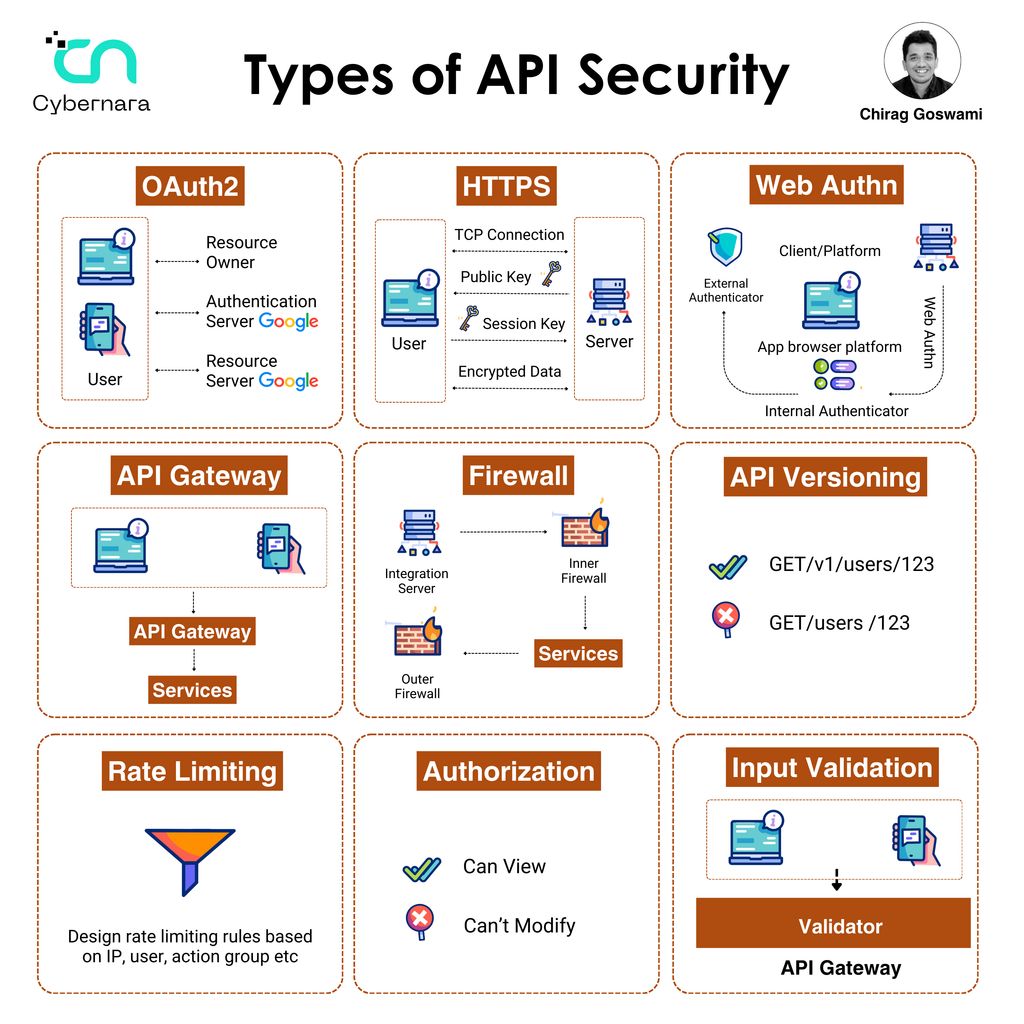
In a recent LinkedIn post, Chirag Goswami discusses the critical role of Application Programming Interfaces (APIs) in modern applications and, consequently, their prominence as targets for cyberattacks. Goswami emphasizes that neglecting API security can lead to severe consequences, including the exposure of user data and the compromise of authentication mechanisms.
Goswami outlines a comprehensive set of security layers essential for protecting APIs, stating:
“APIs are the backbone of every modern app — which also makes them one of the biggest targets for attackers.”
The post details several key components that contribute to a strong API security posture. According to Goswami, these layers work in conjunction to defend against a variety of threats.
Understanding the Core API Security Layers
Chirag Goswami breaks down the essential elements that form the foundation of secure API architecture. He highlights that a multi-layered approach is crucial, as attackers are increasingly sophisticated in their methods.
Authentication and Encryption
Goswami points out the importance of modern authentication protocols and encryption for securing data both for users and in transit. He specifically mentions:
- OAuth2: Described as a modern token-based authentication method that allows users to authenticate without sharing passwords directly.
- HTTPS: Emphasized for its role in encrypting traffic end-to-end, preventing eavesdropping and tampering with data while it is being transmitted.
- WebAuthn: Highlighted as a strong, phishing-resistant authentication standard that leverages biometrics or hardware keys for enhanced security.
“A single weak endpoint can expose user data, break authentication, or open the door for abuse.”
This quote underscores the potential impact of even minor vulnerabilities within an API infrastructure.
Gateway, Firewalls, and Versioning
Further elaborating on protective measures, Goswami discusses the role of centralized management and network-level defenses.
- API Gateway: Positioned as a central hub for managing authentication, monitoring activity, routing requests, controlling traffic flow (throttling), and actively blocking malicious actors.
- Firewalls: Identified as crucial for filtering traffic at both the network and application layers, stopping threats before they can reach the core services.
- API Versioning: Presented as a method to prevent disruptive changes and ensure that older clients, which might harbor unpatched vulnerabilities, do not compromise the system.
Preventing Abuse and Ensuring Integrity
Goswami also addresses mechanisms designed to prevent misuse and maintain the integrity of API interactions.
- Rate Limiting: Explained as a technique to thwart brute-force attacks, credential stuffing, and the exploitation of publicly accessible endpoints by limiting the number of requests a user can make in a given timeframe.
- Authorization: Stressed as the process that ensures users only access the resources and functionalities they are explicitly permitted to, thereby preventing privilege escalation and misuse.
- Input Validation: Described as a fundamental step to block malicious inputs, such as injection attacks or malformed requests, before they can be processed by the backend systems.
“Strong API security is no longer optional.”
Goswami concludes by reinforcing the pervasive nature of APIs in today’s digital landscape, powering everything from mobile applications to internal tools. He asserts that robust API security is a non-negotiable requirement for organizations.
For organizations seeking assistance with API security, architecture reviews, or vulnerability assessments, Goswami mentions that his company, Cybernara, offers support in these areas.
📝 About This Content
This article is based on insights shared by Chirag Goswami on LinkedIn.
📅 Originally posted on November 23, 2025 | View original post on LinkedIn →