
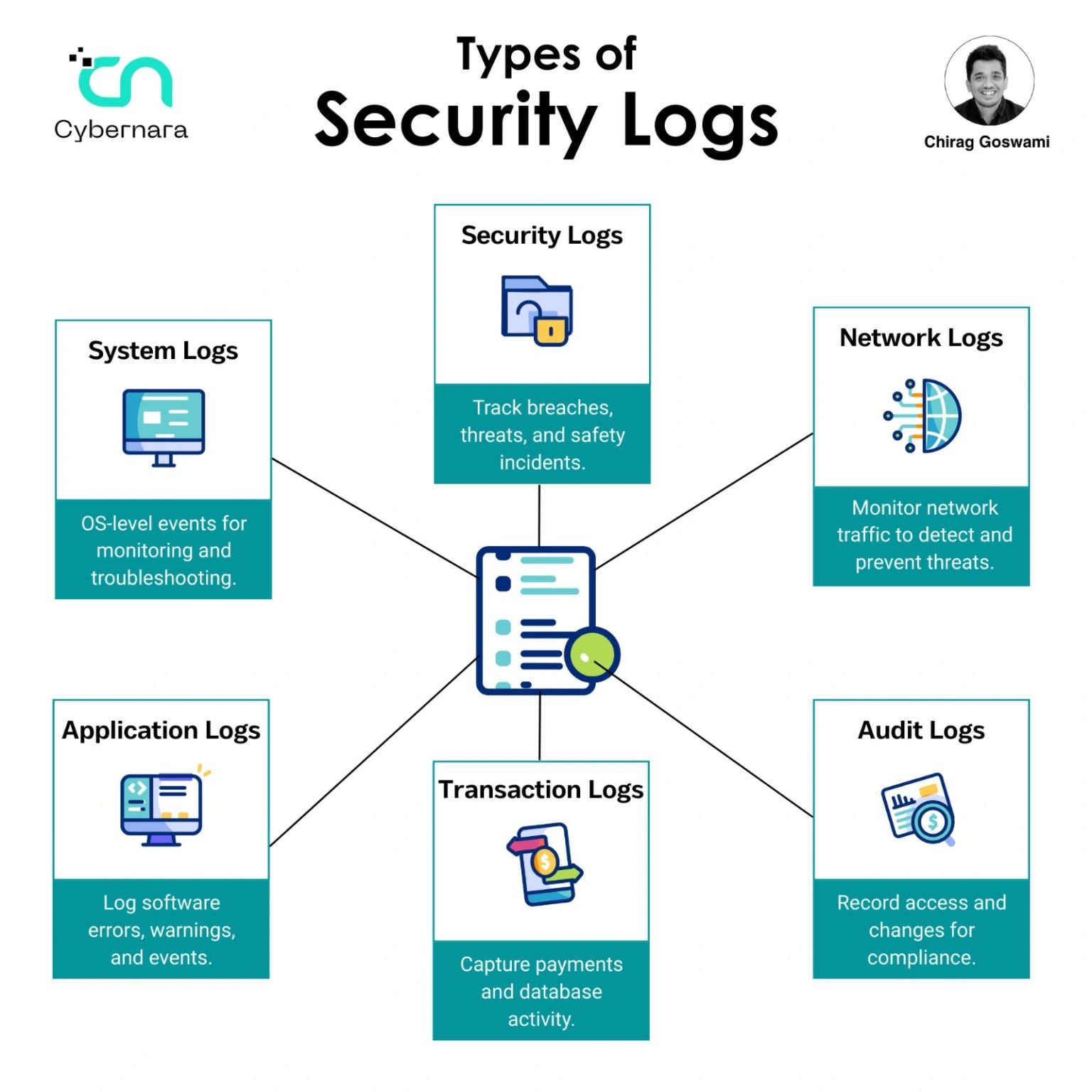
In a recent LinkedIn post, Chirag Goswami explores the critical importance of monitoring various security log categories to proactively defend against cyber threats. Goswami emphasizes that these logs often serve as the earliest indicators of potential security incidents, providing invaluable insights into activities occurring within an organization’s digital infrastructure.
The Foundation of Cyber Defense: Log Monitoring
Goswami’s post, shared on LinkedIn, underscores that while often overlooked, log data is fundamental to maintaining a robust security posture. He highlights that paying close attention to these records can help organizations move from a reactive to a more proactive stance in cybersecurity.
“From unusual login attempts to unexpected financial activity, logs quietly reveal what’s happening behind the scenes. They’re often the earliest warning signs of a cyber incident.”
This statement sets the stage for Goswami’s detailed breakdown of the six essential log categories that demand organizational attention.
Six Critical Log Categories Every Organization Must Monitor
Chirag Goswami identifies and explains six distinct types of logs that are crucial for comprehensive security monitoring:
1. Security Logs
According to Goswami, these logs are paramount for detecting malicious activities. They are designed to identify potential attacks, breaches, and any behavior that deviates from the norm, acting as a first line of defense against intrusions.
2. Network Logs
Goswami points out that network logs are vital for understanding traffic flow and identifying suspicious patterns. As he notes, these logs help in spotting intrusion attempts early by monitoring network traffic patterns.
3. System Logs
In Chirag Goswami’s view, system logs provide essential information about the health and activity of operating systems. They are instrumental in diagnosing system-level issues and ensuring the stability of the IT environment.
4. Application Logs
Goswami highlights the importance of application logs for monitoring the performance and behavior of software. He states that these logs record errors, warnings, and other application-specific activities, offering granular detail about how programs are functioning.
5. Transaction Logs
The insights provided by transaction logs are crucial for financial and data security, as emphasized by Goswami. These logs capture sensitive financial actions and database changes, offering an audit trail for critical operations.
“This is crucial for identifying unauthorized or fraudulent financial activities.”
6. Audit Logs
Finally, Goswami stresses the role of audit logs in maintaining compliance and accountability. These logs meticulously record access events and configuration changes, which are indispensable for regulatory adherence and internal security audits.
“Audit Logs – Maintain records of access and configuration changes for compliance.”
Transforming Data into Visibility with Cybernara
Chirag Goswami concludes his post by mentioning the services offered by his organization, Cybernara. He explains that Cybernara assists businesses in converting raw log data into actionable security intelligence.
“At Cybernara, we help organizations transform raw log data into clear visibility—and real security.”
Goswami extends an invitation for connection to those looking to enhance their internal security measures, reinforcing the message that diligent log monitoring is a cornerstone of effective cybersecurity strategy.
📝 About This Content
This article is based on insights shared by Chirag Goswami on LinkedIn.
📅 Originally posted on January 10, 2026 | View original post on LinkedIn →