
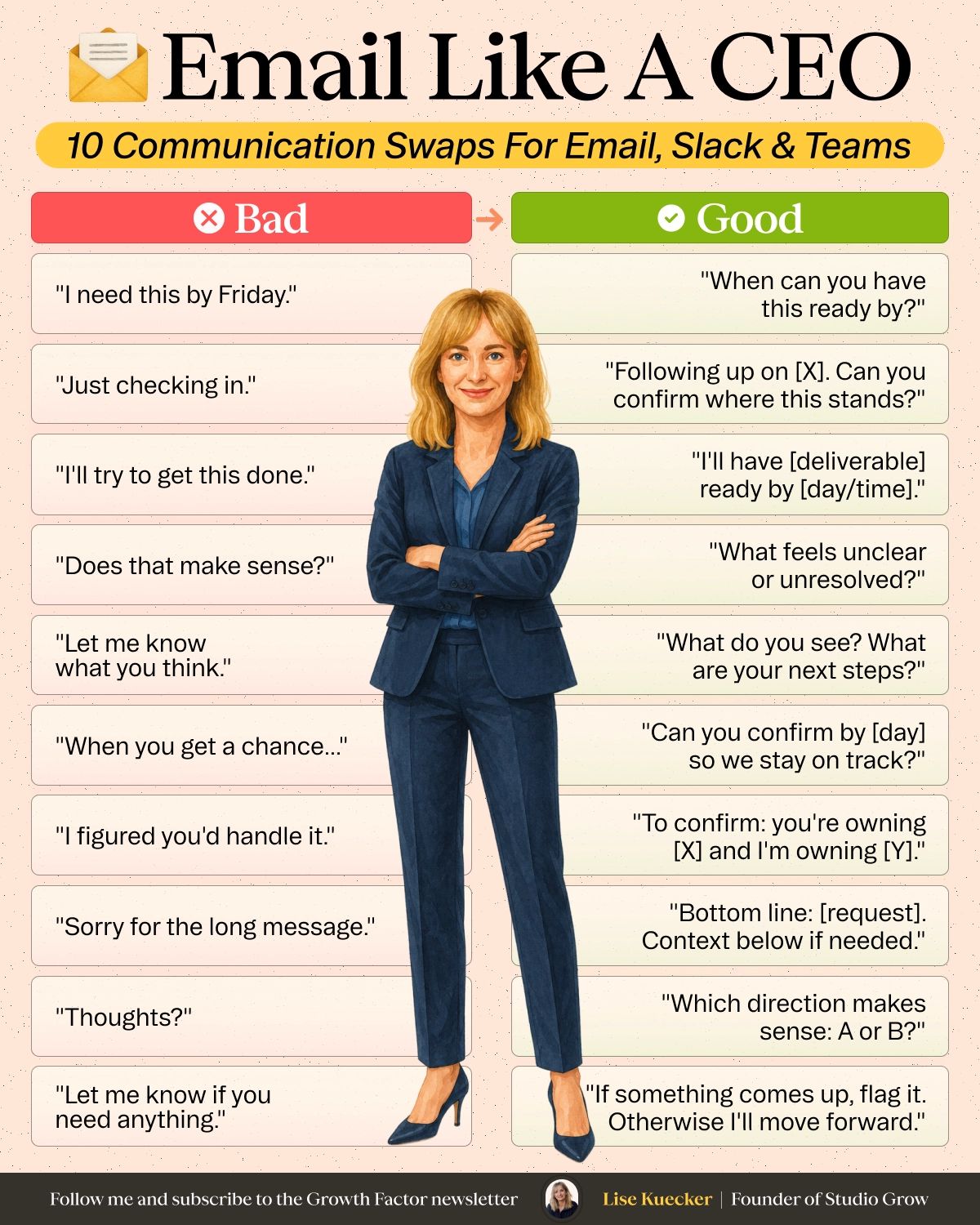
In a recent LinkedIn post, Lise Kuecker explores how vague communication can significantly slow down project timelines and offers actionable strategies to improve team clarity and efficiency. Kuecker, who founded Studio Grow, emphasizes that while her team utilizes Slack for internal communications due to its integration capabilities, the underlying principles of effective communication remain universal.
The Cost of Vague Communication
Kuecker argues that ambiguity in team messages is a primary culprit behind project delays. She highlights that when communication lacks specificity, team members are left guessing about expectations, deadlines, and responsibilities, leading to wasted time and effort. This lack of clarity can create a cycle of unproductive follow-ups and misunderstandings.
“What slows teams down more than almost anything else is when communication is vague and open-ended.”
To combat this, Kuecker provides a series of direct comparisons between ineffective and effective communication phrases. She suggests that by adopting more precise language, teams can ensure everyone is on the same page and understands their role and the expected outcomes.
Actionable Swaps for Clearer Communication
Kuecker’s post offers a practical guide with 10 specific examples of how to rephrase common, vague statements into direct and actionable requests. These swaps are designed to elicit clear commitments and confirm understanding, thereby streamlining workflows.
Examples of Effective Communication Swaps
According to Lise Kuecker, common phrases like “I need this by Friday” can be significantly improved. She proposes replacing it with a more collaborative yet direct question:
“When can you have this ready by?”
Similarly, the passive “Just checking in” is transformed into a proactive follow-up that specifies the subject:
“Following up on [X]. Can you confirm where this stands?”
Kuecker also addresses the issue of commitment, contrasting the hesitant “I’ll try to get this done” with a firm statement of intent and deliverable:
“I’ll have [deliverable] ready by [day/time].”
Another critical area Kuecker addresses is clarity on ownership. She contrasts the ambiguous “I figured you’d handle it” with a clear division of responsibilities:
“To confirm: you’re owning [X] and I’m owning [Y].”
Ensuring Accountability and Progress
The core principle behind Kuecker’s suggested swaps is to ensure that every message clearly communicates what is needed, by when, and who is responsible. As Lise Kuecker notes, this level of clarity allows for tangible progress because team members understand their specific contributions and deadlines.
She advocates for messages that leave no room for interpretation regarding required actions and timelines. This approach, Kuecker suggests, helps prevent the feeling of “talking in circles” that often plagues teams struggling with inefficient communication. By making communication direct and specific, leaders can foster an environment where accountability is clear and project momentum is maintained.
Kuecker concludes by inviting readers to share phrases they find themselves tuning out, further engaging the audience in a discussion about communication best practices. Her post serves as a valuable resource for leaders aiming to enhance team productivity through more effective internal dialogue.
📝 About This Content
This article is based on insights shared by Lise Kuecker on LinkedIn.
📅 Originally posted on July 16, 2026 | View original post on LinkedIn →