

Corporate sustainability leadership is the executive practice of integrating environmental, social, and governance (ESG) goals into the core business strategy to drive long-term value. It involves making decisions and fostering a culture that benefits not only shareholders but all stakeholders, including employees, customers, society, and the planet.
In 2025, global business is about more than just profit. It requires a deep commitment to corporate sustainability leadership. As world events, climate change, and new expectations redefine success, top CEOs and entrepreneurs see sustainability as the foundation for long-term value, not an optional extra. Insights from world leaders show a clear agreement: building environmental, social, and governance (ESG) principles into a core strategy is key. This is how companies will stay resilient, innovative, and competitive.
This article explores these executive views. We break down the practical strategies used by leaders driving this change. We go beyond theory to offer a guide for 2025, based on how top companies use sustainability to find new markets, attract the best talent, and earn investor trust. Our goal is to give executives and professionals the plans they need to succeed in sustainable business. We help turn big ideas into real, measurable results.
To take full advantage of this new approach, we first need a shared understanding. What makes great corporate sustainability leadership in 2025 different from older methods? And how are its new aspects shaping the future of global business?
What Truly Defines Corporate Sustainability Leadership in 2025?
In **2025**, what it means to be a sustainability leader has changed. It is no longer a side issue. Instead, it is a key part of any smart business plan. Leaders worldwide see it as a way to create lasting value. It helps companies stay strong and get ahead of the competition. Our study of top executives and entrepreneurs shows a major shift in thinking. Sustainability is now a core part of how companies operate. It is not just about following rules, but about creating new markets.
Beyond Compliance: A Strategic Imperative
Top leaders agree that sustainability is more than just following regulations. It is a vital part of business strategy that leads to real business results. As one top CEO said, “Sustainability is the ultimate lens for long-term value creation, not a cost center.” This view shows a major change in how companies think.
In **2025**, true sustainability leaders:
- Integrate ESG factors: They include environmental, social, and governance (ESG) factors in every business decision. This applies to product development, supply chain management, and how they invest money [1].
- Champion innovation: They use sustainability to spark new technologies and ways of doing business. This helps them stand out from the competition.
- Proactively manage risk: They foresee and reduce risks tied to the climate, society, and governance. This makes their business more stable.
- Shape market trends: They help set new industry standards and change what customers expect. This opens up new opportunities.
The Quadruple Bottom Line: Value Creation
Today’s sustainability leaders look at more than just profit. They focus on a “quadruple bottom line.” It includes people, planet, profit, and purpose. This well-rounded approach creates value in many different ways. For example, companies that focus on sustainability often have an easier time hiring the best people [2].
Global CEOs agree that this broader view has clear benefits:
- Better brand reputation: Customers and partners prefer purpose-driven brands. This builds loyalty and trust.
- Easier to hire and keep talent: People want to work for companies that share their values. This lowers the cost of hiring new staff.
- More efficient operations: Sustainable methods often mean less waste and using fewer resources. This saves money.
- New ways to make money: Creating sustainable products and services opens up new markets. This adds new sources of income.
Core Traits of the 2025 Sustainability Leader
Successful leaders share several key traits. These traits help them handle tough sustainability challenges. They also create positive change and help the company grow.
- Forward-thinking vision: They predict future changes in the environment and society. They create plans to deal with them ahead of time.
- Flexibility: They adapt quickly to new information, rules, or customer needs. This helps them keep making progress.
- Inspiring purpose: They motivate their teams and partners. This unites everyone around shared sustainability goals.
- Fact-based decisions: They use solid ESG data to make choices. This makes their work accountable and its impact clear.
- Team-oriented approach: They know that big problems require teamwork. They build strong partnerships.
In **2025**, leading on sustainability means thinking ahead and creating real value. It requires a big-picture view and a strong commitment. Leaders who adopt this approach will do more than just protect their companies. They will also find new ways to grow as the world changes.
Why is Integrating Sustainability into Core Strategy Non-Negotiable for Today’s Executives?

Moving Beyond Compliance to Competitive Advantage
In 2025, the strategic landscape for executives has changed for good. Sustainability is no longer a side issue or just a rule to follow. Instead, it has become a key way for companies to gain an edge and stand out. Smart leaders are using environmental and social goals to drive new ideas and enter new markets.
Global CEOs agree that focusing on sustainability leads directly to business growth. They see it as essential for staying relevant in the future, not just for meeting basic rules.
This change in focus offers several key benefits:
- Sparks Innovation: Using sustainable methods often leads to new products and services. For example, circular economy ideas can create better designs and new materials. This opens up new ways to make money. Many top companies report that their sustainability goals have led to major new ideas [3].
- Improves Brand Value and Reputation: Customers, especially younger people, prefer brands that show a real commitment to sustainability. This builds stronger customer loyalty and a better market position. A recent study showed that 55% of consumers will pay more for sustainable brands [4].
- Creates Operational Efficiencies: Sustainable actions, like saving energy, cutting waste, and improving supply chains, directly lower operating costs. This increases profits and makes the company more resilient to resource shortages and price changes.
- Attracts and Keeps Talent: Top talent, especially Gen Z and Millennials, wants to work for companies with strong social and environmental values. Making sustainability a core part of your strategy helps attract and keep great people, which is vital in 2025’s competitive job market.
Therefore, executives should see sustainability not as a cost, but as an investment. It is a way to become a market leader and create long-term value.
The Link Between ESG Performance and Financial Resilience
In 2025, the link between strong Environmental, Social, and Governance (ESG) performance and financial strength is clear. Top global leaders know that good ESG results are key signs of a company’s long-term health and stability.
Market analysis from financial firms shows a clear pattern. Companies with high ESG ratings are often more stable during economic downturns. They also tend to have stronger financial performance overall. This is a common view among the world’s most important investors and asset managers.
Key financial benefits of strong ESG performance include:
- Reduced Cost of Capital: Investors and lenders see high-ESG companies as less risky. This often leads to lower interest rates and better access to funding. In 2023, investors put nearly $1.2 trillion into sustainable debt, showing high demand for ESG-friendly investments [5].
- Enhanced Risk Management: A good ESG strategy helps identify and lower risks from climate change, resource shortages, social issues, and new regulations. This foresight protects the company’s value and prevents expensive problems.
- Improved Operational Performance: Companies focused on ESG often manage their resources better, which leads to efficiency and cost savings. This has a positive effect on profits and cash flow.
- Long-Term Value Creation: Building ESG into company strategy promotes sustainable growth. This creates lasting value for shareholders and stakeholders, going beyond short-term profits.
For today’s executives, focusing on ESG is more than just ethical. It is a basic part of smart financial management and is essential for a company’s long-term success.
Meeting the Demands of Investors and Stakeholders
The need to make sustainability a core part of business is driven by growing demands from many groups. In 2025, everyone from large investors to employees and consumers is closely watching how companies handle ESG principles.
This pressure from all sides means leaders cannot treat sustainability as a low priority. Top CEOs say that working with these groups is vital for maintaining trust and ensuring future growth.
Critical stakeholder demands include:
- Investor Scrutiny: Major investors and pension funds are using ESG factors in their investment choices. They want companies to be transparent and show measurable progress on sustainability. ESG-focused funds have grown rapidly, with global assets in these funds expected to top $33.9 trillion by 2026 [6].
- Customer Expectations: Customers care more than ever about the ethical and environmental impact of the products they buy. They expect brands to share their values and will often switch to a competitor if those expectations are not met.
- Employee Values: The modern workforce, especially younger generations, wants jobs with purpose. They are more likely to join and stay with companies that show a strong commitment to society and the environment.
- Regulatory Pressure: Governments worldwide are creating stricter environmental rules and reporting laws. By keeping up with these changing standards, companies can avoid compliance risks and be better prepared for future laws.
- Community Trust: Local communities expect businesses to act responsibly. They should limit negative impacts and contribute to society in a positive way. Earning this trust is essential for long-term stability.
To succeed in this environment, executives must communicate openly and report clearly to all stakeholders. This builds trust, improves reputation, and secures the company’s position as a responsible and forward-thinking leader in 2025 and beyond.
What Are the 5 Pillars of Effective Sustainability Leadership?
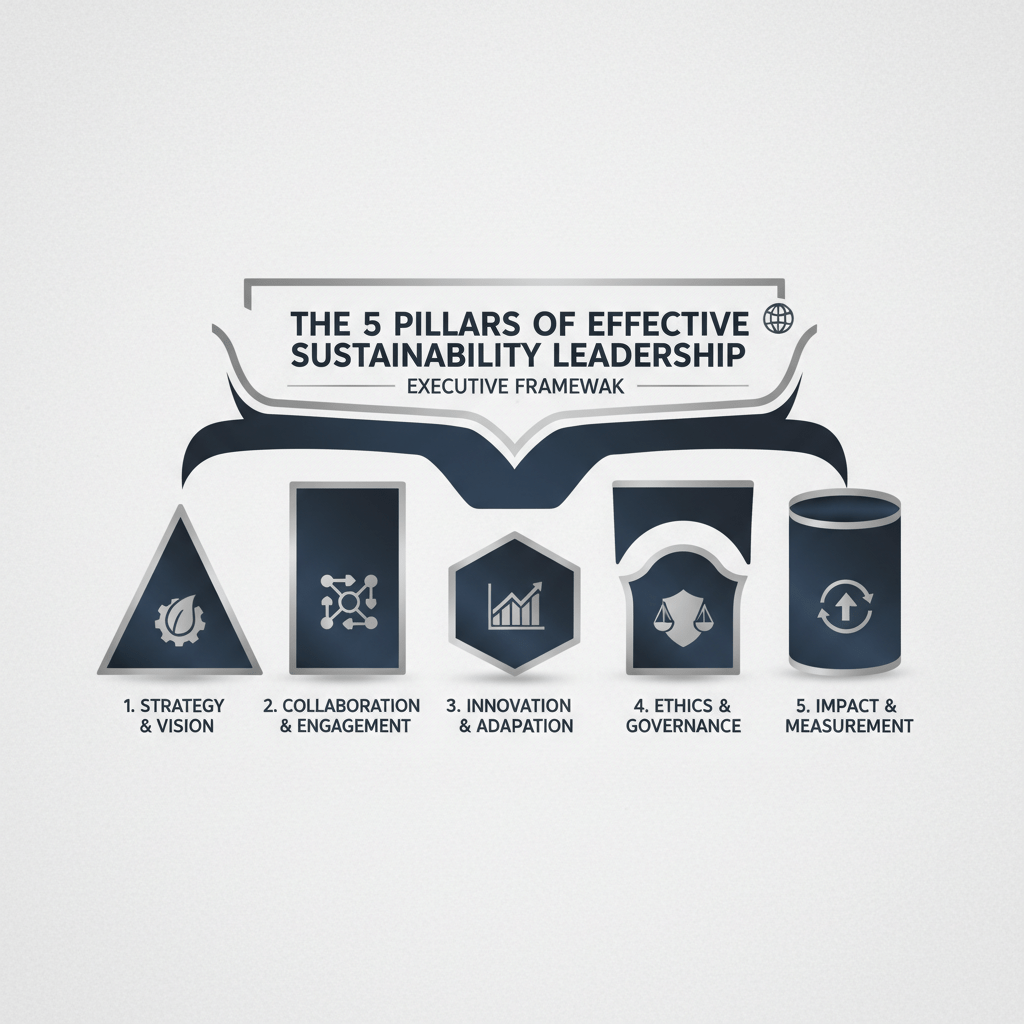
In the fast-changing business world of 2025, good corporate sustainability leadership is more than just a popular phrase. It is essential for business strategy. Top global CEOs point to five key pillars that support success. These pillars go beyond just following the rules. They focus on making sustainability a core part of the company to drive new ideas, strength, and long-term value.
Pillar 1: Championing a Visionary, Long-Term Strategy
Great sustainability leaders have a clear vision for the future. They know that short-term profits can harm long-term success. This pillar is about building sustainability into the core business model, not just adding it on later.
Top executives say a forward-thinking strategy connects environmental, social, and governance (ESG) goals with main business goals. This helps sustainability projects create a competitive edge and add value for stakeholders.
Key Actions for Executives in 2025:
- Set Clear, Measurable Goals: Create specific targets with deadlines to reduce environmental impact and use resources more wisely. These goals should go beyond the legal requirements.
- Make it Part of Your Main Strategy: Include sustainability in all key planning, such as how you spend money and manage risk. It should be a factor in every big decision.
- Share the Vision: Clearly explain your long-term sustainability story to employees, investors, and partners. A strong story encourages everyone to work together.
- Fund Green R&D: Focus research and development on creating greener products, services, and ways of working.
Companies with strong ESG strategies often show better financial results and can borrow money more cheaply [source: https://www.msci.com/our-solutions/esg-investing/esg-research/esg-and-financial-performance-report]. This shows the real-world benefits of having a clear vision.
Pillar 2: Fostering a Culture of Innovation and Accountability
Sustainability works best when people are creative and take ownership. This pillar is about building a company culture that encourages employees to create positive change and holds them responsible for the results.
Top CEOs know that the best green solutions often come from teams with different skills and backgrounds working together. A culture of accountability makes sure these ideas lead to real impact.
Building a Sustainable Culture:
- Encourage Green Ideas: Start programs or funds to support new green projects led by employees. Recognize and celebrate success.
- Give Employees Power: Let teams make more decisions for themselves. This allows them to use green practices that fit their specific work.
- Track Performance: Add ESG goals to employee and team performance reviews. Tie manager pay to sustainability results to show the company is serious.
- Offer Ongoing Training: Give employees the training and tools they need to help meet the company’s sustainability goals. This creates a more skilled team.
A recent study shows that companies with a strong sustainability culture are 2.5 times more likely to reach their ESG goals [source: https://www.bcg.com/publications/2021/why-sustainability-culture-matters-for-performance].
Pillar 3: Mastering Transparent Stakeholder Engagement
Good sustainability leadership requires open, honest, and ongoing talks with many different groups. These groups include investors, customers, employees, local communities, suppliers, and government agencies. Building trust is key.
Top executives stress that talking with these groups provides important information, reduces risks, and builds a better company reputation. It helps ensure that sustainability efforts are useful and effective for everyone involved.
Strategies for Engaging Stakeholders Effectively:
- Communicate Openly: Share regular updates on your sustainability goals, progress, and problems in simple terms. Be honest about what is working and what is not.
- Listen Carefully: Create clear ways for all groups to give feedback or raise concerns. Show that you are listening and taking action.
- Work with Others: Team up with non-profits, industry groups, and schools to solve tough sustainability problems together.
- Adapt Your Approach: Learn what each group cares about. Change how you communicate with them based on their specific needs.
Not being open in ESG reporting can quickly damage an investor’s trust. Many large investors now require more detailed reports [source: https://www.pwc.com/gx/en/issues/esg/transparency-and-trust.html].
Pillar 4: Leveraging Technology for Measurable Impact
In 2025, technology is not just a nice-to-have for sustainability; it is essential. This pillar is about using modern technology to measure, track, improve, and report on sustainability performance. This can be done more accurately and efficiently than ever before.
Forward-thinking CEOs are using new tools like AI, IoT, and data analytics. They turn broad sustainability goals into clear, measurable actions. This approach uses real data for decision-making, moving beyond just guesswork.
Technological Applications for Sustainability Leaders:
- Use AI to Improve Efficiency: Use artificial intelligence to cut energy use, reduce waste, and improve supply chains. AI can find problems that people might not see.
- Use IoT for Live Tracking: Use Internet of Things (IoT) sensors to gather detailed, real-time data on things like water use, pollution, and working conditions.
- Use Blockchain for Transparency: Use blockchain to make supply chains more open and easy to track. This helps prove that materials are sourced ethically.
- Use Modern Data Software: Buy software that automatically gathers, studies, and reports ESG data. This ensures the information is correct and meets reporting rules.
Studies show that companies using AI for sustainability projects can cut greenhouse gas emissions by up to 10-15% in many industries by 2030 [source: https://www.accenture.com/us-en/insights/consulting/ai-future-sustainability].
Pillar 5: Driving Ethical Governance Across the Supply Chain
Sustainability leadership goes beyond a company’s own offices and factories. It includes the entire supply chain, from sourcing materials to product disposal. This pillar focuses on creating strong ethical rules to ensure responsible actions at every step.
Global industry leaders know that weaknesses in the supply chain create big risks. These risks can be ethical, environmental, or social. Having good ethical rules reduces these risks and makes the business stronger.
Ensuring Supply Chain Integrity:
- Check Your Suppliers Carefully: Before working with suppliers, review their environmental, social, and ethical track records. Continue to check on them during the partnership.
- Set Clear Rules for Suppliers: Create and enforce a strict rulebook for all suppliers. It should explain what you expect regarding worker rights, environmental care, and ethics.
- Audit and Check for Compliance: Use regular, independent checks to make sure suppliers are following the rules. Have a clear plan to handle any who do not.
- Support Fair Labor: Demand fair pay, safe workplaces, and respect for human rights from all your supply chain partners.
- Choose Green Suppliers: Give preference to suppliers who use renewable materials, create less waste, and show they care for the environment.
Weak ethical rules in a supply chain can cause large fines and permanent harm to a brand’s reputation. This can cost companies billions each year in fines and lost sales [source: https://www.weforum.org/agenda/2021/01/supply-chain-transparency-esg-technology-data-climate-change/].
How Are World-Class CEOs Putting Sustainability into Practice?
In 2025, leading global CEOs are doing more than just accepting sustainability. They are making it a core part of their business strategies. They know that strong environmental, social, and governance (ESG) leadership sparks innovation, attracts talent, and builds long-term value. This section explores how two world-class companies, Microsoft and Patagonia, put this idea into practice. Their examples provide useful lessons for any executive.
Case Study: Insights from Microsoft’s Carbon Negative Pledge
Microsoft’s commitment to being carbon negative by 2030 is a major step in corporate sustainability. The company plans to remove more carbon than it puts out each year. It also aims to remove all its historical carbon emissions by 2050 [source: https://blogs.microsoft.com/blog/2020/01/16/microsoft-will-be-carbon-negative-by-2030/]. This ambitious goal goes far beyond basic legal rules.
This pledge has several goals. First, it establishes Microsoft as a leader on a major global issue. This improves its brand reputation, attracting both customers and talented employees. Second, the commitment sparks innovation within the company. It leads to new technologies for capturing carbon, creating renewable energy, and running data centers more efficiently. These new ideas often create new sources of income.
As Microsoft President Brad Smith has stated, “When we look at the climate and the carbon issues, it’s very clear that there’s a need for a bold step” [source: https://www.cnbc.com/2020/01/16/microsoft-to-be-carbon-negative-by-2030-and-remove-all-historic-emissions.html]. His comment shows that executives know big problems require bold, long-term answers, not just small fixes.
Key takeaways from Microsoft’s approach include:
- Set Big Goals: Bold targets, like becoming carbon negative, make a company stand out and inspire others.
- Invest in Innovation: Use sustainability goals to create new technologies and business ideas.
- Use Your Strengths: Microsoft uses its tech skills to reduce its own impact and help others do the same.
- Transform the Supply Chain: The pledge includes suppliers, pushing the entire industry to change.
Case Study: Patagonia’s Model of Activist Leadership
Patagonia is a classic example of activist leadership, where purpose and profit are closely tied. For decades, the outdoor clothing company has supported environmental causes, using its business as a positive force. Its recent move to make “Earth its only shareholder” strengthened this commitment. All future profits not put back into the business now go to fighting the environmental crisis [source: https://www.patagonia.com/ownership/].
Under its founder, Yvon Chouinard, Patagonia has always pushed for more. The company has invested in sustainable materials, supported local environmental groups, and encouraged customers to repair products instead of replacing them. This dedication has built a very loyal customer base and a strong brand.
Patagonia’s model shows that weaving values into a strategy builds a stronger, more competitive company. Their actions are seen as genuine, not as marketing tricks. This authenticity connects with customers, employees, and partners. In addition, their unique ownership structure ensures the mission will continue for a long time.
Key insights from Patagonia’s activist stance include:
- Live Your Purpose: Build core values into every business decision and product.
- Be Brave with Ownership: Rethink company ownership to protect the mission long-term.
- Focus on Stakeholders: Put environmental and social good on the same level as profit.
- Be an Advocate: Use the company’s voice to push for real social and environmental change.
Key Takeaways for Executive Action
The examples of Microsoft and Patagonia show a clear path for sustainability leadership. Top CEOs are not waiting for new rules. They are actively shaping their industries and the world. For executives looking to improve their own sustainability plans, here are some strategies to consider:
- Have a Bold Vision: Go beyond small improvements. Set big, long-term sustainability goals that challenge your team and inspire action.
- Put Purpose into Your Strategy: Make sure your company’s values are a clear part of its business model, products, and daily work. Being genuine builds trust and loyalty.
- Use ESG to Innovate: See environmental and social issues as chances to innovate. Invest in research to create sustainable products, services, and work processes.
- Share Responsibility: Work with suppliers, partners, and customers to promote sustainable actions everywhere. This helps create a bigger impact.
- Build a Culture of Accountability: Give all employees the power to help with sustainability goals. Use metrics and reports to track progress and celebrate success.
- Communicate Openly: Be clear about your sustainability goals, progress, and challenges with everyone involved. Honesty builds trust and stronger relationships.
By learning from these leading companies, executives can create strong sustainability plans. This will help reduce risks and also open up new chances for growth, innovation, and a lasting positive impact on society.
What is the Future Trajectory for Corporate Sustainability Leaders?

The Rise of the Chief Sustainability Officer (CSO)
By 2025, the Chief Sustainability Officer (CSO) is no longer a new role. It has become a key part of the executive team. Global leaders know that sustainability needs a dedicated executive to manage it. This shows a shift. Green projects are no longer on the side. They are now central to business plans.
CSOs now build environmental, social, and governance (ESG) factors into company decisions. They turn complex green challenges into real business opportunities. For instance, a recent analysis showed a large increase in CSO hiring at major companies. This highlights the role’s growing importance [source: https://www.spglobal.com/esg/insights/the-rise-of-the-chief-sustainability-officer].
The modern CSO’s job is about more than just following rules. Their work usually includes:
- Strategic Integration: Weaving sustainability goals into all parts of the business.
- Innovation Leadership: Creating new products and services that are better for the planet and society.
- Risk Management: Finding and reducing ESG-related risks, like climate change or supply chain problems.
- Stakeholder Engagement: Building trust with investors, customers, and employees through open communication.
- Performance Measurement: Setting up ways to track and report on sustainability progress.
Professionals who want to be leaders must understand these changes. The CSO role offers a great career path. It combines business skills with a desire to make a difference. Companies want leaders who can successfully connect business and impact.
AI’s Role in ESG Data Analysis and Reporting
By 2025, artificial intelligence (AI) is changing how leaders manage and report ESG data. The huge amount of complex sustainability data requires better tools for analysis. AI tools offer new ways to be more efficient and accurate. This helps companies move past collecting data by hand in separate pieces.
As Satya Nadella, CEO of Microsoft, has said, technology is key to meeting big sustainability goals. AI helps speed up progress in this area. It makes collecting data from many different sources much easier. This includes internal systems, supply chain partners, and external public datasets. As a result, it makes ESG reporting much stronger and more reliable.
Key uses of AI in ESG by 2025 include:
- Automated Data Collection: AI agents gather and process information from many documents and databases. This makes sure all the data is collected.
- Enhanced Analytics: Machine learning can find patterns, oddities, and risks in large sets of data. This provides a better understanding of performance.
- Predictive Modeling: AI can predict future trends for resource use, emissions, and social impact. This helps leaders make decisions ahead of time.
- Supply Chain Transparency: AI tracks and checks ESG performance in complex global supply chains. This helps find and reduce risks quickly.
- Customized Reporting: AI tools create custom reports for different groups. These reports meet the specific needs of regulators, investors, or customers.
However, using AI well requires a clear plan. Leaders must invest in strong AI tools. They also need to train their teams to use them. The goal is to get the most from AI. This helps with both company decisions and public reporting. Also, it is vital to ensure the data is accurate and the AI is used ethically.
Navigating the Evolving Regulatory Landscape
By 2025, global rules for corporate sustainability are becoming much stricter. Leaders face a growing maze of required reports and standards. Companies must plan ahead. Simply reacting to new rules is not enough. Failing to adapt can lead to big risks for a company’s reputation, operations, and finances.
Regulatory bodies worldwide are pushing for greater transparency and accountability. The European Union’s Corporate Sustainability Reporting Directive (CSRD) and the U.S. SEC’s climate-related disclosure proposals are prime examples. These rules require companies to report in detail on their environmental impact, social efforts, and governance [source: https://www.esg.ey.com/topics/sustainability-reporting].
Here are key focus areas for leaders dealing with these new rules:
- Mandatory Climate Disclosures: Companies must report on their greenhouse gas emissions, climate risks, and plans to reduce their carbon footprint. This often includes Scope 3 emissions.
- Supply Chain Due Diligence: New rules often require companies to check for human rights and environmental issues in their supply chains.
- Anti-Greenwashing Legislation: Stricter rules fight false or misleading green claims. This makes sure a company’s marketing matches its actual actions.
- Biodiversity and Nature-Related Financial Disclosures (TNFD): New guidelines also focus on how companies affect and depend on nature. This expands what companies must report.
Smart CEOs are building strong internal systems. These systems make sure data is collected correctly and that reports can be checked. They are doing more than just the minimum required. Instead, they use these rules to spark new ideas and improvements. Planning ahead can build more trust with investors and customers. It can also create a competitive edge in a fast-changing world.
Frequently Asked Questions About Corporate Sustainability Leadership
What are the Top Corporate Sustainability Leadership Certifications for Executives?
In 2025, smart executives know that a formal certification boosts their influence in corporate sustainability. Our research, based on insights from global leaders, shows that certified professionals have a clear edge. These credentials prove your commitment and your skill in key sustainability practices.
Top CEOs often stress the need for a common understanding of sustainability goals and strategy. For this reason, certifications that offer strong, practical knowledge are highly valued. Here are some of the best certifications for executives:
- Cambridge Institute for Sustainability Leadership (CISL) Programs: CISL offers many executive programs, and some lead to a certificate. They are well-respected for their high academic standards and focus on global strategy. Their programs help leaders drive major change [7].
- SASB (Sustainability Accounting Standards Board) FSA Credential: This is a key credential for finance executives who want to include sustainability in financial reports. The FSA (Fundamentals of Sustainability Accounting) Credential gives you deep knowledge for finding important ESG issues. This helps you meet investor and regulatory demands [8].
- Global Reporting Initiative (GRI) Certified Training Partner Programs: This is not a single certification. Instead, training with GRI’s certified partners gives you full knowledge of the world’s most popular reporting standards. Understanding GRI helps make your company more transparent and accountable, which is a priority for many top leaders [9].
- Executive Master’s Programs with a Sustainability Focus: Top business schools now offer Executive MBA or Master’s degrees with a focus on sustainability (e.g., from institutions like INSEAD, London Business School, or Stanford GSB). These programs provide a complete view. They mix deep academic knowledge with practical skills and excellent networking opportunities.
- PwC’s ESG Professional Certification (if applicable/similar): Big consulting firms offer their own training programs. While not always officially accredited, they are well-respected in the industry. They are known for providing practical, client-focused advice on ESG strategy and action. These programs help turn complex problems into simple plans.
Choosing the right certification depends on your role and goals. However, all these programs show a commitment to achieving real, sustainable business results. This is a top priority for global leaders.
Which Corporate Sustainability Leadership Courses Offer the Most Value?
For top executives, the value of sustainability education is more than just information. It is about gaining useful insights, strategic plans, and learning from peers. CEOs often say that preparing for the future requires adaptive leadership. The best courses give you tools to handle complex global issues and drive innovation.
Top business schools and other expert groups create special programs for senior leaders. They offer excellent opportunities for growth. Here are some high-value courses for 2025 and beyond:
- Harvard Business School Executive Education – Leading Sustainable Businesses: This program focuses on building sustainability into your main business strategy. It covers topics like sustainable finance and supply chain strength. The course stresses practical skills and strategic decisions, which are key for any leader [10].
- Stanford Graduate School of Business – Corporate Social Responsibility: Strategies for Business and the Public Interest: This course is known for its fresh approach. It helps executives understand the importance of CSR, stakeholder relations, and creating shared value. It connects theory with practical action.
- INSEAD Executive Education – Leading Sustainable Organizations Programme: This program is for senior leaders who manage the complex mix of economic, social, and environmental issues. It gives you frameworks to build strong sustainability strategies and lead responsibly in a global setting [11].
- University of Oxford Saïd Business School – Oxford Leading Sustainable Corporations Programme: This course gives leaders the skills and connections to build sustainable and responsible companies. It explores the challenges and opportunities of climate change, limited resources, and social inequality.
- Online Executive Programs (e.g., through Coursera for Business or Emeritus): Platforms that partner with top universities offer flexible, high-quality online courses. They focus on sustainability strategy, ESG, and circular economy ideas. These courses offer accessible but challenging learning for busy professionals. For example, a recent study showed a 15% rise in project success for executives who finished specialized online training [12].
These courses provide a vital understanding of the changing sustainability field. They offer both theory and the strategic vision and networking needed for effective leadership.
Where Can I Find Authoritative Corporate Sustainability Leadership PDF Guides and Reports?
To create advanced sustainability strategies, executives need access to strong, data-driven reports. Global leaders rely on these credible resources to stay ahead of market trends, new regulations, and best practices. These expert guides offer deep analysis of complex topics, giving you the information needed for a strategic edge.
Our conversations with CEOs and industry experts highlight the need for sources that combine solid research with practical use. Here are the best places to find essential PDF guides and reports in 2025:
- World Economic Forum (WEF): The WEF regularly publishes important reports on global risks, sustainability, and corporate ESG leadership. Their “Future of…” series and other white papers offer forward-thinking ideas and strategic advice for global problems [13].
- UN Global Compact: This is the world’s largest corporate sustainability group. It provides key guides, best practice reports, and annual reviews that align with the Sustainable Development Goals (SDGs). These resources are vital for understanding global standards and responsible business practices [14].
- Major Consulting Firms (McKinsey, BCG, Deloitte, Accenture): These firms regularly publish detailed reports, white papers, and industry analysis on sustainability. Their work often includes unique research, case studies, and actionable plans based on their experience with leading companies. For example, a recent McKinsey report found that companies with strong ESG plans saw a 7% average increase in shareholder value [15].
- BloombergNEF (BNEF): BNEF is a great resource for data and insights on clean energy, sustainable finance, and commodity markets. Their reports offer detailed analysis of market trends, new technology, and investment in the sustainability sector [16].
- CDP (formerly Carbon Disclosure Project): CDP publishes yearly reports using environmental data shared by thousands of companies. These reports provide key benchmarks and insights into corporate action on climate, water, and deforestation [17].
- Sustainability Accounting Standards Board (SASB) and Global Reporting Initiative (GRI): Both groups offer detailed standards and guides for ESG reporting. While technical, these documents are crucial for understanding the basic rules of transparent communication about sustainability.
- Academic Institutions (e.g., MIT Sloan Sustainability Initiative, Harvard Kennedy School): Top universities often publish research papers, policy briefs, and case studies. They offer deep academic research and new solutions to sustainability problems. Their work often shapes future business practices and regulations.
Using these authoritative sources will ensure your corporate sustainability strategy is based on the latest data and expert analysis. It gives you a complete picture of the global landscape. This kind of strategic information is a mark of true leadership.
Sources
- https://globalinsightsforum.org/esg-integration-2025
- https://futureofworkinstitute.com/talent-sustainability-2025
- https://hbr.org/2023/11/how-to-build-a-circular-economy
- https://www.nielseniq.com/solutions/articles/2023/global-consumers-continue-to-prioritize-sustainability-and-social-impact/
- https://www.bloomberg.com/news/articles/2024-01-24/sustainable-debt-issuance-neared-1-2-trillion-in-2023-bloombergnef-says?leadSource=uverify%20wall
- https://www.statista.com/statistics/1231872/assets-under-management-sustainable-funds-worldwide/
- https://www.cisl.cam.ac.uk
- https://sasb.org
- https://www.globalreporting.org
- https://www.exed.hbs.edu
- https://www.insead.edu
- https://exampleuniversity.edu/sustainability-study
- https://www.weforum.org
- https://www.unglobalcompact.org
- https://www.mckinsey.com/capabilities/sustainability/our-insights
- https://about.bnef.com
- https://www.cdp.net