
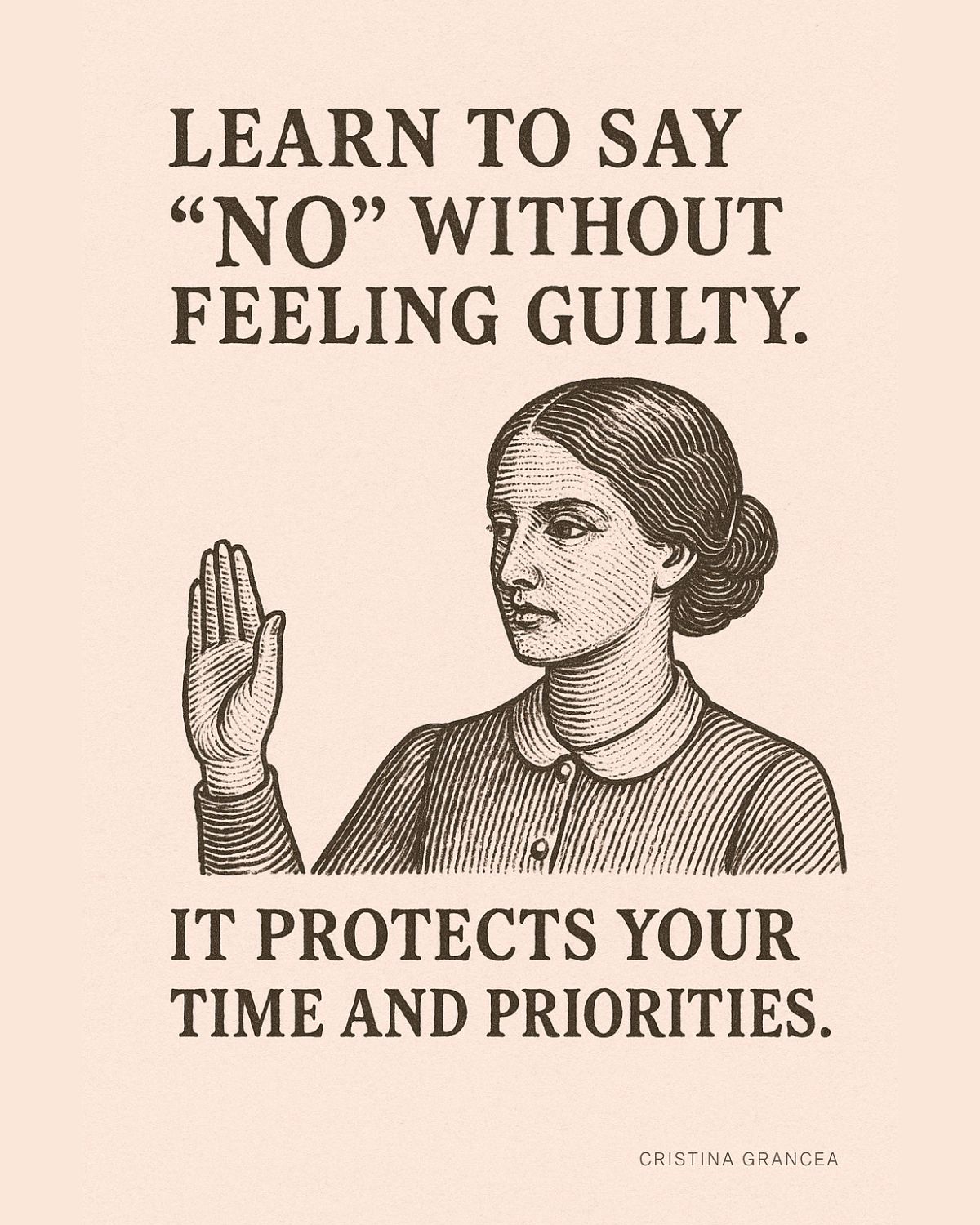
In a recent LinkedIn post, Cristina Grancea discusses the critical importance of leaders setting and maintaining boundaries, not as a personal indulgence, but as a fundamental leadership responsibility. Grancea shares her own journey of learning to say no without guilt, moving away from the misconception that being a good boss means being constantly available.
She highlights the personal toll of this approach, stating:
“I used to think being a good boss meant being always on: Open door, Always available, Always responding. But behind the scenes? I was stressed, stretched thin, barely holding it together Telling myself it just comes with the title.”
Grancea argues that this mindset is unsustainable and ultimately detrimental to both the leader and their team. She emphasizes that true boundary-setting begins internally.
The Internal Battle for Boundaries
Grancea posits that the first and most crucial step in establishing effective boundaries is to set them with oneself. This internal commitment is the foundation upon which external boundaries are built. She explains that by allowing herself to truly disconnect, she found herself returning to work with renewed energy and focus.
According to Grancea, this personal practice has a direct impact on team dynamics and performance:
“Protecting my energy isn’t a personal indulgence. It’s a leadership responsibility. Because how I show up affects everyone else. If I’m always running on empty, I set that pace for the whole team.”
This perspective reframes the act of resting and recharging not as a sign of weakness or unavailability, but as a strategic leadership choice that benefits the entire organization.
Practical Strategies for Implementing Boundaries
To move from theory to practice, Grancea outlines several actionable strategies for leaders to implement healthy boundaries within their teams. She advocates for a conscious shift away from glorifying burnout.
Defining and Modeling Limits
Grancea advises leaders to define firm limits on communication times and to communicate these clearly to their teams. Crucially, she stresses the importance of modeling this behavior personally. Sending emails late at night or being constantly available can inadvertently set an expectation for the team to do the same.
“Don’t send emails at midnight. Your example gives others permission to switch off.”
By refraining from such actions, leaders provide tacit permission for their team members to also disconnect and prioritize their well-being.
Leveraging Tools and Encouraging Rest
The use of scheduling tools is another practical tip Grancea suggests. She notes that while ideas may come at any time, the delivery does not need to be immediate. Scheduling messages for appropriate working hours ensures that urgent thoughts are captured without encroaching on personal time.
Furthermore, Grancea champions the encouragement of offline time as a standard practice, not an exception. She believes that teams that are given the opportunity to rest and recharge are ultimately more productive and engaged.
Boundaries as a Necessity, Not Selfishness
In conclusion, Cristina Grancea’s post serves as a powerful reminder that setting boundaries is not a selfish act but a necessary component of effective leadership. She argues that consistent presence and optimal performance stem from a well-managed energy reserve, benefiting the leader, their family, and their team.
“Being a good leader doesn’t mean burning yourself out. It means showing up as your best self, consistently.”
Grancea’s insights offer a valuable perspective for leaders looking to foster a healthier, more sustainable work environment.
📝 About This Content
This article is based on insights shared by Cristina Grancea on LinkedIn.
📅 Originally posted on February 2, 2026 | View original post on LinkedIn →