
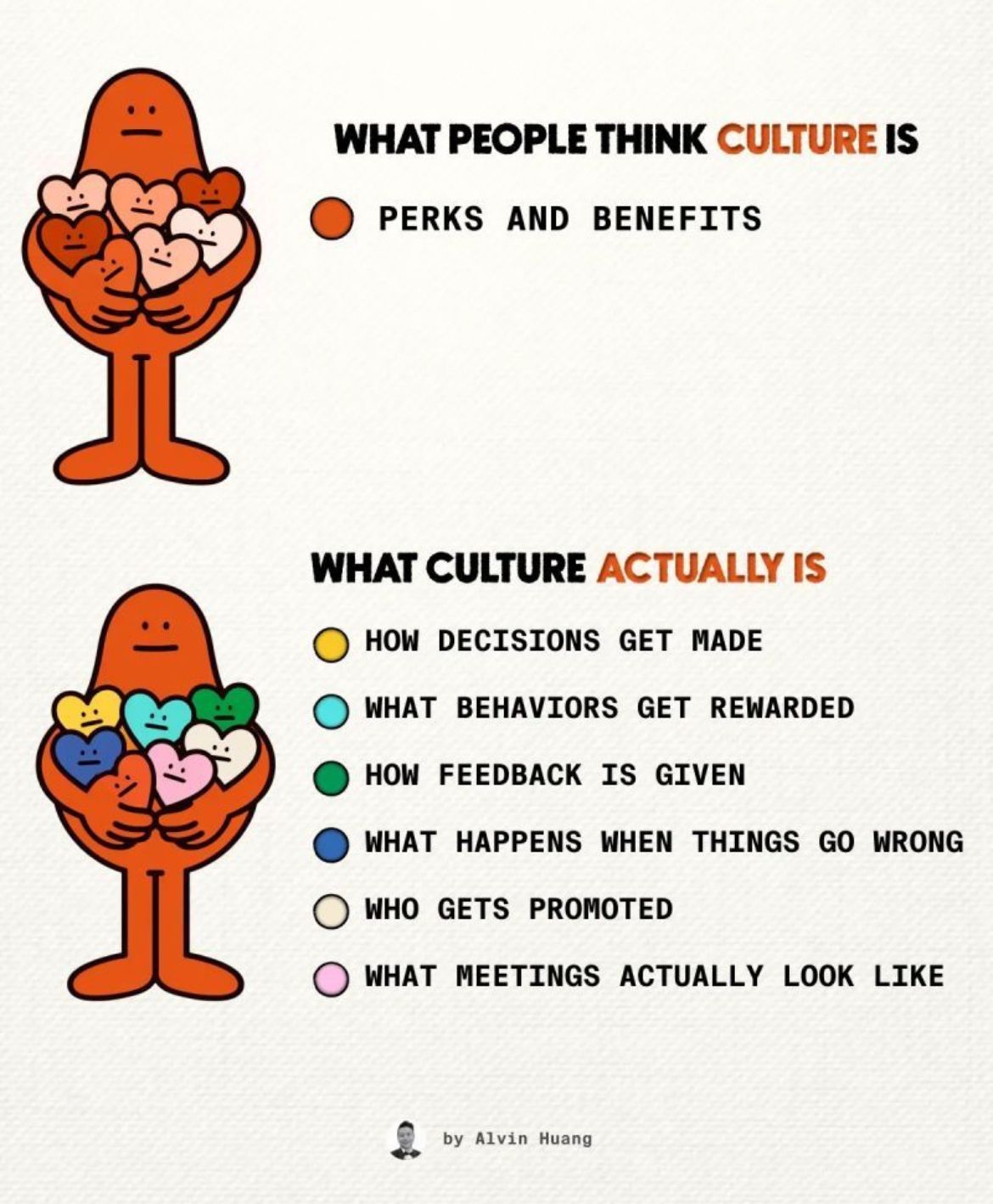
In a recent LinkedIn post, Elrona D’Souza 🎙️SHRM-SCP℠ challenges conventional thinking about organizational culture, arguing that it is fundamentally a matter of behavior rather than a mere employee benefit. D’Souza highlights the common disconnect between a company’s presented culture and the reality experienced by its employees on a daily basis.
D’Souza emphasizes that the true culture of an organization is revealed not in polished presentations or onboarding materials, but in how the company responds to critical, unplanned moments. She poses pointed questions to illustrate this: “When a project fails, who takes the blame? When someone speaks up, do they feel safe doing it again? When a top performer behaves badly, does anything actually change?”
The Duality of Organizational Culture
According to Elrona D’Souza 🎙️SHRM-SCP℠, every organization operates with two distinct cultures: the one it publicly promotes and the one that genuinely dictates operations. The presented culture, she explains, is often showcased on careers pages and in marketing materials. However, the real culture emerges during situations that are not scripted or anticipated.
D’Souza asserts that superficial perks cannot mask a dysfunctional underlying culture. “No amount of free lunches or flexible Fridays covers up a culture where people don’t feel heard, valued or safe,” she writes. This discrepancy, she notes, is quickly recognized by employees, often before leadership fully grasps the situation.
“The real one shows up in moments nobody planned for.”
The Birthplace of Employee Disengagement
Elrona D’Souza 🎙️SHRM-SCP℠ argues that the gap between a company’s stated cultural values and the lived experiences of its employees is the root cause of significant workplace issues. This disconnect, she explains, directly fuels problems such as retention challenges, quiet quitting, and widespread disengagement.
She further clarifies that culture is not simply an HR-driven initiative. Instead, D’Souza posits that it is the cumulative effect of all decisions, reactions, and conversations occurring within the organization at any given time. This perspective shifts the focus from policy creation to the consistent, day-to-day actions and responses that shape the employee experience.
“The gap between what a company says its culture is and what people actually feel day to day, that’s where retention problems, quiet quitting and disengagement are born.”
Self-Reflection for Leaders
To foster a healthier and more authentic workplace, D’Souza encourages leaders to engage in honest self-assessment. She prompts them with a critical question:
“Does the culture your people experience match the one you think you’ve built?”
This call to introspection, as highlighted by Elrona D’Souza 🎙️SHRM-SCP℠, is crucial for identifying and addressing the discrepancies that can undermine employee morale and organizational effectiveness. By focusing on the behavioral underpinnings of culture, businesses can move beyond superficial benefits to cultivate an environment where employees truly feel heard, valued, and safe.
📝 About This Content
This article is based on insights shared by Elrona D'Souza 🎙️SHRM-SCP℠ on LinkedIn.
📅 Originally posted on April 10, 2026 | View original post on LinkedIn →