
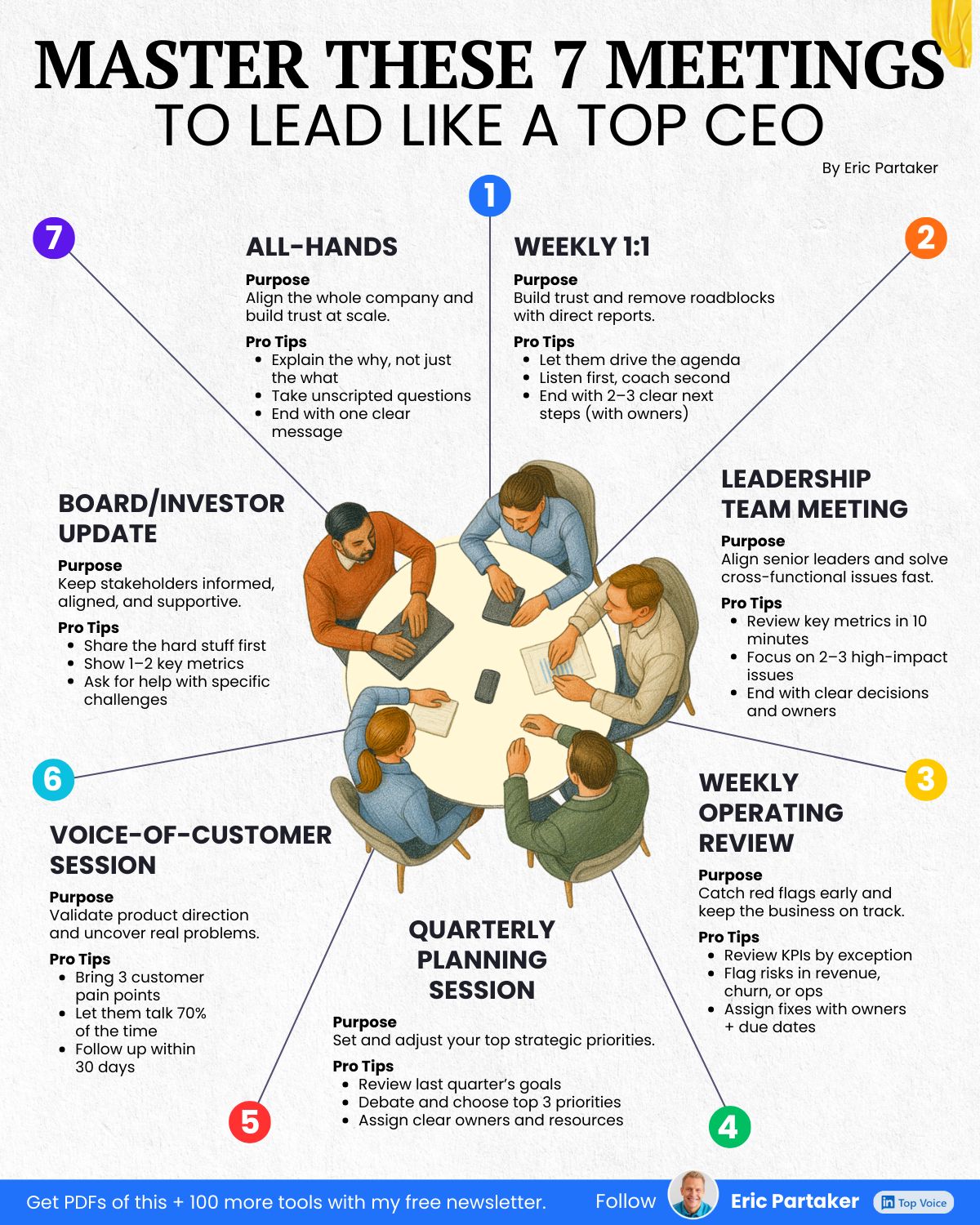
In a recent LinkedIn post, Eric Partaker tackles the pervasive issue of unproductive meetings, drawing on a Harvard report that indicates a staggering 71% of such gatherings are ineffective. Partaker emphasizes that truly effective leaders don’t necessarily run more meetings, but rather ensure the ones they do conduct are those that truly matter. The core objective, as outlined by Partaker, is to keep teams aligned, focused, and progressing rapidly without squandering valuable time.
The post provides a structured approach to optimizing various types of business meetings, aiming to drive tangible business outcomes. Partaker highlights that the key lies in intentionality and a clear purpose for each interaction.
“The best leaders don’t run more meetings. They run the ones that matter.”
According to Partaker, the goal of any well-run meeting should be to ensure teams remain aligned, focused, and moving at pace, all while respecting everyone’s time.
Optimizing Key Meeting Cadences
Partaker details several essential meeting types and offers specific guidance for their execution:
Weekly 1:1s
For one-on-one meetings, Partaker advises leaders to let the employee drive the agenda, prioritize listening over immediate coaching, and conclude with two to three clear, actionable next steps. This approach empowers individuals and ensures accountability.
Leadership Team Meetings
When it comes to leadership team gatherings, Partaker suggests a tight focus. The recommendation is to review key metrics within a brief 10-minute window and dedicate the remainder of the time to discussing two to three high-impact issues, culminating in clear decisions with assigned owners.
“Review key metrics in 10 minutes. Focus on 2–3 high-impact issues. End with clear decisions and owners.”
Weekly Operating Reviews
Partaker outlines that these reviews should focus on key performance indicators (KPIs) by exception, flagging potential risks in areas like revenue, churn, or operations. Crucially, fixes should be assigned with clear owners and due dates.
Quarterly Planning Sessions
For strategic planning, Partaker’s framework involves reviewing the previous quarter’s goals, debating and selecting the top three priorities for the upcoming quarter, and then assigning clear ownership and necessary resources.
Voice-of-Customer Sessions
Partaker emphasizes the importance of customer feedback, suggesting that leaders bring three real customer pain points to these sessions. He advocates for letting customers speak for 70% of the time and ensuring follow-up actions are taken within 30 days.
“Bring 3 real pain points. Let customers talk 70% of the time. Follow up within 30 days.”
Board or Investor Updates
For crucial updates to stakeholders, Partaker recommends transparency by sharing the challenging information first, highlighting one to two key metrics that truly matter, and explicitly asking for help with specific obstacles.
All-Hands Meetings
Partaker suggests that all-hands meetings should focus on explaining the ‘why’ behind initiatives, not just the ‘what.’ He also advocates for taking live, unscripted questions and concluding with a single, clear takeaway message.
Auditing and Streamlining Meeting Schedules
The underlying message from Partaker is that companies often have too many meetings. He encourages leaders to use his framework as a tool to audit their current meeting culture. The advice is direct: cut what isn’t working.
“Your team will thank you for their time back.”
Ultimately, Partaker argues that better meetings lead to faster decisions, sharper focus, and the generation of real momentum within an organization. By implementing a more strategic approach to meeting management, leaders can reclaim valuable time for their teams and foster a more productive work environment.
📝 About This Content
This article is based on insights shared by Eric Partaker on LinkedIn.
📅 Originally posted on January 26, 2026 | View original post on LinkedIn →