
In a recent LinkedIn post, Daniel Pink explores the evolving landscape of artificial intelligence and argues that the true competitive advantage in this new era lies not in faster answers, but in the ability to ask more profound questions.
Daniel Pink highlights the increasing capability of AI, stating:
“AI is becoming an answer machine. If your value depends on retrieval, you’re competing with something that retrieves faster, cheaper, and forever.”
This observation sets the stage for his central thesis: as AI excels at providing answers, the critical skill for humans will be formulating the right questions.
The Shift from Answering to Questioning
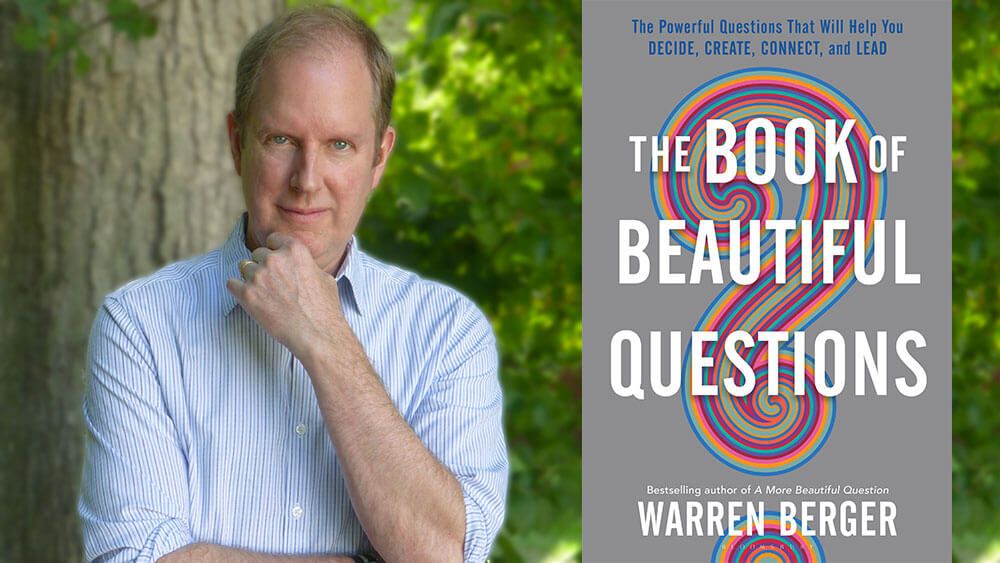
Daniel Pink posits that the smartest approach in an AI-driven world is to pause and critically examine our assumptions before proceeding. He elaborates on this by referencing Warren Berger’s definition of a “beautiful question” – one that is sharp, ambitious yet actionable, reframes problems, and leads to meaningful change.
According to Daniel Pink, achieving this high bar for questions is challenging but essential. He suggests that the “escape hatch” from competing solely on retrieval speed with AI is to focus on the “question side of the equation.” This means cultivating a mindset that prioritizes inquiry and critical thinking over mere information recall.
Three Essential Questions for the AI Age
To navigate this shift, Daniel Pink introduces three pivotal questions that individuals should integrate into their thinking process:
Question 1: Why do I believe what I believe?
Daniel Pink suggests that many of our beliefs are adopted rather than consciously chosen. This question encourages introspection, helping individuals identify the origins of their convictions—whether from family, peers, or societal defaults—and to retain only those that are truly their own. As Daniel Pink notes, this process “surfaces the inheritance and lets you keep what’s yours.”
Question 2: Would I rather be right, or would I rather understand?
This question, according to Daniel Pink, serves as a crucial differentiator between ego-driven certainty and growth-oriented curiosity. He argues that clinging to being right “closes the loop,” whereas prioritizing understanding “keeps it open,” fostering continuous learning and adaptability.
Question 3: What’s the question I’m not asking that I should be?
Daniel Pink emphasizes that while the obvious facets of a problem are often apparent, the truly impactful insights lie in the unasked questions. This question compels individuals to “widen the frame” and explore the less obvious, often more transformative, dimensions of a challenge.
The Future Belongs to the Inquisitive
Concluding his post, Daniel Pink reiterates that as AI models become more sophisticated, the importance of human questioning will only increase. He asserts:
“The people who win the AI era won’t be the ones with the fastest tools. They’ll be the ones who know what to point those tools at.”
Daniel Pink’s message is clear: cultivating the skill of asking better questions is fundamental to making better decisions and, ultimately, leading a better life in an increasingly AI-powered world. It is a skill that is both “simple” and “hard,” requiring conscious effort and practice.
📝 About This Content
This article is based on insights shared by Daniel Pink on LinkedIn.
📅 Originally posted on June 22, 2026 | View original post on LinkedIn →