
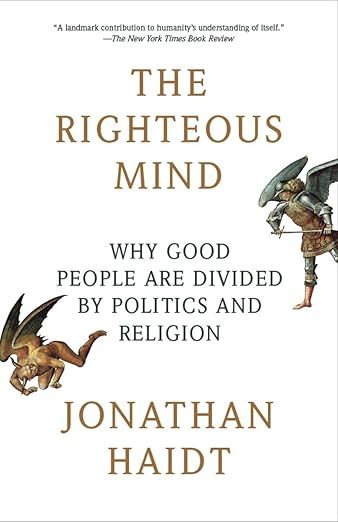
In a recent LinkedIn post, Daniel Pink delves into the complex nature of moral decision-making, challenging the conventional belief that logic always precedes emotion. Drawing insights from Jonathan Haidt’s book, *The Righteous Mind*, Pink argues that our initial reactions are primarily emotional, with reason often serving as a tool to defend pre-existing feelings rather than uncover objective truth.
Pink begins by dismantling the notion that moral choices are a careful weighing of pros and cons. Instead, he asserts that individuals often start with a visceral reaction or a gut feeling. This initial emotional response then shapes how reason is employed.
“We don’t start with logic. We start with emotion. A gut feeling. A visceral reaction. Then we call in reason not to explore truth, but to defend what we already believe.”
The Press Secretary, Not the Judge
To further illustrate this point, Daniel Pink employs a powerful analogy from Haidt’s work, likening the rational mind not to an impartial judge seeking truth, but to a press secretary tasked with promoting a specific narrative.
As Daniel Pink notes:
“Your rational mind isn’t a judge. It’s a press secretary. Its job isn’t to find the truth. It’s to spin the truth to match what you already feel.”
This perspective, according to Pink, helps explain why rational arguments often fail to sway deeply held beliefs. The mind, in this view, is more invested in maintaining consistency with its emotional state than in engaging in objective inquiry.
Understanding Diverse Moral Foundations
Beyond the mechanics of individual decision-making, Pink highlights Haidt’s revelation that morality is not monolithic. He points out that different individuals and groups prioritize various moral foundations, leading to fundamental disagreements that can be difficult to bridge.
Daniel Pink explains this divergence by stating:
“Nearly everyone values ‘do no harm.’ But not everyone values ‘respect authority’ or ‘protect purity.’ Some moral values are shared. Others divide us quietly but deeply.”
This disparity in moral priorities, Pink argues, is a key reason why communication breaks down, particularly in polarized environments. Discussions that appear to be about facts are, in reality, clashes rooted in differing emotional and moral frameworks.
The Emotional Core of Disagreement
Pink suggests that many interpersonal and political conflicts stem from this fundamental disconnect. When individuals engage in debates, they are often operating from distinct emotional starting points, making logical appeals insufficient.
“Because we’re arguing reason while standing on emotion,” Pink writes, summarizing the core issue. This insight, he believes, reshaped his own understanding of disagreement and improved his ability to listen to those with whom he differs.
The Lasting Impact of Moral Understanding
Concluding his post, Daniel Pink emphasizes the profound importance of understanding an individual’s moral landscape to truly comprehend their perspective. He reiterates that morality is a deep-seated, emotional aspect of human nature.
The takeaway, as Daniel Pink articulates, is clear: “If you want to understand people really understand them, start by understanding their morality. It’s older, deeper, and more emotional than we think.” This framework, Pink suggests, is essential for navigating disagreements and fostering more empathetic communication.
📝 About This Content
This article is based on insights shared by Daniel Pink on LinkedIn.
📅 Originally posted on February 3, 2026 | View original post on LinkedIn →