

Conscious leadership, as conceptualized by John Mackey and Raj Sisodia, is a management philosophy that prioritizes serving the needs of all business stakeholders, including customers, employees, suppliers, and the community, not just shareholders. It is a core pillar of their broader ‘Conscious Capitalism’ framework, which argues that business can be a source for good and long-term value creation.
Today’s business world is changing fast, and in 2025, it demands more than just quarterly profits. Leaders now see that long-term success comes from a company culture built on purpose and value for all stakeholders. Older leadership styles that focused only on shareholders are proving insufficient. They cannot meet today’s complex global challenges or the growing demand for ethical leadership. This shift is more than a trend—it redefines effective, impactful leadership for the modern era. As a result, executives must rethink their core beliefs and strategic outlooks.
In this changing environment, the concept of conscious leadership provides a path forward. This framework, from John Mackey and Raj Sisodia, offers a transformative blueprint. Their model goes beyond conventional management theories by blending a higher purpose, stakeholder focus, and self-aware leadership into daily operations. For executives, CEOs, and entrepreneurs who want to grow their companies and make a lasting impact, this is critical. Understanding this method is now a strategic imperative for managing market changes and fostering unparalleled organizational resilience.
This article summarizes the key ideas from Mackey and Sisodia’s groundbreaking work. It shows how their principles can help build exceptional, future-ready organizations. We will break down the core concepts of conscious leadership and explore how to use them. You will get actionable strategies to add this powerful model to your leadership style and corporate strategy. By looking at why many of today’s most influential leaders use this philosophy, we will show the strategic benefits it offers.
Why Are Today’s Leaders Turning to Conscious Leadership?
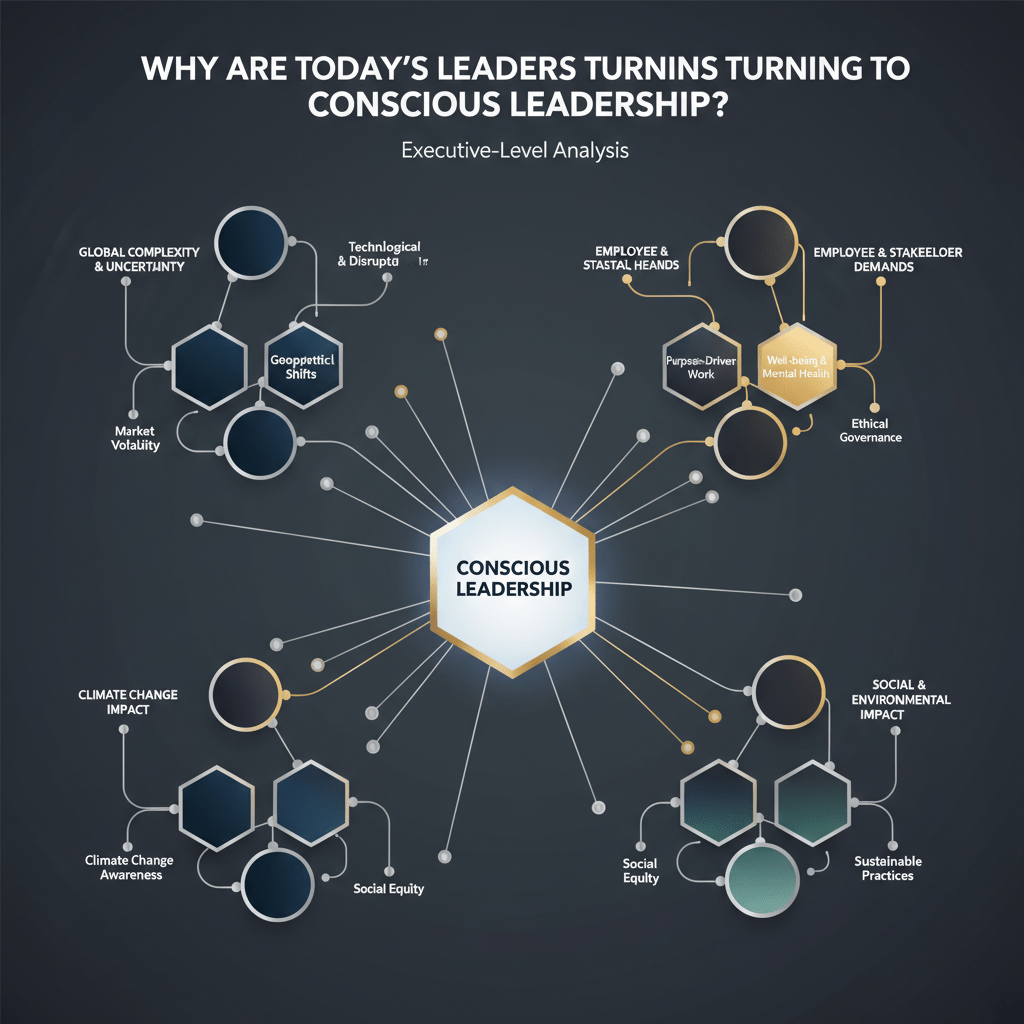
Moving Beyond Shareholder Primacy in the 2025 business landscape
The 2025 business landscape is changing, and so is the definition of corporate success. Leaders now realize that focusing only on short-term shareholder profits is a flawed strategy. It is unsustainable and can backfire. This shift is a response to new market demands and greater social expectations.
Top executives now understand that caring for all stakeholders creates more value in the long run. This view is shared in boardrooms across the globe. The old model, which put profits above all else, is being replaced by a view that connects business and society.
Key leaders like Jamie Dimon, CEO of JPMorgan Chase, have publicly supported this change. He and others signed the 2019 Business Roundtable statement, which called for companies to serve all stakeholders, not just shareholders [1]. This agreement shows a deep shift in business thinking. Research also shows that companies focusing on stakeholders often perform better financially over time [2].
Today’s leaders see several good reasons for this change:
- Enhanced Brand Reputation: Customers and employees prefer companies that are ethical and socially responsible.
- Attracting Top Talent: Skilled people want to work for companies with a clear purpose. Businesses with strong ESG (Environmental, Social, Governance) records often have more engaged and loyal employees [3].
- Increased Resilience: Companies with strong stakeholder relationships can handle crises better.
- Innovation and Growth: Focusing on society’s needs can lead to new market chances and fresh ideas.
- Reduced Regulatory Scrutiny: Taking action on social and environmental issues early can lower future risks.
This new strategy is not just about charity; it is a practical way to build lasting success. It recognizes that a company does well when its entire network—employees, customers, suppliers, and communities—also does well. For this reason, leaders are using frameworks like conscious leadership to guide them in this new, connected world.
The Genesis: Who are John Mackey and Raj Sisodia?
The move toward conscious leadership and stakeholder value is largely thanks to the early work of John Mackey and Raj Sisodia. Together, they created a strong framework for this new approach. Learning about their backgrounds helps explain their deep insights.
John Mackey is best known as the co-founder and former CEO of Whole Foods Market. Under his watch, Whole Foods grew from a single store in Austin, Texas, into a global seller of natural and organic foods. Mackey built the company on ideas different from the old shareholder-first model. He promoted a business where purpose, people, and the planet were just as important as profit [4]. His hands-on experience running a successful, purpose-driven company offers valuable lessons for leaders.
Raj Sisodia‘s work complements Mackey’s business experience. Sisodia is a respected professor and a co-founder of the Conscious Capitalism movement. He is a world-renowned expert and author. He is a professor of Global Business at Babson College and co-chairman of Conscious Capitalism Inc. [5]. His deep research on successful, purpose-driven companies provides the facts that support the Conscious Capitalism model.
Together, Mackey and Sisodia wrote the important book, “Conscious Capitalism: Liberating the Heroic Spirit of Business.” This work brings their ideas together. It gives leaders a full model for combining a higher purpose, a focus on stakeholders, a conscious culture, and conscious leadership. Their work is a blueprint for leaders who want to build businesses that create both profit and positive social impact in 2026 and beyond.
Their framework is now a must-read for leaders around the world. It offers practical ways to build trust, be transparent, and create lasting value. It also argues that business, when done consciously, can be a powerful force for good.
What is the Definition of Conscious Capitalism?
The Foundational Framework for Conscious Leadership
In 2025’s fast-changing business world, leaders see the need for a new approach. Conscious Capitalism is more than just an idea. It is a strong, practical guide. It offers a clear plan for building conscious leadership in any company.
This model comes from leaders like John Mackey and Raj Sisodia. They argue that business can be a powerful force for good. It takes a whole-picture view that combines many parts to create lasting value. Studies show that companies using this guide often do better than their competitors.
Key pillars define this foundational framework:
- Higher Purpose: Leaders must find and share a deep purpose for their company. This purpose goes beyond just making money.
- Stakeholder Integration: Success means creating value for everyone involved. This includes customers, employees, suppliers, communities, and investors.
- Conscious Culture: It is essential to build a culture of trust, openness, and responsibility. This helps individuals and teams thrive.
- Conscious Leadership: Leaders must live by these values themselves. Their honesty and vision motivate the whole company.
Top leaders around the world are using this approach more and more [6]. They know it builds strong, purpose-driven companies that are ready for the future.
Integrating Purpose and Profit: An Analytical View
A core idea of Conscious Capitalism is blending purpose with profit. This view questions the old idea that these two goals are at odds. In fact, modern leaders now see that they support each other.
Top companies show that a clear purpose is a powerful tool. It attracts great employees, builds strong customer loyalty, and sparks new ideas. Also, focusing on all stakeholders improves profits over the long run. This view is key for steady growth in 2026.
The strategic benefits of this approach are clear:
- Enhanced Brand Equity: Brands with a purpose connect with customers. They create stronger emotional ties and stand out from the competition.
- Talent Attraction & Retention: People want their work to have meaning. Companies with a strong purpose attract the best talent. This lowers the costs of hiring and training [7].
- Increased Innovation: A clear purpose sparks creative thinking. It helps teams focus on finding solutions that make a real difference.
- Improved Stakeholder Relationships: Valuing everyone involved builds trust and teamwork. This reduces risks and creates strong partnerships.
- Sustainable Financial Performance: Studies show that conscious businesses often get better financial results over time. Their focus on creating value for everyone pays off.
In the end, leaders who blend purpose and profit move their companies forward. They build businesses that make money and also make a positive impact on the world. This is the highest form of modern business strategy.
What are the 4 Principles of Conscious Capitalism?

Higher Purpose: Aligning Your Organization with a Mission
In today’s fast-paced business world, smart leaders know that success is about more than just profit. The first principle of Conscious Capitalism, Higher Purpose, lifts a company’s mission beyond just making money. It gives the company a core reason to exist that inspires and brings together everyone involved.
More leaders are sharing a strong vision for their companies. This purpose gives employees meaning and builds deep connections with customers. It goes beyond short-term goals to guide big decisions and new ideas. A clear purpose also acts as a moral guide, making sure business practices help society. This method builds brand loyalty and leads to long-term growth.
From an executive perspective, having a higher purpose offers clear strategic benefits:
- Enhanced Employee Engagement: Team members feel part of something bigger. This drives motivation and productivity, and it lowers turnover rates [8].
- Stronger Customer Loyalty: Customers today prefer brands that share their values. They want real connections, which leads to more sales and support.
- Innovation Catalyst: A common goal can spark new ideas. It pushes teams to find solutions that help both the business and its broader mission.
- Strategic Clarity: Hard choices become easier when you have a clear purpose. It acts as a filter for what projects to pursue.
Therefore, setting and living by a higher purpose is more than just the right thing to do. It is a key business advantage for companies that want long-term success in 2026 and beyond.
Stakeholder Integration: Creating Win-Win Scenarios for All
The old model of putting shareholders first is changing. The second principle, Stakeholder Integration, takes a wider view of business. It says that a business must create value for all connected groups. This includes customers, employees, suppliers, communities, and investors.
John Mackey and Raj Sisodia point out that a business needs a healthy ecosystem to thrive long-term. Ignoring any single group, like customers or employees, hurts the entire system. Good leaders see how these groups are connected. They create plans that benefit everyone, not just one part of the business.
This integrated view offers major benefits for leaders:
- Reduced Risk: Good relationships with all groups lower the chance of conflicts. This includes legal problems and damage to the company’s reputation.
- Increased Collaboration: When all groups see a shared benefit, they work together better. This creates strong partnerships with suppliers, distributors, and others.
- Enhanced Reputation: Companies known for treating everyone fairly build trust. This attracts top employees and loyal customers.
- Sustainable Growth: A balanced approach ensures the company acts responsibly. It focuses on long-term health, not short-term gains.
For example, a company that invests in its employees often gets more work done and spends less on hiring. Likewise, treating suppliers fairly leads to better quality and new ideas. This principle requires a new mindset. Leaders must shift from simple transactions to building true partnerships with everyone they work with.
Conscious Culture: Fostering Trust, Transparency, and Accountability
A great company is built on a strong culture. The third principle, Conscious Culture, is about the shared values and beliefs inside a company. It builds a workplace where trust, openness, and accountability are the most important things.
This culture is more than just a rulebook. It is the living example of the company’s purpose and its promise to all its stakeholders. Good leaders actively build this culture. They make people feel safe to share ideas and give helpful feedback. This creates a workplace where everyone feels valued and empowered.
Key parts of a strong conscious culture include:
- High Trust: Employees trust their leaders and each other. This leads to less conflict and better teamwork. Research shows high-trust companies perform better than their competitors [9].
- Radical Transparency: Information is shared freely and openly. This includes company finances, key decisions, and current challenges.
- Mutual Accountability: Everyone takes ownership of their work. The team shares a commitment to reaching its goals together.
- Care and Empathy: Leaders show real concern for their team. This support goes beyond work tasks to include personal growth.
For leaders, building a conscious culture is a direct investment in their people. It sparks new ideas, improves morale, and helps keep great employees. In the end, a strong culture becomes a key advantage for attracting and keeping the best talent.
Conscious Leadership: The Lynchpin of the Entire Model
The final and most important principle is Conscious Leadership. It shows that the other three ideas need strong and aware leaders to work. Conscious leaders are the ones who build, support, and champion a conscious company. They live the company’s purpose, unite all stakeholders, and build the culture.
Mackey and Sisodia say these leaders are very self-aware. They have high emotional intelligence and a strong commitment to doing the right thing. They lead by serving others, not by gaining power for themselves. Their vision goes beyond quarterly profits to making a positive impact on society.
Effective conscious leadership shows up in several key ways:
- Visionary Thinking: They share a clear and exciting vision for the future. This inspires teams to work toward big goals.
- Courage and Resilience: They are ready to make tough choices. They stand by their values, even in hard times.
- Authenticity and Integrity: Their actions match their words. This builds deep trust and makes them credible to all stakeholders.
- Systems Thinking: They understand how all parts of the business connect. They manage complex issues by looking at the whole system.
For leaders, becoming a conscious leader is a personal journey. It requires constant self-reflection and a desire to grow. But the reward is huge: a fully engaged team, loyal customers, and a business ready for long-term success and a positive impact in the world of 2026.
What are the Characteristics of Conscious Leadership as Defined by Mackey and Sisodia?
Embodying Integrity and Emotional Intelligence (EQ)
According to John Mackey and Raj Sisodia, conscious leadership is more than just business strategy. It requires a deep commitment to personal integrity and strong emotional intelligence (EQ). This means you must lead with honesty and ensure your actions match your words. Leaders know that integrity is the foundation of trust with their teams, customers, and partners [10].
A leader with high EQ understands the emotions in their organization. They can manage their own feelings well. They also use empathy to connect with others. This skill is key to solving tough problems and creating a positive work environment.
Strategic takeaways for executives looking to embody these traits:
- Cultivate Self-Awareness: Regularly think about your own biases, strengths, and weaknesses. Knowing how you affect others is key.
- Practice Transparency: Share information openly and honestly. This builds trust and makes things clearer.
- Develop Empathy: Actively listen to your team and others. Try to understand different views before you make a decision.
- Lead by Example: Your actions set the standard for how to act. Keep your promises and admit when you are wrong.
Systems Thinking: A Holistic Approach to Business Challenges
Conscious leaders see their companies as complex systems, not as separate parts. These systems are connected to the world around them. This systems thinking approach is a key part of the Mackey and Sisodia model. It looks beyond individual departments to see the big picture. It focuses on how everything works together, including customers, employees, suppliers, and the community.
In the fast-changing business world of 2025, understanding these connections is vital. It helps leaders find the true cause of problems. They can also better predict the results of their decisions. This broad view avoids short-term fixes that fail in the long run.
To integrate systems thinking into your leadership:
- Map Interdependencies: Learn how your business affects everyone involved. Think about both direct and indirect effects.
- Foster Cross-Functional Collaboration: Break down internal barriers. Encourage teams to work together across departments.
- Analyze Long-Term Impacts: Look at decisions for more than just short-term wins. Think about how they will affect things later on.
- Embrace Complexity: Accept that business problems are often complex. Choose flexible strategies instead of strict plans.
Driving Long-Term Value Through Vision and Courage
The final key trait of conscious leadership is a powerful mix of vision and courage. These leaders have an inspiring, higher purpose for their company. This vision is about more than just making a profit. They describe an exciting future that motivates everyone.
Most importantly, they need courage to act on their vision. This often means making hard choices. They may choose to do the right thing instead of focusing on short-term profits. This bold style is different from leaders who often give in to quarterly pressures. This approach is key in 2026 for building strong, lasting companies.
Executives can cultivate this visionary courage by:
- Define a Higher Purpose: Clearly explain “why” your company exists. Make sure your team connects with this purpose.
- Communicate the Vision Relentlessly: Get your whole company excited about a shared future. Make it real and exciting.
- Champion Bold Initiatives: Be ready to take smart risks for long-term rewards. This might mean trying new green practices or technologies.
- Stand Firm on Values: Show you are serious about sticking to your principles. Do this even when it is hard or you face pressure.
How Does Conscious Capitalism Apply at Whole Foods?
Case Study: Mackey’s Philosophy in Action
Whole Foods Market is a great example of Conscious Capitalism in practice. Co-founder John Mackey’s vision was about more than just making money. He built a global company on a foundation of clear values. His approach shows how a business can succeed by focusing on everyone involved.
Higher Purpose: Nourishing People and Planet
- The stated purpose of Whole Foods is “to nourish people and the planet.” This is more than just selling groceries [11].
- Every major decision supports this mission. It guides product choices and even store design.
- This clear purpose connected with customers. It built loyalty and trust in a crowded market.
Stakeholder Integration: A Web of Mutual Benefit
Mackey focused on a model that served everyone. This meant a strong commitment to many different groups.
- Team Members: Whole Foods offered great benefits, including good wages and healthcare. They built a culture where employees felt empowered and shared in the company’s success [12].
- Customers: The company sold high-quality natural and organic products. Being open about where food came from made them stand out.
- Suppliers: Whole Foods formed strong, fair relationships with its suppliers. They often supported small, local farmers. This created a dependable supply chain and helped the community.
- Communities: The company gave back through local food programs and other initiatives. This improved their reputation and built goodwill.
- Investors: By creating value for everyone, Whole Foods delivered great returns. This proved that a conscious business can also be very profitable.
Conscious Culture: Trust, Transparency, and Empowerment
The company’s internal culture matched its core values. It was built on trust and giving teams more control.
- Teams had the power to make their own decisions. This gave them a sense of ownership and responsibility.
- The company shared financial information openly. This helped employees understand how the business was doing.
- This culture attracted and kept great employees. It built a strong, united team.
Conscious Leadership: Mackey’s Guiding Principles
John Mackey’s leadership was a key driving force. He showed integrity and had a long-term vision. He always put the company’s purpose before short-term profits. His courage in questioning common business practices set a new standard for the industry.
Key Takeaways for C-Suite Executives
The story of Whole Foods has important lessons for leaders today. Executives can use these ideas in their own companies. This approach can lead to lasting growth and make organizations stronger for 2026 and beyond.
- Articulate a Higher Purpose: Define why your company exists, beyond just making money. Share this purpose clearly with everyone. It will inspire your team and connect with your customers.
- Cultivate Comprehensive Stakeholder Value: Move beyond focusing only on shareholders. Know who your key stakeholders are. Create strategies where everyone wins. This builds strong relationships and long-term loyalty.
- Invest in Your People: Empower your team. Build a culture of trust and openness. Offer chances to grow and share in success. Engaged employees are a powerful advantage [13].
- Lead with Integrity and Vision: Your leadership sets the example. Be courageous in your decisions. Make ethical practices a priority. Inspire everyone with a clear vision for the future.
- Measure Beyond Financials: Track your impact on everyone involved. This includes employee happiness, customer loyalty, and community support. These numbers give you a complete picture of your company’s health.
Beyond Whole Foods: Analyzing Other Conscious Capitalism Companies
Whole Foods is not the only success story. Many companies show the power of Conscious Capitalism. These businesses prove that this model works in many industries. They confirm that a company can have a purpose and still be profitable.
When we look at these examples, we see a pattern. They all have a higher purpose. They serve the interests of all their stakeholders. They build strong, ethical cultures. And they are guided by conscious leaders.
- Patagonia: This outdoor clothing company is a leader in environmental care. Its mission is “to build the best product, cause no unnecessary harm, use business to inspire and implement solutions to the environmental crisis” [14]. Patagonia focuses on sustainability in everything it does. They also repair products and support environmental laws.
- The Container Store: This retailer is known for its great culture focused on employees. Their belief is that “1 Great Person = 3 Good People.” This leads to higher pay and more training. Their happy employees provide excellent customer service and drive strong profits.
- Southwest Airlines: This airline is always ranked high for customer and employee happiness. Its culture is fun, respectful, and feels like a family. They put employees first, which leads to great service and smooth operations.
- REI: As a co-op, REI is owned by its customers. Its purpose is focused on outdoor fun and protecting the environment. They invest in conservation and help people get outdoors. Their model benefits members, employees, and their communities.
These different companies show that Conscious Capitalism is not a niche strategy. It is a strong framework for creating long-term value. Leaders in 2025 and 2026 can use these ideas. They can build businesses that truly help society while also being financially successful.
Implementing the Mackey and Sisodia Framework: A Strategic Roadmap for 2026

Assessing Your Current Leadership Style and Organizational Culture
Using the Mackey and Sisodia framework for 2026 starts with an honest self-assessment. Good leaders know that real change starts from within. This step looks at how well your organization follows conscious principles. It checks your current leadership habits and core cultural values.
1. Evaluate Your Leadership Blueprint
Successful conscious leaders have one thing in common: they know their impact. Start by checking your leadership style against the five key traits of a conscious leader. These include integrity, emotional intelligence, systems thinking, vision, and courage [15].
- Integrity and Authenticity: Do your actions match your words? Leaders like Patagonia’s Yvon Chouinard show this strong commitment.
- Emotional Intelligence (EQ): How well do you manage your emotions and understand others? High EQ builds trust and teamwork.
- Systems Thinking: Do you see your business as a connected system and consider all ripple effects? This big-picture view stops departments from working in isolation.
- Visionary Leadership: Is your company’s purpose clear and inspiring? A strong vision is about more than just making money.
- Courage to Act: Are you brave enough to make tough choices for long-term value, not just short-term profit? This is what makes a leader truly great.
2. Audit Your Organizational Culture
A conscious culture is the foundation for long-term success. It promotes trust, transparency, and accountability. A full cultural audit in 2026 can show you where to improve.
- Purpose Alignment: Do employees understand and believe in the company’s main purpose? Engagement surveys can give you important answers.
- Stakeholder Consideration: How well do you create value for everyone involved—employees, customers, suppliers, communities, and the environment? Review how you currently work with each group.
- Trust and Psychological Safety: Do people feel safe to share ideas and concerns without fear? This is key for new ideas and teamwork.
- Transparency and Communication: Are important decisions and results shared openly? Top conscious companies encourage open talks.
- Accountability Structures: Are people held accountable for their results *and* their impact on company values? You should reward ethical behavior.
Use anonymous surveys, leader interviews, and focus groups to get a complete picture. This detailed view shows any gaps between what you say you value and what people actually experience.
Actionable Steps for Cultivating a Conscious Business Model
Using the Mackey and Sisodia framework is a step-by-step process. It needs leaders to be committed and everyone to get involved. Here are practical steps for 2026, based on what the best conscious leaders do worldwide.
- Define and Communicate Your Higher Purpose:
- Clarify “Why”: Work with your leadership team to define an inspiring purpose beyond just profit. This purpose should guide you and connect with everyone involved. For example, Seventh Generation’s purpose is to protect the planet for the future [16].
- Embed Universally: Put this purpose everywhere. Add it to your mission, brand, and 2026 plans. Make sure it guides every big decision.
- Integrate Stakeholder Value Creation:
- Map Stakeholder Needs: Identify all your key groups. Understand what they need, want, and struggle with.
- Design Win-Win Strategies: Create plans that help everyone. These should create value for each group. For instance, fair trade helps both suppliers and customers.
- Foster Dialogue: Talk with your stakeholders regularly. Listen to their feedback and use it to improve.
- Nurture a Conscious Culture:
- Lead by Example: Senior leaders must live by these principles every day. Their actions set the tone for the whole company.
- Empower Employees: Let your teams make decisions when it makes sense. Encourage freedom and new ideas, and trust your teams to make choices that align with your purpose.
- Invest in Development: Offer training on topics like emotional intelligence, ethical choices, and systems thinking. This helps build a more conscious culture.
- Celebrate Values: Reward people for actions that match your values. Publicly praise employees who act consciously.
- Develop Conscious Leadership Capabilities:
- Mentorship Programs: Pair new leaders with experienced ones in your company. This helps pass on practical knowledge.
- Ongoing Education: Invest in workshops on advanced leadership skills, ethics, and social impact.
- Feedback Loops: Use 360-degree feedback systems. This checks how well leaders follow conscious principles, not just their results.
- Ensure Ethical Governance and Transparency:
- Robust Policies: Create clear ethical rules and guidelines. These protect your company’s integrity and build trust.
- Open Communication: Be as open as possible about finances, challenges, and strategy. This builds employee trust and alignment.
Measuring Success: Metrics Beyond the Bottom Line
In 2026, focusing only on financial results is not enough. Conscious leaders measure success in many ways. They know that companies with a clear purpose do better over time [17]. To truly measure your impact, you need to track more than one thing.
1. Stakeholder-Centric Performance Indicators
Top companies track results for all stakeholder groups. These measures go beyond just money.
- Employee Well-being and Engagement:
- Engagement Scores: Regularly check employee happiness, motivation, and connection to the company’s purpose.
- Turnover Rates: Track how many employees leave, especially top performers.
- Diversity, Equity, and Inclusion (DEI) Metrics: Check for fair representation and opportunities in your workforce.
- Training and Development Investment: Track spending on employee growth and training.
- Customer Loyalty and Advocacy:
- Net Promoter Score (NPS): Measure if customers would recommend you to others.
- Customer Lifetime Value (CLV): Measure the long-term value of a customer relationship.
- Complaint Resolution Rates: Track how well and how quickly you solve customer problems.
- Supplier Relationships:
- Supplier Satisfaction Scores: Regularly survey key suppliers about fairness, partnership, and payment.
- Ethical Sourcing Compliance: Check if suppliers are following your ethical and sustainable rules.
- Community and Environmental Impact:
- Carbon Footprint Reduction: Measure your progress in reducing your environmental impact.
- Community Investment: Track donations, volunteer hours, and your local economic impact.
- Waste Reduction and Recycling Rates: Measure how much you reduce waste and recycle.
2. Integrating Financial and Non-Financial Metrics
The goal is to see the connection. How does helping stakeholders improve your finances?
Example Metrics Framework for 2026:
| Principle Focus | Key Performance Indicators (KPIs) | Impact on Business Outcomes |
|---|---|---|
| Higher Purpose | Employee Purpose Alignment Score, Brand Reputation Index | Increased innovation, stronger talent attraction, enhanced brand equity |
| Stakeholder Integration | NPS, Employee Retention Rate, Supplier Trust Index, Community Investment ROI | Higher revenue, reduced operating costs, greater market share, stronger resilience |
| Conscious Culture | Psychological Safety Score, DEI Metrics, Internal Collaboration Index | Improved decision-making, faster problem-solving, reduced absenteeism, better team performance |
| Conscious Leadership | 360 Leadership Effectiveness Scores, Succession Planning Readiness, Ethical Incident Rate | Enhanced organizational stability, stronger ethical foundation, effective talent development |
By using these metrics, leaders can show the value of being a conscious business. This data-driven plan supports the Mackey and Sisodia framework. It helps ensure long-term growth and a positive impact for 2026 and beyond. A complete scorecard keeps you accountable and tells a powerful story about the value you create.
Frequently Asked Questions
What is a summary of the ‘Conscious Capitalism’ book?
The book ‘Conscious Capitalism: Liberating the Heroic Spirit of Business’ by John Mackey and Raj Sisodia offers a new view on business leadership. It argues that capitalism can be a strong force for good if it is practiced consciously. This model looks beyond just making a profit. It supports an approach that benefits everyone involved, not just shareholders.
Mackey and Sisodia state that businesses do best when they have a Higher Purpose beyond just making money. This purpose guides the company and helps it attract and keep talented people. They also stress the need for Stakeholder Integration. This means a company must create value for customers, employees, suppliers, communities, and investors all at once. This builds strong relationships that help everyone.
A Conscious Culture is also very important. Such a culture builds trust, openness, and responsibility in the company. It gives employees more power and encourages new ideas. Finally, Conscious Leadership is the foundation of this model. These leaders show great integrity, emotional intelligence, and a big-picture view. They inspire and guide their teams toward shared goals. This creates lasting value for society as a whole [source: https://www.consciouscapitalism.org/resources/the-book].
For leaders in 2025, using these principles offers a real advantage. It can improve a company’s reputation, increase employee involvement, and support steady growth.
How is conscious leadership different from servant leadership?
Both Conscious Leadership and Servant Leadership care about the well-being of others. However, their main goals and overall reach are very different. Knowing these differences is key to choosing the best leadership style for your company in 2026.
Servant Leadership was made popular by Robert K. Greenleaf. It mainly focuses on helping the leader’s team and community grow and be well. The leader’s first role is to serve, aiming to give power to the people they lead and help them develop [source: https://www.greenleaf.org/what-is-servant-leadership/]. This method builds strong, loyal teams.
Conscious Leadership, as described by Mackey and Sisodia, takes a much wider view. It weaves the four principles of Conscious Capitalism into how a leader acts and thinks. It is not just about serving employees. It is about balancing the needs of all stakeholders—customers, suppliers, investors, and the environment—while following a higher purpose.
Here’s a comparison of their key differences:
| Aspect | Conscious Leadership | Servant Leadership |
|---|---|---|
| Primary Focus | Creating value for everyone involved (the whole system). | Helping and giving power to employees and teams. |
| Scope of Impact | Company culture, business plans, and impact on society. | Team growth, employee happiness, and serving the community. |
| Key Attributes | Big-picture thinking, business drive, honesty, emotional intelligence, focus on a higher purpose. | Empathy, listening, helping, awareness, persuasion, taking care of others. |
| Decision-Making Lens | Creating lasting value for the whole business network. | How it affects personal growth and team unity. |
In the end, Conscious Leadership includes the caring and growth-focused parts of servant leadership but puts them into a bigger picture. It creates a lasting business edge by finding solutions that benefit everyone involved.
What are some prominent Conscious Capitalism companies besides Whole Foods?
Besides Whole Foods Market, many top companies are great examples of Conscious Capitalism. These companies show that focusing on a purpose and on all stakeholders leads to great business success. Their success gives practical ideas to leaders who want to change their own companies.
Here are a few well-known examples:
- Patagonia: This outdoor clothing company is famous for its dedication to protecting the environment and using fair labor. Patagonia donates part of its sales to environmental groups and strongly supports using sustainable materials. They show a clear Higher Purpose beyond profit, which connects well with both customers and employees [source: https://www.patagonia.com/our-purpose/].
- Costco Wholesale: Costco puts its employees and customers first by offering good pay, great benefits, and high-quality products at low prices. This commitment to Stakeholder Integration builds amazing employee loyalty and happy customers. It proves that taking care of people leads to strong financial results [source: https://www.forbes.com/sites/erikpetersen/2023/11/08/costcos-culture-of-conscious-capitalism/].
- The Container Store: This store creates a Conscious Culture by focusing on its employees. It provides a lot of training, high pay, and follows the belief that “1 Great Person = 3 Good People.” This investment in its people leads directly to better customer service and a very involved team [source: https://www.thecontainerstore.com/careers/culture].
- Trader Joe’s: Known for its special culture, employee benefits, and focus on giving customers value with new products. Trader Joe’s is a great example of Conscious Culture and Stakeholder Integration. This helps it build a strong, unique brand and a loyal group of customers. Their focus on a fun, supportive work environment directly helps their business succeed [source: https://www.traderjoes.com/home/careers/benefits].
These companies show that using conscious principles is not just about charity. It is a smart business plan for lasting success in today’s fast-changing market.
Sources
- https://www.businessroundtable.org/business-roundtable-redefines-the-purpose-of-a-corporation-to-promote-an-economy-that-serves-all-americans
- https://hbr.org/2022/10/the-business-case-for-stakeholder-capitalism
- https://www.pwc.com/gx/en/issues/esg/esg-survey-findings.html
- https://www.consciouscapitalism.org/john-mackey
- https://www.consciouscapitalism.org/raj-sisodia
- https://www.consciouscapitalism.org/resources/research
- https://hbr.org/2021/07/does-your-company-have-a-purpose
- https://hbr.org/2018/09/the-business-case-for-purpose
- https://www.greatplacetowork.com/resources/blog/trust-index-score-and-why-it-matters
- https://hbr.org/2021/01/the-new-rules-of-leadership
- https://www.wholefoodsmarket.com/values-and-impact
- https://www.consciouscapitalism.org/articles/conscious-leadership-lessons-from-john-mackey
- https://hbr.org/2016/09/the-neuroscience-of-trust
- https://www.patagonia.com/our-purpose/
- https://www.consciouscapitalism.org/conscious-leadership
- https://www.seventhgeneration.com/our-purpose
- https://hbr.org/2015/09/the-business-case-for-purpose