
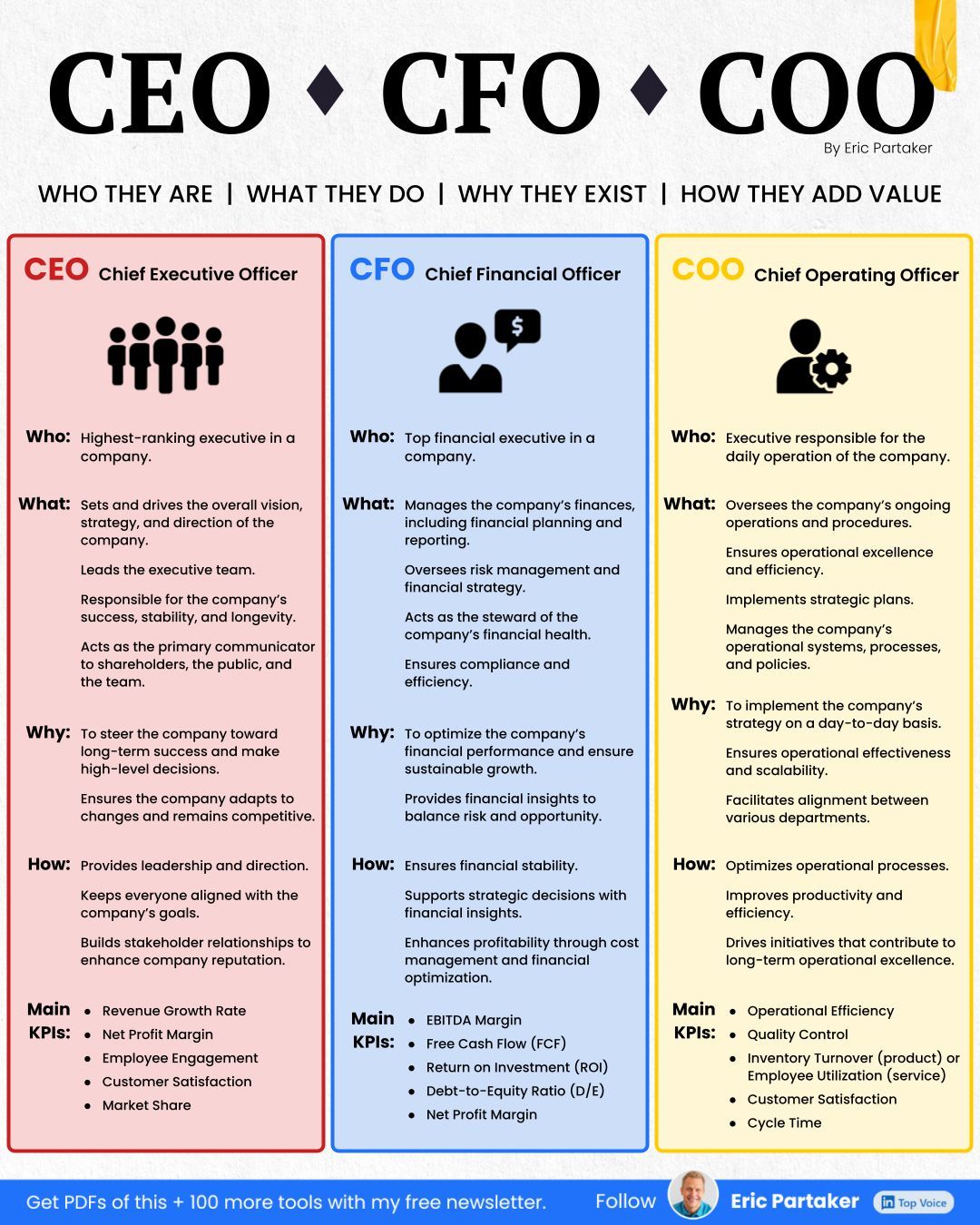
In a recent LinkedIn post, Eric Partaker delves into the fundamental responsibilities and significance of three pivotal C-suite roles: CEO, CFO, and COO. The post aims to demystify these positions for a broad audience, from those aspiring to leadership roles to seasoned executives and individuals simply seeking to understand corporate structures.
Understanding the Core Functions
Partaker begins by outlining the essential focus areas for each role. He succinctly defines the CEO’s domain as encompassing vision, strategy, and leadership. The CFO’s responsibilities are centered on finance, stability, and stewardship, while the COO is tasked with operations, efficiency, and execution. This foundational breakdown serves as a primer for anyone navigating the complexities of business leadership.
“CEO: Vision. Strategy. Leadership. CFO: Finance. Stability. Stewardship. COO: Operations. Efficiency. Execution.”
Why C-Suite Comprehension Matters
The core of Partaker’s message emphasizes the practical benefits of understanding these executive functions. He argues that a clear grasp of who leads the vision, manages finances, and oversees day-to-day operations is crucial for professional growth and effective collaboration.
According to Partaker, understanding these roles can:
- Clarify your career path
- Strengthen your collaboration efforts
- Help you gain necessary buy-in and support
These benefits, he suggests, are valuable regardless of one’s current position, whether they are climbing the corporate ladder, already in a leadership capacity, or simply seeking to comprehend how companies operate.
Beyond Management: Shaping Culture and Driving Innovation
Partaker extends the importance of these roles beyond mere business management. He highlights their profound impact on the broader organizational landscape, stating that these positions do more than just run a business.
“They shape culture. Drive innovation. Set the tone for everything.”
In Partaker’s view, the influence of the CEO, CFO, and COO permeates the entire organization, affecting its internal dynamics, creative output, and overall ethos. This perspective underscores the strategic importance of these leadership functions.
Encouraging Engagement and Further Learning
The post concludes with a call to action, encouraging readers to save the information for future reference, repost it to assist others, and engage with the content. Partaker also invites discussion, asking followers what they believe is missing from his analysis and which other roles are pivotal.
He further offers a complimentary PDF, a “CEO/CFO/COO Cheat Sheet” along with over 100 other leadership resources, accessible via a provided link. This initiative aims to provide tangible value and support for individuals on their leadership journeys.
As Eric Partaker notes, understanding these key positions is invaluable, particularly as individuals may find themselves in such seats in the future. His post serves as a clear and concise guide to the foundational elements of the C-suite.
📝 About This Content
This article is based on insights shared by Eric Partaker on LinkedIn.
📅 Originally posted on February 19, 2026 | View original post on LinkedIn →