
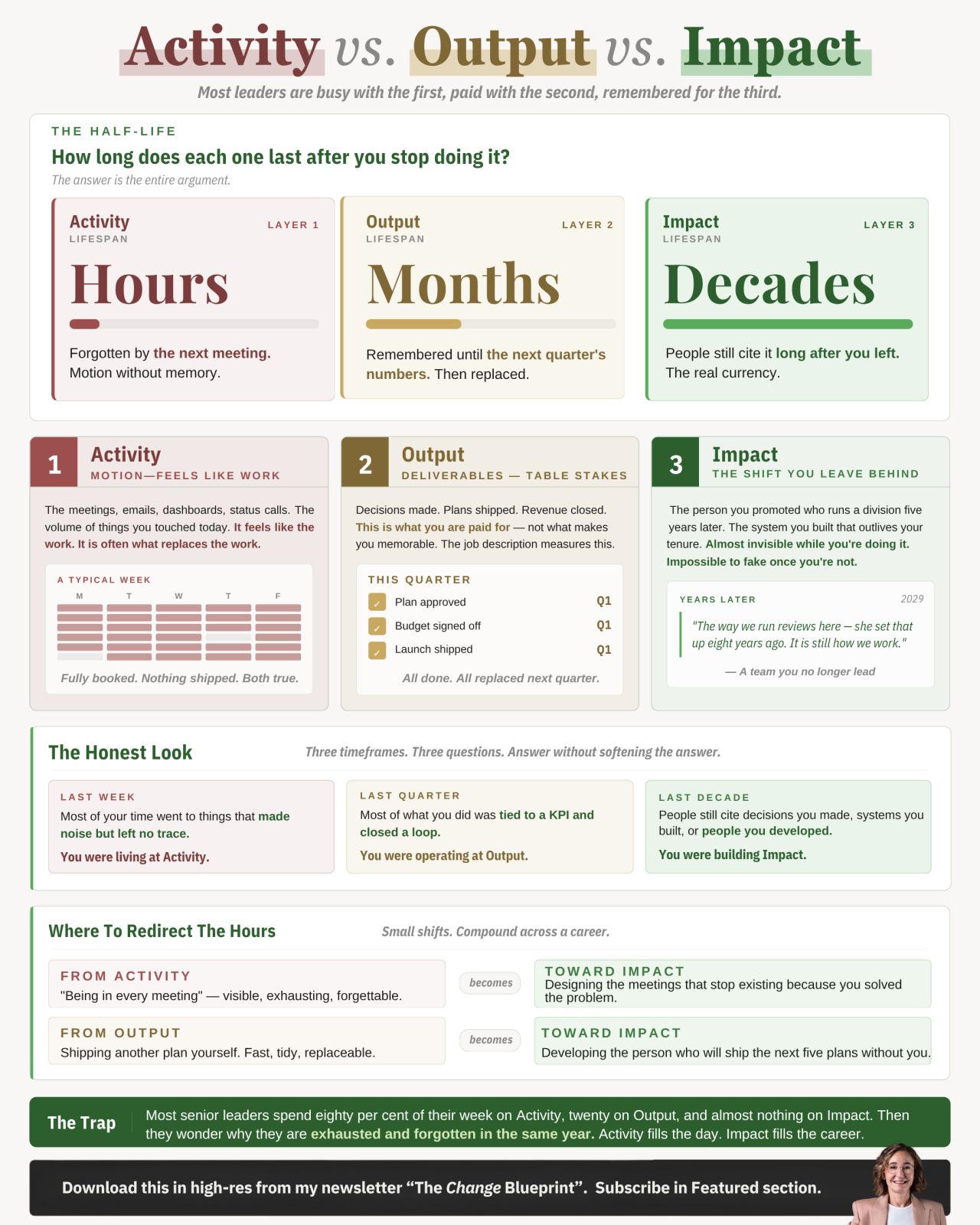
In a recent LinkedIn post, Ani Filipova distinguishes between being busy, being effective, and ultimately, being remembered in the professional sphere. Filipova argues that many professionals become trapped in a cycle of mere activity, mistaking it for true effectiveness, which in turn hinders their ability to create lasting impact.
Filipova highlights the common pitfalls of modern work, stating:
“Most professionals spend their week buried in ACTIVITY. Meetings. Emails. Dashboards. Calls that fill the calendar. Updates that feel urgent by default.”
The post elaborates that this constant engagement, while feeling productive, often replaces the actual work that drives significant results. This focus on activity leads to output – completed budgets, signed-off decisions, or targets met – which Filipova contends is transactional and easily replaceable.
The Crucial Difference Between Output and Impact
The core of Filipova’s message lies in differentiating output from impact. While output might satisfy immediate demands and secure compensation, it rarely contributes to long-term career significance. Impact, on the other hand, signifies a lasting contribution that transcends one’s tenure.
Filipova defines impact with powerful examples:
“Impact is the person you promoted who is running a division five years later. It is the system you built that still works after you have left. It is the decision-making standard the team still uses long after you left.”
According to Filipova, the typical professional dedicates a disproportionate amount of time to activity and output, leaving little to no time for impact. This imbalance, she suggests, leads to feelings of exhaustion and invisibility.
Shifting Towards Lasting Career Value
Filipova proposes a subtle yet profound shift in professional focus. Instead of solely concentrating on immediate tasks and quarterly deliverables, she advocates for investing time in developing others and building sustainable systems.
The Path to Career Optionality
The key, as Filipova outlines, is intentionality. She suggests that choosing, even just once or twice a week, to empower a colleague to handle future responsibilities, rather than repeating the same tasks oneself, is a critical step.
“The shift is not dramatic. It is choosing, once or twice a week, to develop the person who will do the next five quarterly plans without you, rather than you doing this one yourself again.”
This strategic redirection of effort, Filipova argues, not only fosters greater impact but also creates more choice and optionality in one’s career. This allows individuals to pursue different opportunities and redesign their professional lives. To help professionals identify where this choice could originate, Filipova offers a ‘Career Optionality Quiz’.
📝 About This Content
This article is based on insights shared by Ani Filipova on LinkedIn.
📅 Originally posted on July 7, 2026 | View original post on LinkedIn →