
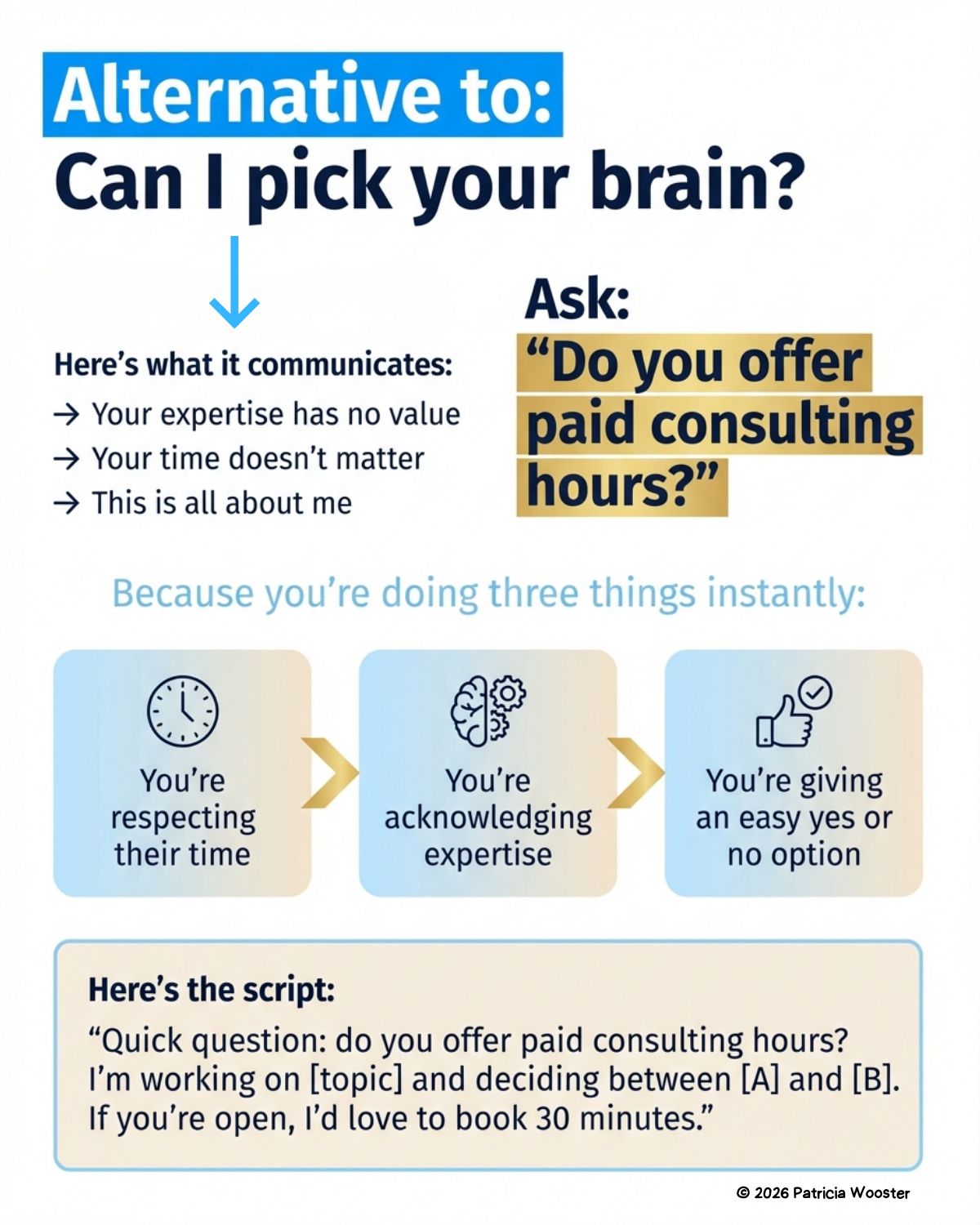
In a recent LinkedIn post, Patricia Wooster addresses a common networking phrase, arguing that the casual request to “pick your brain” is detrimental and should be removed from professional vocabulary. Wooster asserts that this seemingly innocuous ask often communicates a lack of respect for the expert’s time and value.
Wooster begins by dissecting the underlying messages conveyed by the phrase “Can I pick your brain?” According to the post, this wording can inadvertently signal that the requester views the expert’s knowledge as having no inherent value, that their time is unimportant, and that the request is entirely self-serving.
“Can I pick your brain?”
Remove it from your vocabulary.
Here’s what it communicates:
→ Your expertise has no value
→ Your time doesn’t matter
→ This is all about me
The Problem with ‘Brain Picking’
Patricia Wooster highlights that while the act of asking to “pick someone’s brain” has become normalized, it carries significant negative implications. In her view, this normalization masks the disrespect inherent in the request, making it a pervasive, yet problematic, aspect of professional networking.
Wooster argues that this approach fails to acknowledge the expertise of the person being asked. Instead of valuing their knowledge and experience, it positions them as a passive resource to be extracted from, with little regard for their own commitments or the effort involved in sharing insights.
A More Respectful Alternative: Paid Consulting
To counter the shortcomings of the “pick your brain” method, Wooster proposes a more direct and respectful alternative: inquiring about paid consulting hours. This approach, she explains, immediately sets a different tone and establishes clear expectations.
As Wooster outlines, asking about paid consulting does three crucial things:
- It respects the expert’s time.
- It acknowledges their expertise.
- It provides an easy way for them to accept or decline.
Wooster suggests a specific script to facilitate this more professional exchange:
“Do you offer paid consulting hours?”
Because you’re doing three things instantly:
✅ You’re respecting their time
✅ You’re acknowledging expertise
✅ You’re giving an easy yes or no option
Crafting an Effective Request
Further refining the process, Patricia Wooster provides a step-by-step guide to making the ask even smoother. She recommends clearly stating the problem the requester is trying to solve, defining the specific decision they need to make, and then requesting a timed consultation.
Wooster offers a practical script to implement this strategy:
“Quick question: do you offer paid consulting hours? I’m working on [topic] and deciding between [A] and [B]. If you’re open, I’d love to book 30 minutes.”
According to Wooster, this approach eliminates the awkwardness associated with “brain picking” and avoids vague requests for favors. It frames the interaction as a professional engagement where expertise is valued and compensated, thereby increasing the likelihood of a positive and helpful response from experts.
In conclusion, Patricia Wooster’s insights on LinkedIn offer a valuable framework for professionals seeking guidance. By shifting from the informal “pick your brain” to a more structured and respectful inquiry about paid consulting, individuals can foster better professional relationships and receive more meaningful assistance.
📝 About This Content
This article is based on insights shared by Patricia Wooster on LinkedIn.
📅 Originally posted on January 17, 2026 | View original post on LinkedIn →