
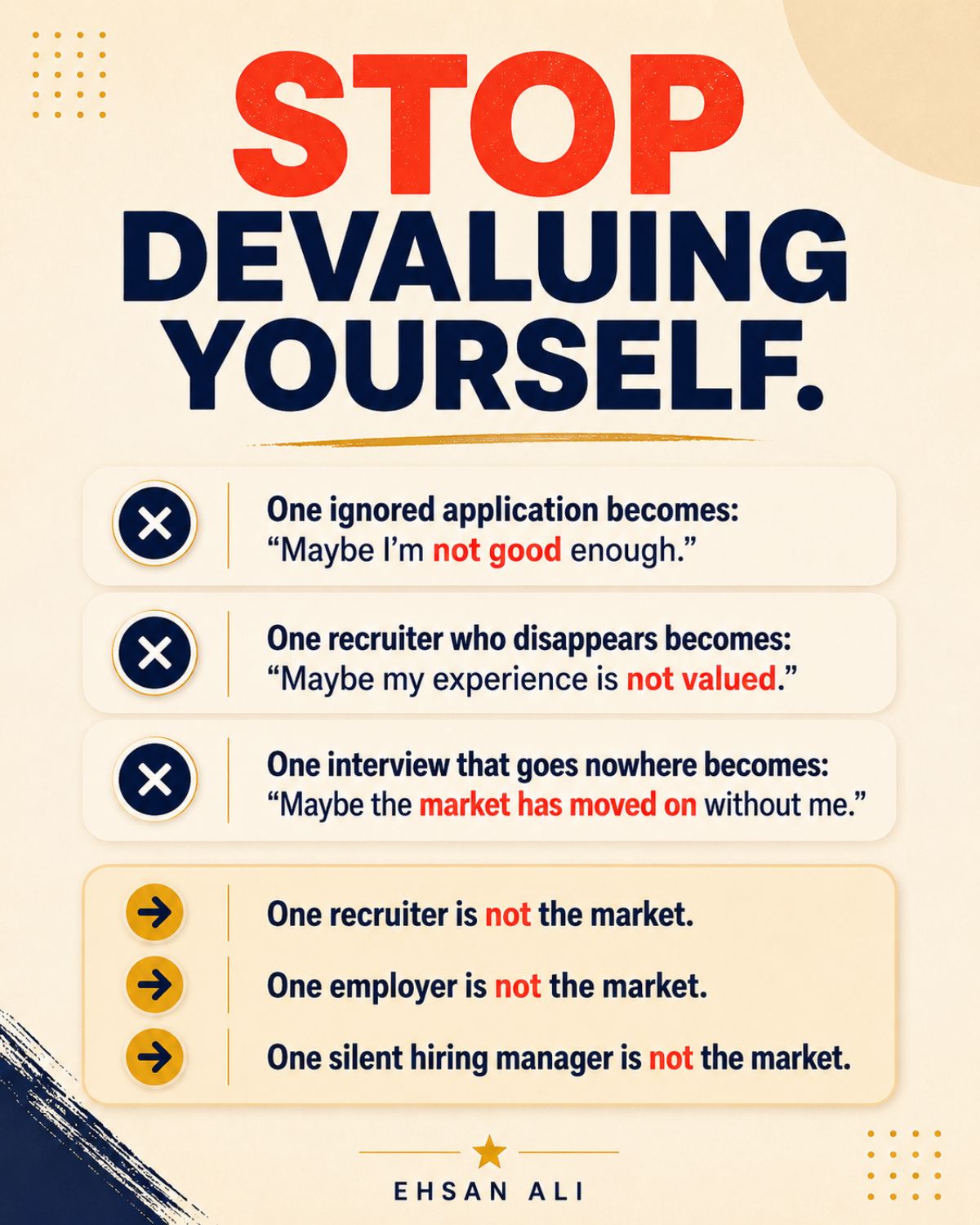
In a recent LinkedIn post, IT leadership and career strategist Ehsan Ali addresses a common pitfall senior professionals face: misinterpreting silence in the job market as personal rejection. Ali argues that this interpretation can be detrimental, leading experienced individuals to question their worth and value based on a lack of response from recruiters or hiring managers.
Ali begins by reframing the concept of a “no reply,” asserting that it is simply that – a lack of reply, not a definitive rejection. He outlines several practical reasons why a response might not be forthcoming, such as a busy recruiter, a frozen budget, shifting role requirements, or the selection of an internal candidate. These external factors, he emphasizes, are often the cause, not a reflection of the candidate’s qualifications.
“The recruiter may be busy. The budget got frozen. The role requirements shifted. An internal candidate was already pre-selected.”
The Danger of Turning Silence into Identity
The core of Ali’s message highlights the psychological impact of this silence on senior IT leaders. He observes a pattern where a single unanswered application or an instance of being ghosted can lead to a cascade of self-doubt. This is particularly concerning for professionals with 15-20 years or more of experience, whose value should not be diminished by such occurrences.
As Ehsan Ali points out, the danger lies in allowing these isolated incidents to shape one’s professional identity. He states:
“One ignored application becomes: ‘Maybe I’m not good enough.’ One ghosting recruiter becomes: ‘Maybe my experience isn’t valued.’ One quiet interview becomes: ‘Maybe the market has passed me by.’”
Ali strongly advocates against devaluing extensive experience based on a lack of communication. He stresses that individual recruiters, employers, or hiring managers do not represent the entirety of the job market. When a person’s entire career outlook hinges on a single application’s response, each silence can feel intensely personal, potentially derailing their job search momentum for weeks.
Shifting Focus from Résumé to Strategy
Rethinking the Job Search Approach
Instead of questioning their own value when faced with silence, Ali urges professionals to “Question the strategy.” This involves a critical review of the job search process itself, prompting introspection on key elements:
- Was it the right role?
- Was it the right company?
- Was it the right decision-maker?
- Was it the right positioning?
According to Ehsan Ali, if a silent inbox can disrupt an entire job search, the issue may not be the résumé itself but rather the overarching career strategy. He suggests that a more robust approach is needed, one that provides greater control and clarity.
The Need for a ‘Career Operating System’
Ali introduces the concept of a “career operating system” as the solution for senior IT professionals. He explains that this system is designed to provide a structured and controlled method for navigating career transitions and advancements. In his own words:
“If one silent inbox can derail your entire job search, you don’t need a better résumé. You need a better career operating system.”
He further elaborates that such a system empowers individuals to build a senior career strategy that offers complete command over their professional journey and future opportunities. Ali recently announced his final two live sessions for the month, dedicated to breaking down how to establish this effective career operating system for IT leaders.
📝 About This Content
This article is based on insights shared by Ehsan Ali on LinkedIn.
📅 Originally posted on August 15, 2026 | View original post on LinkedIn →