
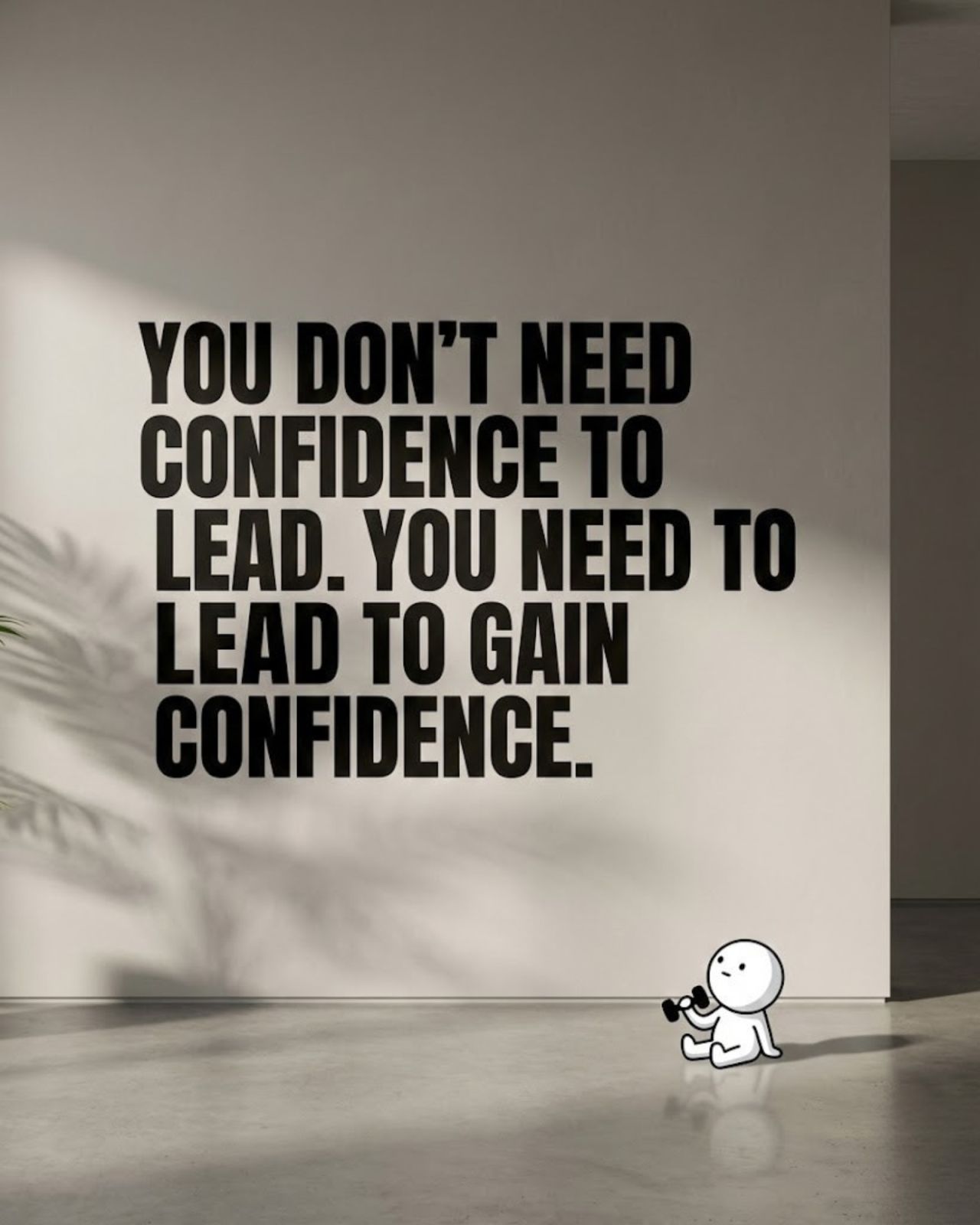
In a recent LinkedIn post, Dror Allouche challenges a common misconception about leadership: the idea that one must possess confidence before taking the helm. Instead, Allouche posits that confidence is not a prerequisite for leading but rather a direct result of engaging in leadership actions, particularly under pressure.
The post opens with a bold statement, “Stop waiting for confidence to lead. That’s a trap. And it’s why most potential leaders stay stuck.” This immediately sets the stage for Allouche’s argument that aspiring leaders often fall into the trap of believing confidence must precede action. He contends that this is a fundamental misunderstanding of how leadership skills, and the confidence that accompanies them, are actually developed.
“They think confidence is a prerequisite. In reality, it’s a byproduct.”
Allouche emphasizes that while the theory of effective leadership, such as Stephen Covey’s principle to “seek first to understand, then to be understood,” is intellectually accessible, its practical application during times of crisis is where true leadership emerges. He draws a distinction between theoretical understanding and the ability to perform when faced with significant challenges.
The Execution Gap: Theory vs. Practice Under Pressure
According to Dror Allouche, the critical differentiator between a successful leader and an amateur is not the quality of their plan but their capacity to execute that plan when faced with intense pressure. He states, “The difference between a champion and an amateur isn’t the plan. It’s the ability to execute the plan when the pressure hits.” This highlights the core of his message: leadership is an active pursuit, forged in the crucible of real-world challenges.
Confidence as a Result of Repetition
Allouche reframes confidence not as an emotional state but as a skill honed through consistent practice. He asserts, “Confidence isn’t a mood. It’s a repetition.” To cultivate this, he outlines three daily practices designed to build leadership resilience and confidence, even amidst chaos:
- The Morning Scan (Anticipation): This involves proactively identifying potential friction points in the day and preparing mentally to listen and remain calm, rather than merely reviewing an agenda. Allouche advises, “You don’t stumble into leadership. You prep for it.”
- The Mirror Test (Assessment): Instead of asking if one feels confident, Allouche suggests evaluating past actions by asking, “Did I do my best?” This involves rating oneself on specific behaviors like listening or staying calm. He argues, “Judgment kills growth. Measurement builds it.”
- The Stakeholder Audit (Calibration): This practice involves seeking direct feedback from others on areas for improvement, particularly in managing crises. Allouche recommends asking stakeholders, “I’m working on my calm during crises. What’s one thing I can do better?”
The Leadership-Confidence Loop
Dror Allouche concludes by reinforcing the cyclical relationship between leading and confidence. He posits, “You don’t need confidence to start leading. You need to start leading to build confidence.” This iterative process, where practice in challenging situations reduces the fear of future difficulties, is central to his philosophy. As he puts it, “The more you practice in the storm, the less you fear the rain.” Ultimately, Allouche defines leadership as practice, with confidence serving as the measure of that practice.
The insights shared by Dror Allouche offer a practical framework for individuals looking to develop their leadership capabilities by emphasizing action and continuous improvement over the passive pursuit of confidence.
📝 About This Content
This article is based on insights shared by Dror Allouche on LinkedIn.
📅 Originally posted on January 21, 2026 | View original post on LinkedIn →