
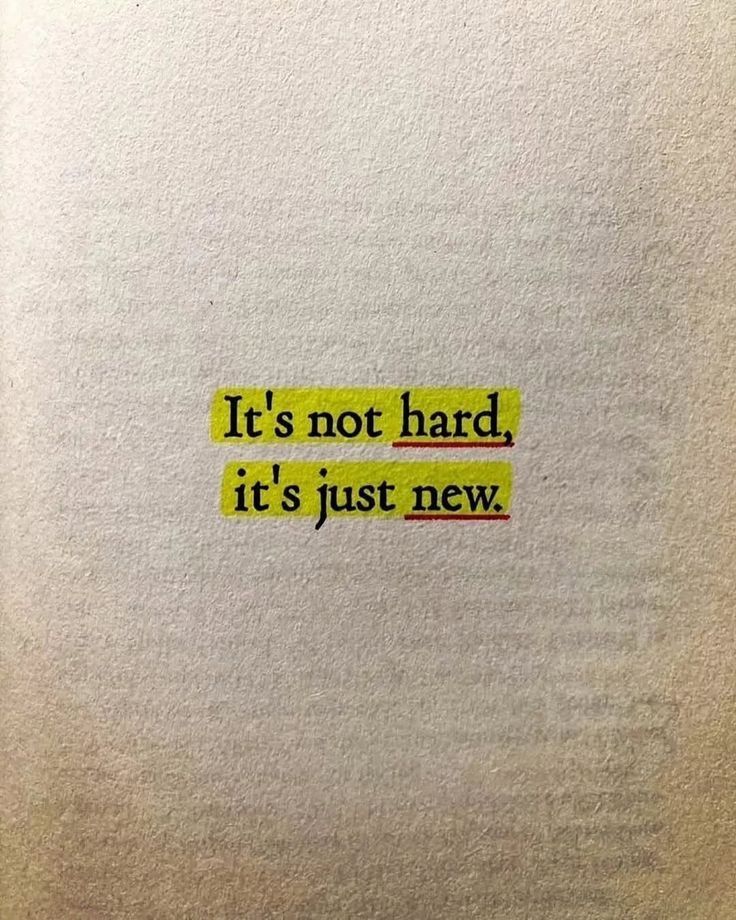
In a recent LinkedIn post, Noemi Kis✨ offers a compelling reframing of challenges, arguing that what often feels difficult is simply unfamiliarity with a new task or skill. The post challenges the common perception that struggles indicate an inability, instead positing that discomfort is a natural and necessary part of the learning process.
Noemi Kis✨ begins by highlighting the initial awkwardness associated with new endeavors, stating:
“Your first sales call feels awkward. Your first post gets no engagement. Your first hire feels risky. Your first client pitch sounds shaky”
This initial awkwardness, according to Noemi Kis✨, often triggers negative self-talk, such as “You’re bad at this” or “This isn’t for you.” However, the core message is that this internal narrative is a misinterpretation of the situation. As Noemi Kis✨ points out, the feeling of being “bad at this” is merely a reflection of being “new at it.” The post draws parallels to universally experienced initial difficulties:
The Familiarity of Early Struggles
Noemi Kis✨ illustrates this point by referencing common first-time experiences that felt uncertain or clumsy, such as driving a car, giving a presentation, or leading a team. The author emphasizes that consistent repetition transforms these initially uncomfortable experiences into comfortable, routine actions. The key takeaway, as Noemi Kis✨ highlights, is that most people abandon their pursuits before reaching this stage of familiarity.
“They mistake the discomfort of being new for proof that they’re not capable. They confuse unfamiliarity with inability. And they quit right before the breakthrough.”
Strategies for Navigating Newness
The post then shifts to actionable advice for those facing the discomfort of new challenges, whether it be starting a business, learning a new skill, or taking on a new role. Noemi Kis✨ proposes a three-step strategy:
1. Reframe the Discomfort
This involves consciously changing the internal monologue from negative self-judgment to a more constructive perspective. Noemi Kis✨ suggests replacing phrases like:
- “This feels hard” with “This feels new”
- “I’m bad at this” with “I’m learning this”
- “Maybe I should quit” with “Maybe I should keep going”
2. Set Repetition Goals, Not Perfection Goals
Noemi Kis✨ advocates for focusing on the volume of practice rather than immediate quality. The idea is to accumulate experience through sheer repetition, suggesting goals like making a certain number of sales calls or posting a specific quantity of content. As Noemi Kis✨ notes, “Quality comes with reps.”
3. Track Small Wins
The author encourages individuals to actively notice and celebrate incremental progress. This includes acknowledging when a task feels slightly easier or when improvement is detected, even if it’s invisible to others. This practice helps build momentum and reinforces the idea of progress.
Ultimately, Noemi Kis✨ concludes that the discomfort experienced when engaging in something new is not a sign to stop, but rather an indicator of growth and engagement with meaningful activities.
“The discomfort you’re feeling isn’t a stop sign. It’s a signal that you’re in the right place.”
The central argument is that success is not achieved by avoiding discomfort, but by persevering through it until it becomes normalized. Noemi Kis✨ encourages readers to “keep going,” emphasizing that sustained effort is the true differentiator for high performers.
📝 About This Content
This article is based on insights shared by Noemi Kis✨ on LinkedIn.
📅 Originally posted on December 27, 2025 | View original post on LinkedIn →