
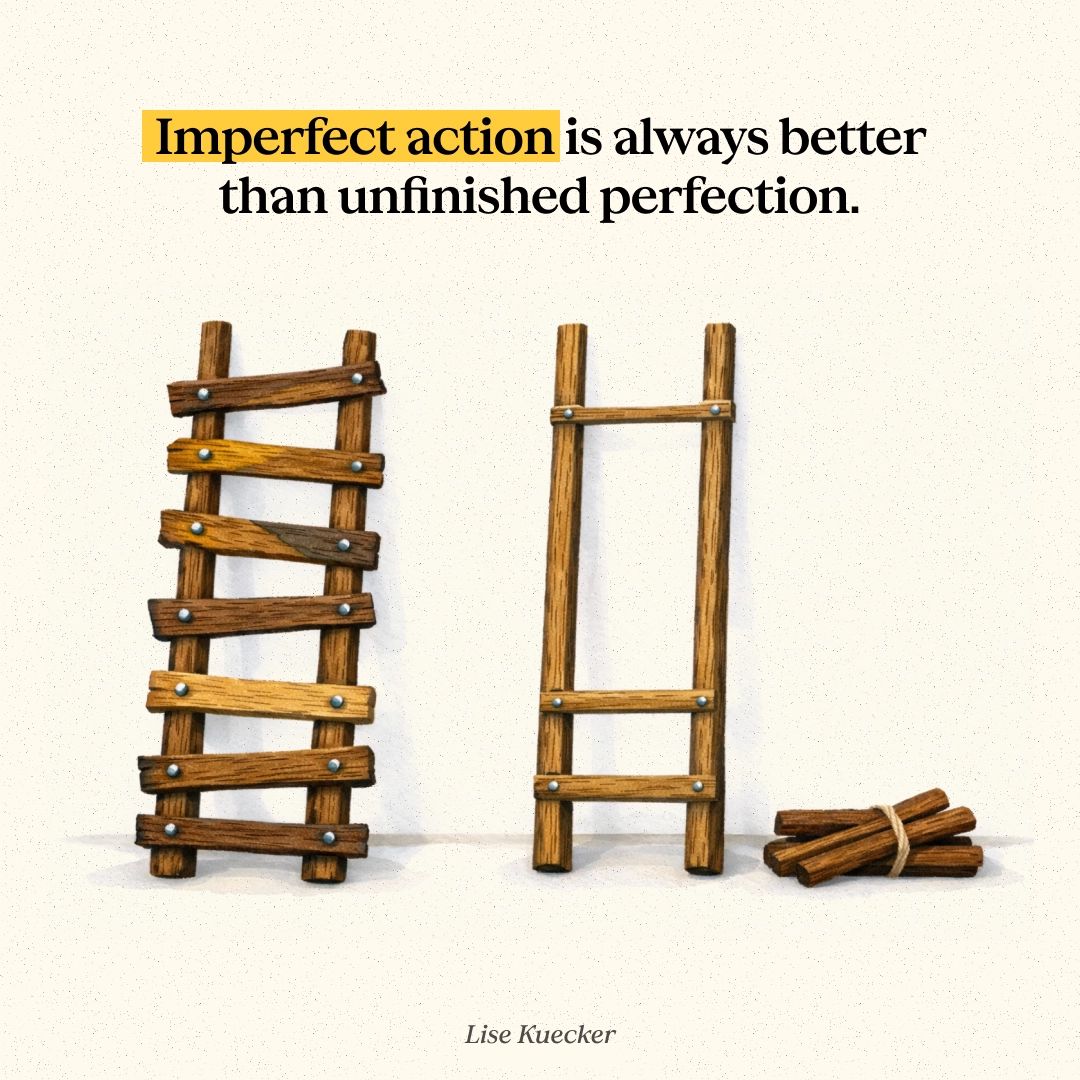
In a recent LinkedIn post, Lise Kuecker explores the critical difference between aspiring entrepreneurs and those who actively build businesses, emphasizing the importance of embracing imperfection to get started. Kuecker uses a compelling analogy of two ladders to illustrate her point: one that is complete but flawed, and another that is aesthetically perfect but remains in pieces. This serves as a metaphor for the startup journey, where action, even in a messy form, is more valuable than prolonged, inactionable planning.
The Perils of Perfectionism in Entrepreneurship
Kuecker argues that the pursuit of a perfect first version of a product, pitch, or campaign can be a significant roadblock for founders. She highlights that waiting for ideal conditions or flawless execution often leads to perpetual delay, preventing founders from gaining crucial real-world experience. As Lise Kuecker notes:
“If you want to build a business, you have to be comfortable with the first version of things being messy.”
This perspective challenges the common entrepreneurial myth that successful ventures spring forth fully formed and polished. Instead, Kuecker advocates for a pragmatic approach where the initial output is functional enough to elicit feedback, rather than being a finished masterpiece.
Real-World Application: The Mission Statement Example
To underscore her point, Lise Kuecker shares a personal anecdote from her experience running fitness studios. She describes a collaborative process to create a mission statement, involving the team, giant Post-it notes, and sharpies. This method, while imperfect and evolving, was instrumental in achieving significant business milestones.
“We did our first $1,000,000 with that imperfect mission statement. And the business only grew from there.”
This story exemplifies Kuecker’s philosophy: the imperfect first draft, when acted upon, can lead to substantial growth and learning. She further connects this to the founding of Studio Grow, which achieved a $65 million valuation, suggesting that this mindset of starting imperfectly was a foundational element of her success.
Permission to Start, Not Be Sloppy
Kuecker clarifies that her message is not an endorsement of carelessness or a lack of quality. Instead, it is an encouragement to overcome the fear of inadequacy and to launch initiatives before feeling entirely ready. According to Lise Kuecker:
“It’s permission to start before you feel ready. Launch something well enough to get real feedback. Then make it better based on what you learn.”
This approach prioritizes iterative improvement based on market response and user feedback over exhaustive pre-launch planning. Kuecker posits that the lessons learned from these imperfect beginnings are invaluable and cannot be replicated through planning alone. She prompts readers to consider their own ‘imperfect first step’ for the week, encouraging immediate action in their entrepreneurial endeavors.
The Value of Imperfect Action
Ultimately, Lise Kuecker’s insights on LinkedIn serve as a powerful reminder for aspiring and current entrepreneurs. By shifting the focus from achieving perfection to achieving progress, founders can unlock their potential and build momentum. The core message is that a tangible, albeit imperfect, beginning is the essential first step on the path to significant business success.
📝 About This Content
This article is based on insights shared by Lise Kuecker on LinkedIn.
📅 Originally posted on March 20, 2026 | View original post on LinkedIn →