
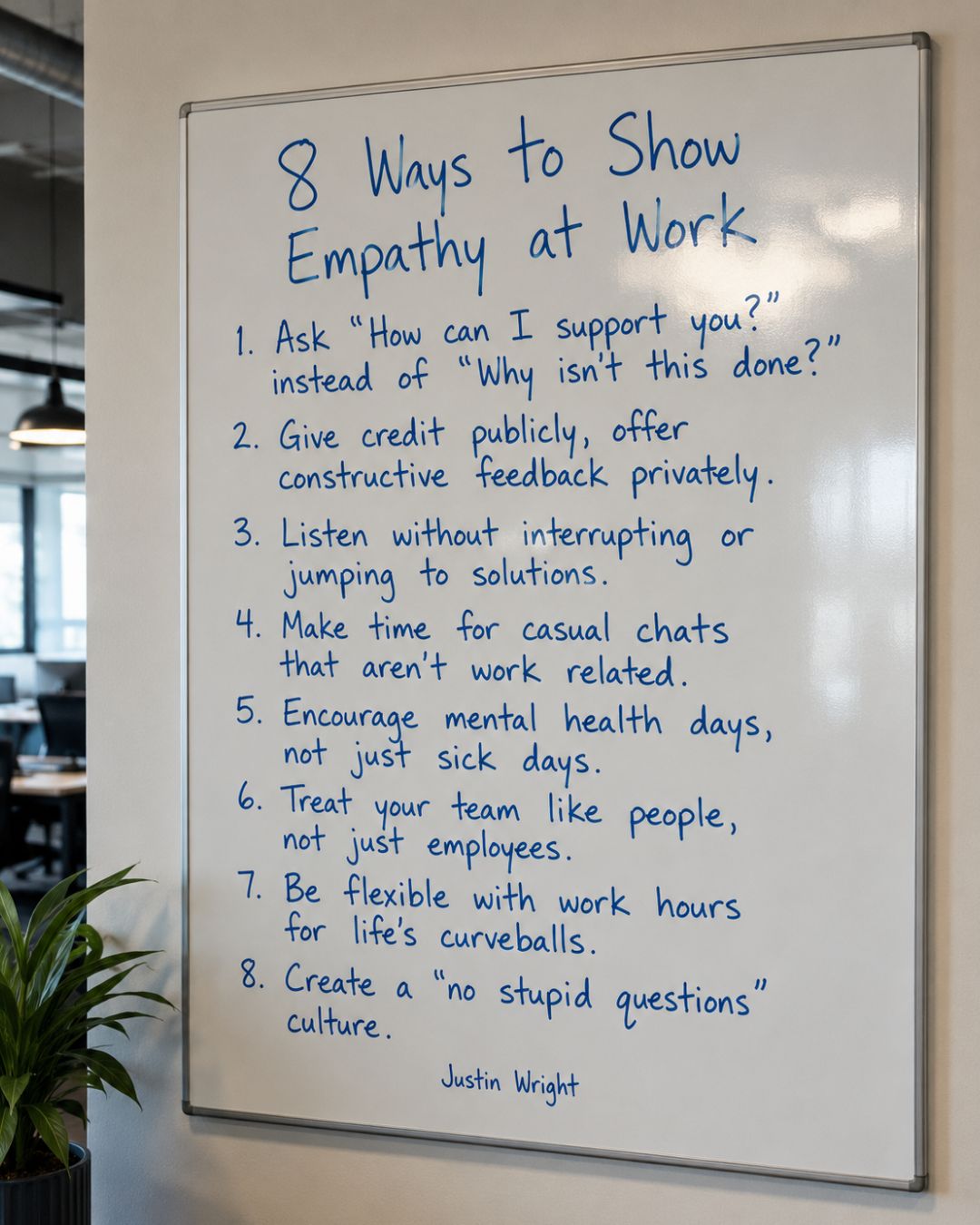
In a recent LinkedIn post, Justin Wright challenges the conventional view of empathy in the workplace, arguing that it is far from a mere “soft skill.” Instead, Wright posits that empathy is a leader’s most potent tool, essential for both human-centric management and business success.
Wright shares a personal anecdote that illustrates his point: “I once had a top performer who was missing deadlines. Instead of asking ‘Why isn’t this done?’ I asked ‘How can I support you?’ Turns out, she was dealing with family health issues but was afraid to speak up. That one conversation changed everything.” This experience, he explains, was a turning point in his understanding of effective leadership.
Empathy as a Core Leadership Strategy
Wright contends that leaders often misinterpret the role of empathy, viewing it as secondary to performance metrics. He asserts that this perspective is fundamentally flawed. “You don’t have to choose between being human and being successful,” Wright writes. “The most effective leaders are both.” This statement underscores his belief that integrating empathy into leadership practices does not diminish effectiveness but rather enhances it.
The author outlines eight practical ways leaders can cultivate and demonstrate empathy in their teams:
- Listen without immediately trying to fix problems.
- Show flexibility when unforeseen personal circumstances arise.
- Dedicate time for conversations that extend beyond work topics.
- Deliver public praise and private feedback.
- Foster an environment where asking questions is encouraged and feels safe.
- Support mental health days as readily as sick days.
- Prioritize asking how to help over questioning why tasks are incomplete.
- Treat team members as individuals first, and employees second.
The True Cost of Lacking Empathy
Further elaborating on the consequences of neglecting empathy, Wright points to a common reason for employee turnover. “People don’t leave bad jobs. They leave environments where they don’t feel understood or appreciated,” he states. This highlights the critical link between an employee’s sense of belonging and their decision to stay with an organization. Wright frames empathy not just as a beneficial practice but as a strategic imperative for retention and team cohesion.
Wright concludes his post by emphasizing the long-term benefits of prioritizing empathy. “If you want to strengthen your team, start with empathy. It’s the investment that pays the highest returns.” He encourages leaders to view empathy as a fundamental aspect of their role, directly tied to the overall health and success of their teams and, by extension, the business.
His insights suggest that a leadership approach grounded in genuine human connection and understanding can unlock greater performance and loyalty than traditional, purely results-driven methods.
📝 About This Content
This article is based on insights shared by Justin Wright on LinkedIn.
📅 Originally posted on July 24, 2026 | View original post on LinkedIn →