
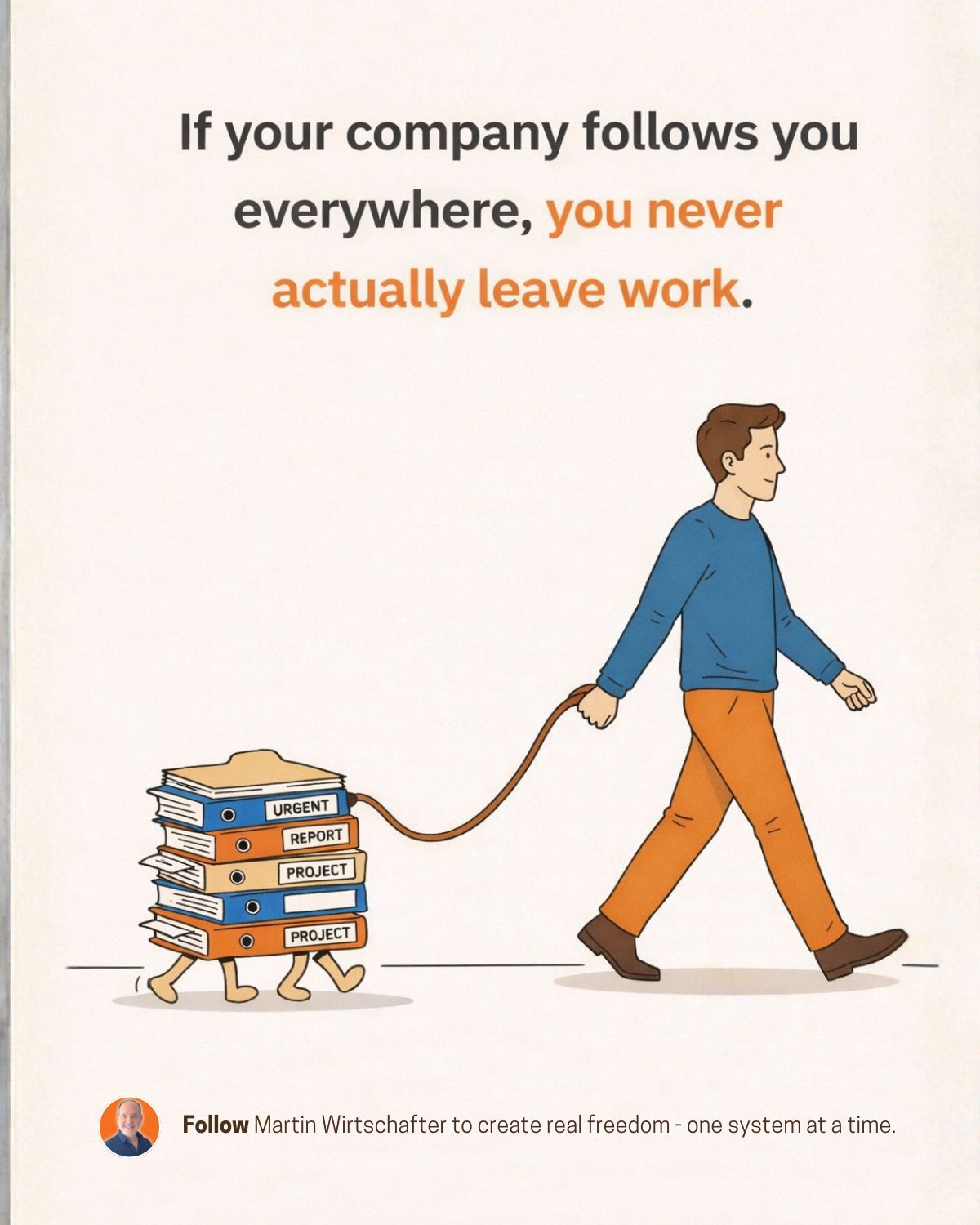
In a recent LinkedIn post, Martin Wirtschafter discusses the pervasive challenge of the “Dependency Loop” and how business leaders can reclaim their presence and time. Wirtschafter, a business leader himself, draws a stark parallel between constant digital engagement and a state of perpetual obligation, even during moments that should be for personal respite.
He vividly describes his past habits, where ordinary activities like being stopped at a red light would become impromptu work sessions. “I used to turn every red light into a work meeting,” Wirtschafter writes. “Because there was always something that needed me. Not occasionally. Every single one.” This constant engagement, he explains, left him feeling tethered to his business, unable to truly disconnect.
The All-Consuming Nature of the Dependency Loop
Wirtschafter elaborates on the feeling of being trapped by this constant demand. He likens the experience to an inescapable cycle where everything must pass through the leader, preventing any genuine detachment. “That’s what the Dependency Loop feels like. Everything routes through you. So you never really leave,” he states.
This state, according to Wirtschafter, doesn’t just impact productivity; it erodes personal relationships and mental well-being. He recounts how his presence with his family was compromised:
“My family noticed. Conversations would stop the second my hand reached for my phone.”
The underlying belief driving this behavior, Wirtschafter suggests, was the assumption that the business could not function without his constant intervention. He admits, “I told myself I was doing this for a better future. But the business only worked if I was in it.” This creates a paradox where the leader’s efforts to build a successful business inadvertently make them indispensable in a way that is detrimental to both themselves and the business’s long-term sustainability.
Designing for Freedom: The Path Beyond Constant Engagement
The turning point for Wirtschafter was a conscious decision to break free from this cycle. He describes a transformation in how he navigates his daily commute, a period once filled with work-related anxieties.
“Now I drive the same roads differently. Same stoplights. Same traffic. But nothing pulls at me. No inbox triage. No mental firefighting. I listen to my favourite music. Notice the trees changing with the season. Arrive calm instead of already behind.”
Wirtschafter emphasizes that this shift wasn’t achieved overnight but through a deliberate process of delegation and empowering his team. He argues that true freedom for a business leader is not a sudden revelation but a result of incremental changes.
“It started with one handoff. One decision I no longer owned. One small shift each week. Freedom isn’t built in a breakthrough. It’s built one handoff at a time. That’s freedom by design.”
His insights offer a valuable perspective for leaders who find themselves caught in similar cycles of over-involvement, highlighting the importance of building systems and trust that allow for genuine presence and a more sustainable approach to leadership. The core message is that a business should be designed to thrive independently, granting its leaders the freedom they originally sought.
📝 About This Content
This article is based on insights shared by Martin Wirtschafter on LinkedIn.
📅 Originally posted on February 13, 2026 | View original post on LinkedIn →