
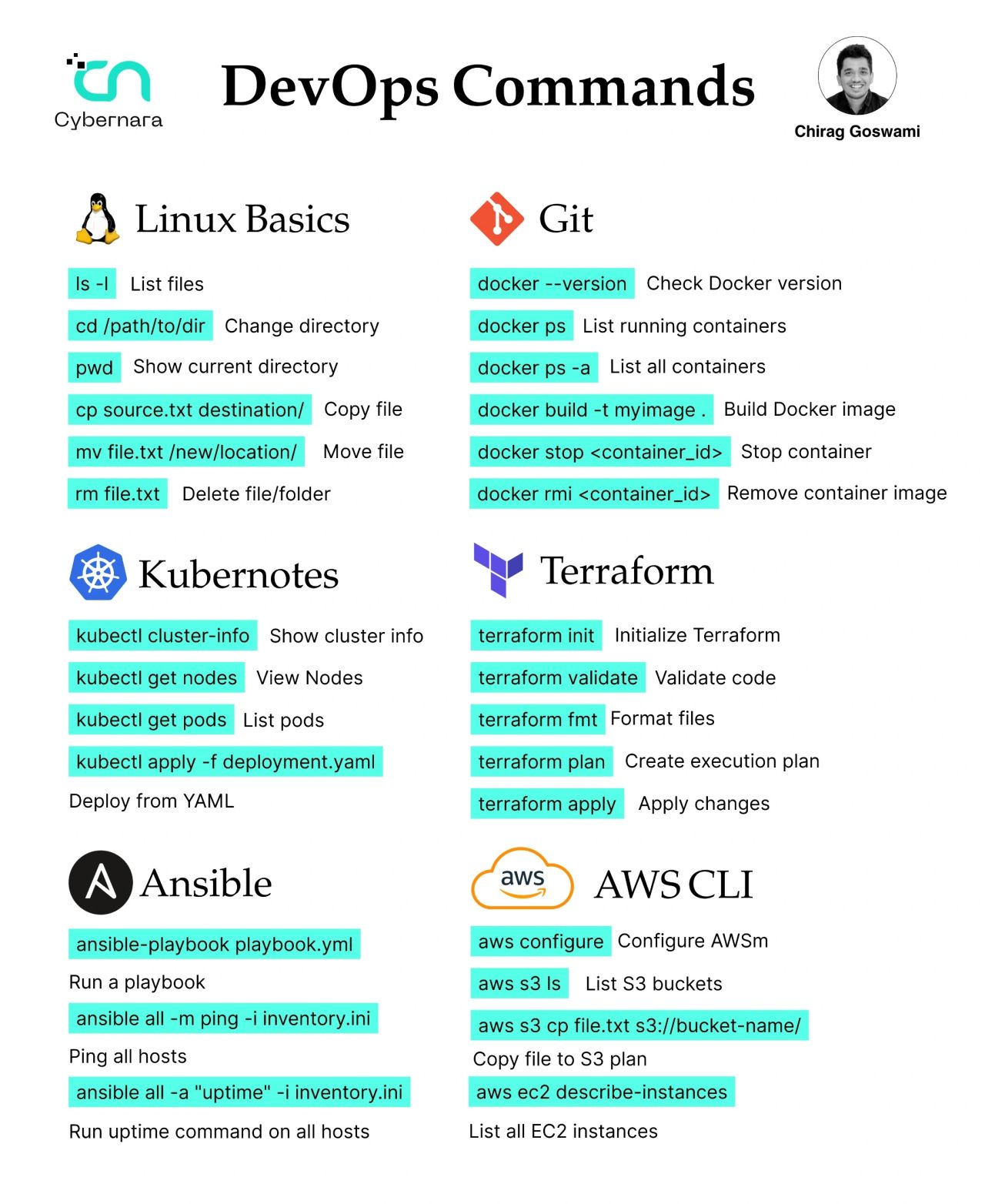
In a recent LinkedIn post, Chirag Goswami explores the fundamental commands that form the backbone of daily operations for professionals in DevOps, cloud, and infrastructure roles. Goswami emphasizes that proficiency with a select set of tools can dramatically reduce manual effort, transforming hours of work into mere minutes.
The post highlights the terminal as the starting point for many in these fields. Goswami points out the critical nature of these commands, stating:
“If you work in DevOps, cloud, or infrastructure, your day usually starts in the terminal. And a handful of commands end up doing most of the heavy lifting.”
Core Areas of DevOps Command Utility
Chirag Goswami breaks down the essential domains where these commands are applied. According to Goswami, every DevOps engineer regularly interacts with several key areas:
- Linux Basics: For system navigation and file management.
- Container Tools: For building and executing containerized applications.
- Kubernetes: For large-scale application orchestration.
- Infrastructure as Code (IaC): For automating deployment processes.
- Configuration Management: For controlling server environments.
- Cloud CLI Tools: For direct interaction with cloud infrastructure.
Goswami argues that mastering these commands is not just about efficiency but about enabling robust and scalable engineering practices. He notes the practical benefit, writing:
“Knowing the right commands can turn hours of manual work into minutes.”
The Value of a Personal Command Cheat Sheet
In his post, Chirag Goswami suggests that experienced engineers often maintain a personal reference guide for these essential commands. This practice, as Goswami explains, serves as a readily accessible resource to streamline complex tasks.
Goswami elaborates on the importance of this curated knowledge, stating:
“That’s why most experienced engineers keep a personal cheat sheet like this close by.”
Securing the DevOps Pipeline
Beyond the operational efficiency gained from mastering daily commands, Goswami touches upon the crucial aspect of security within these automated environments. He highlights the work of his organization, Cybernara, in addressing this need.
According to Goswami, ensuring security does not have to impede the speed and automation that DevOps principles enable. He concludes by emphasizing this balance:
“At Cybernara, we help organizations secure their DevOps and cloud environments, ensuring automation and speed don’t come at the cost of security.”
Goswami’s insights underscore the indispensable role of command-line proficiency in modern cloud and infrastructure engineering, while also pointing to the ongoing need for robust security measures in these fast-paced environments.
📝 About This Content
This article is based on insights shared by Chirag Goswami on LinkedIn.
📅 Originally posted on March 11, 2026 | View original post on LinkedIn →