
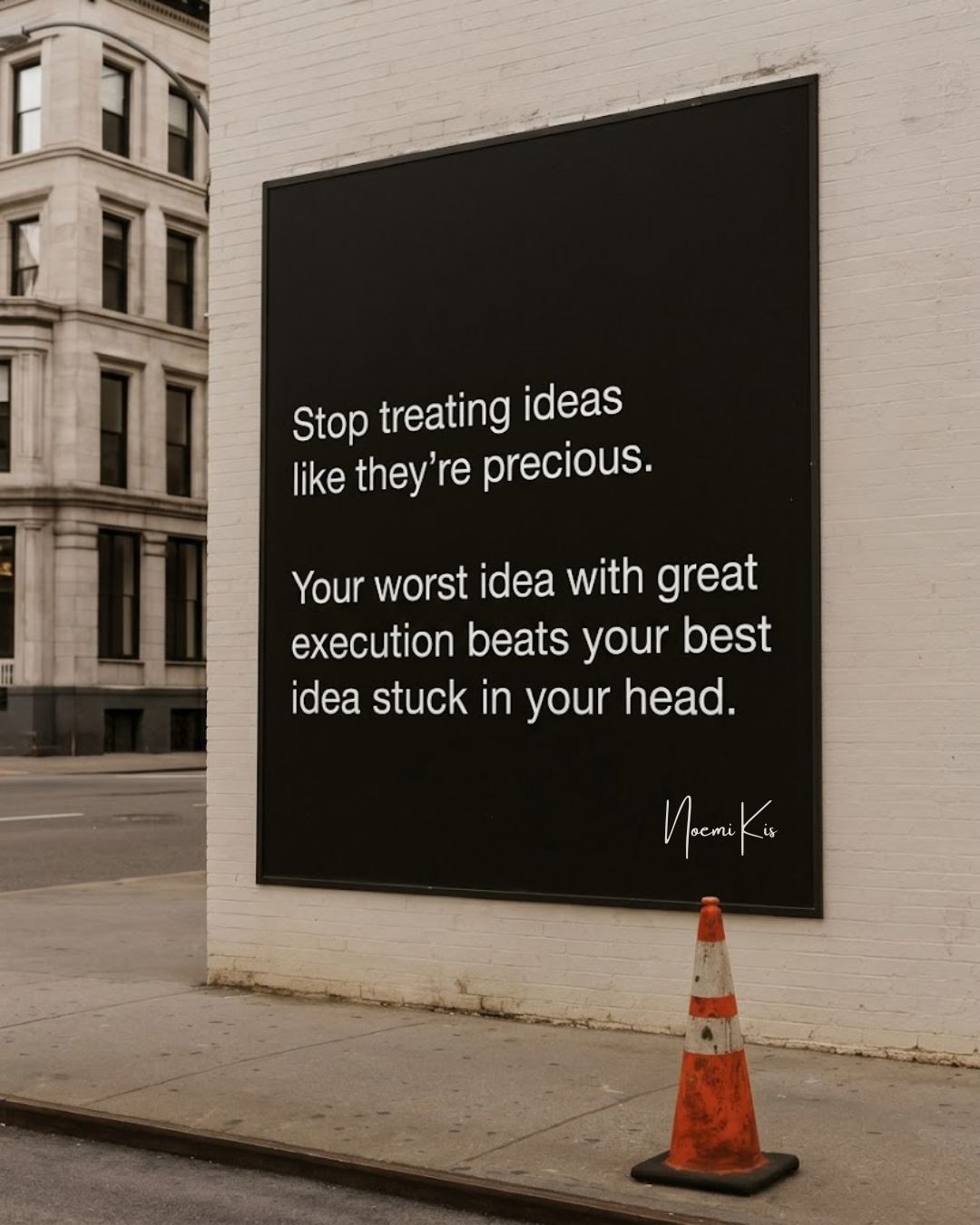
In a recent LinkedIn post, Noemi Kis✨ challenges the conventional wisdom around protecting groundbreaking ideas, arguing instead that superior execution is the true differentiator between success and failure. Kis✨ contends that many aspiring entrepreneurs become paralyzed by the pursuit of a ‘perfect’ idea, while others with less novel concepts achieve significant market success through sheer speed and effective implementation.
The post highlights historical examples to underscore this point. Kis✨ notes that market giants like Uber, Facebook, and Google were not the first to market with their core concepts. For instance, she states:
“Google was the 18th search engine. iPhone wasn’t the first smartphone.”
This observation serves as a foundation for Kis✨’s argument that the novelty of an idea is often less important than how it is brought to life. According to Kis✨, spending excessive time on planning, waiting for market readiness, or engaging in continuous learning without action are all detrimental to progress.
The Perils of Perfectionism
Kis✨ identifies several common pitfalls that prevent ideas from reaching their potential. These include:
- Spending too long perfecting a plan (e.g., 6 months).
- Waiting for an undefined market readiness.
- Delaying action due to the need for ‘one more course’.
- Keeping the idea secret from potential collaborators or early adopters.
She posits that these behaviors stem from an overvaluation of the idea itself, rather than the process of bringing it to fruition. As Kis✨ puts it:
“Your ‘perfect’ idea is worthless when: You spend 6 months perfecting the plan. You’re waiting for the market to be ready. You need one more course before starting. You’re keeping it secret from everyone.”
The Pillars of Successful Execution
To counter these tendencies, Kis✨ outlines three core elements that she believes actually determine success:
1. Speed of Execution
Kis✨ advocates for rapid development and deployment. Her advice is direct: “Ship in 30 days, not 6 months.” This emphasis on speed forces entrepreneurs to confront the market quickly, gather feedback, and iterate, rather than getting lost in endless planning.
2. Willingness to Look Stupid
A significant barrier for many is the fear of judgment or failure. Kis✨ encourages embracing imperfection in the early stages. She asserts, “Your first version will embarrass you. Ship it.” This mindset shift allows for faster learning and adaptation, which are crucial in dynamic markets.
3. Solving a Real Problem
Ultimately, market traction comes from addressing genuine needs. Kis✨ stresses that cleverness alone is insufficient. “Nobody cares about clever. They want solutions,” she writes. This focus on problem-solving ensures that the executed idea has tangible value for users.
The Reality of Competition
Kis✨ concludes by reminding readers of the competitive landscape. She estimates that multiple individuals may have the same idea concurrently. The difference, she argues, lies in action: “Five people have your exact idea right now. Most will never start. One will quit after a month. One will execute.” This stark reality reinforces her core message: treat ideas as starting points, not finished products, and prioritize bringing them to life effectively.
In essence, Kis✨’s post is a call to action, urging entrepreneurs to shift their focus from ideation purity to the messy, dynamic, and ultimately more rewarding process of execution. Her perspective suggests that the most valuable asset isn’t a guarded, ‘million-dollar idea,’ but the courage and capability to build and iterate rapidly.
📝 About This Content
This article is based on insights shared by Noemi Kis✨ on LinkedIn.
📅 Originally posted on April 12, 2026 | View original post on LinkedIn →