
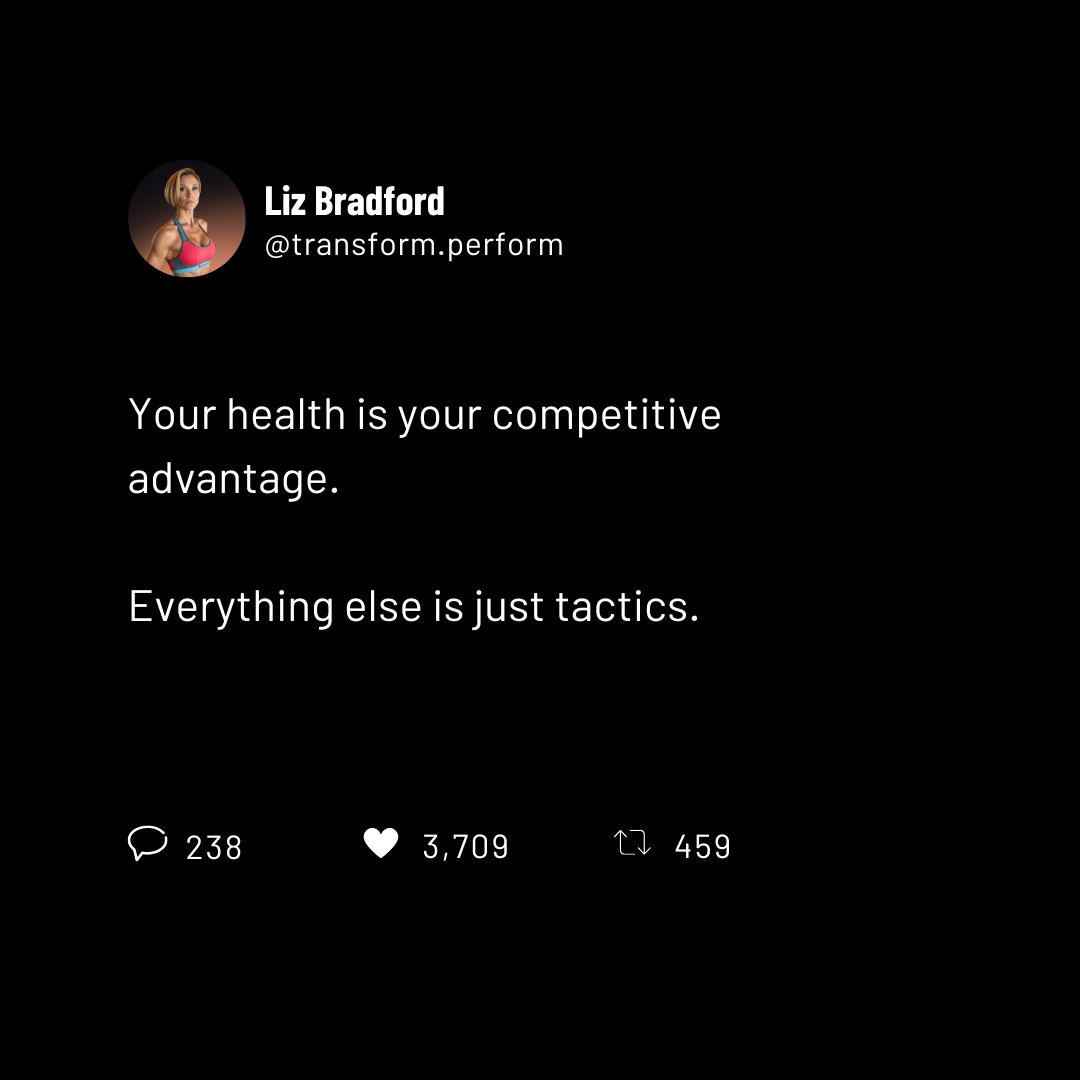
In a recent LinkedIn post, Liz Bradford offers a candid look at maintaining health and sanity while navigating the high-pressure world of executive roles. Drawing from two decades of experience, Bradford shares ten practical strategies designed to combat the all-consuming nature of demanding careers, emphasizing that prioritizing well-being is not a luxury but a necessity.
Bradford begins by stressing the importance of integrating physical activity, no matter how small, into the daily routine. She suggests simple yet effective methods for those who feel their calendars leave no room for exercise:
“Any exercise is better than no exercise. Keep dumbbells by your desk, a resistance band in your suitcase, do 20 squats while the kettle’s boiling. Whatever it is, train yourself to believe you’re someone who exercises, not someone who doesn’t have time.”
The Foundation of Physical Health
Bradford’s advice extends to nutrition and movement, two critical pillars of sustained energy and health. She advocates for strategic food planning to avoid unhealthy choices during long workdays.
As Bradford notes, proximity to nutritious options is key when unexpected meeting overruns occur. “Keep protein bars in every bag, car, and desk drawer,” she advises, “When the 2 PM meeting runs to 4 PM, you eat what’s available. Don’t let the only thing available be the team treat box and then have to contend with the self-loathing.”
Furthermore, Bradford highlights the significant benefits of incorporating walking into the workday. She shares a personal anecdote of averaging 15,000 steps daily by walking during phone calls that didn’t require screen sharing, equating steps to a powerful generator of Brain-Derived Neurotrophic Factor (BDNF), which she likens to “miracle-gro for the brain.”
Prioritizing Rest and Mental Clarity
Beyond physical activity and nutrition, Bradford places a strong emphasis on the often-neglected aspects of sleep and mental decompression. She argues for treating sleep with the same seriousness as a board meeting.
The Strategic Importance of Sleep and Decompression
“Schedule sleep like you schedule board meetings,” Bradford urges, recommending a minimum of 7.5 hours blocked out in one’s calendar. She also suggests using commutes for genuine relaxation, free from productivity-focused podcasts or work-related calls, advocating instead for silence or calming music.
Bradford also touches upon the crucial role of social support and mental boundaries. She recommends maintaining a small circle of trusted individuals for “sanity checks” during moments of stress. “Keep three people on speed dial for sanity checks,” she suggests, “When you’re spiralling at 10 PM over an email, text someone who’ll tell you to breathe. Surround yourself with energisers, not energy vampires.”
The post further details the value of investing in tools that support mental well-being, such as noise-cancelling headphones, and the simple yet effective practice of taking short walks after meals to boost energy and improve insulin sensitivity.
Setting Boundaries for Sustainability
A recurring theme in Bradford’s advice is the necessity of setting boundaries to protect one’s energy and well-being. She proposes a simple yet powerful boundary-setting technique:
“Default to ‘let me check my calendar’ instead of immediate yes. Buys you 24 hours to think before committing to one more thing that’ll drain you. Best boundary hack ever.”
Ultimately, Liz Bradford concludes that the most significant hurdle is not knowing what healthy practices entail, but rather convincing oneself that prioritizing personal well-being is deserved, especially in environments that often glorify burnout. “Your body keeps the score whether you’re paying attention or not,” she states, underscoring the long-term consequences of neglecting self-care.
📝 About This Content
This article is based on insights shared by Liz Bradford on LinkedIn.
📅 Originally posted on March 29, 2026 | View original post on LinkedIn →