
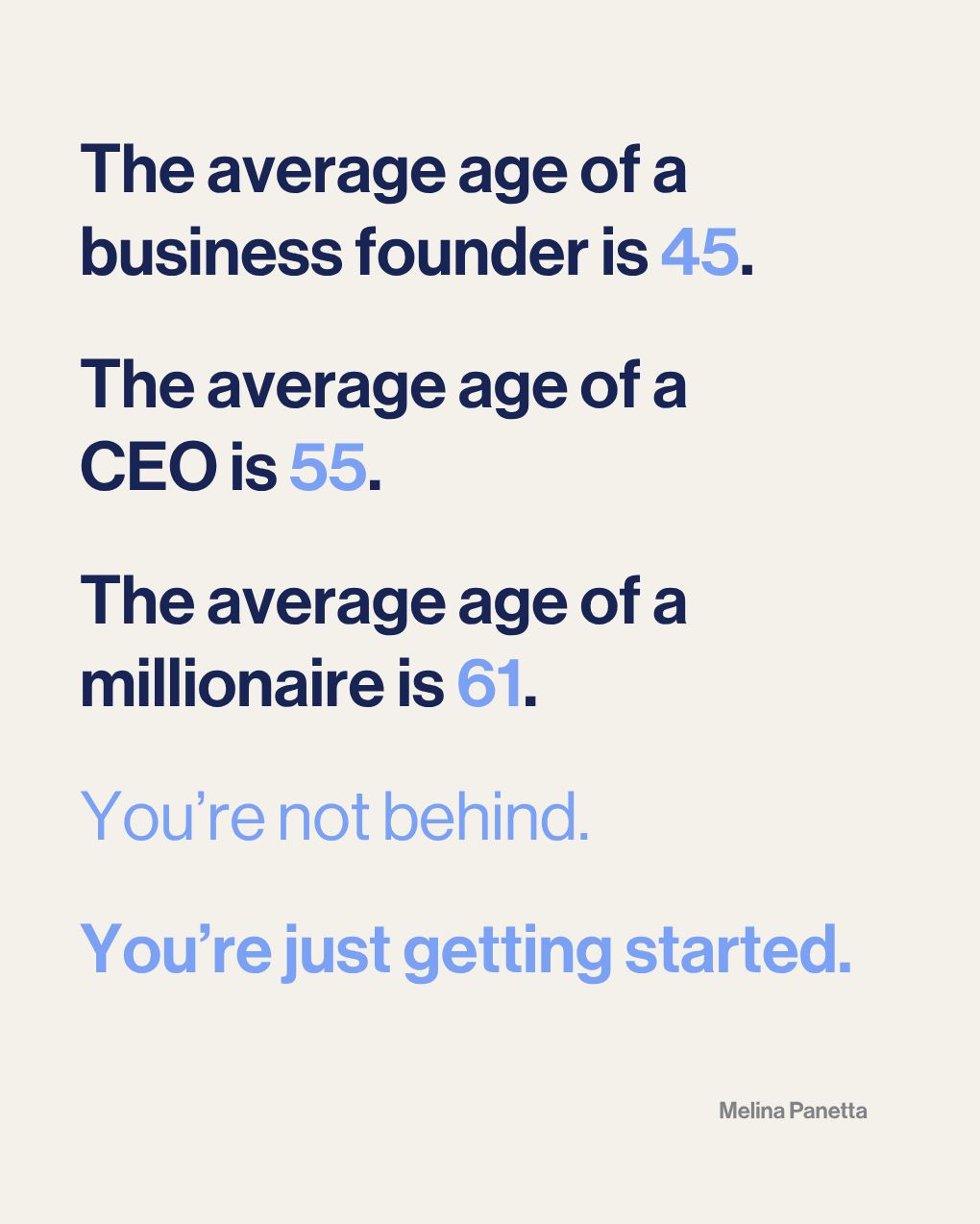
In a recent LinkedIn post, Melina Panetta explores the often-overlooked power of accumulated experience, particularly in the context of career transitions and finding success later in life. Panetta challenges the notion that starting over in one’s 40s or 50s means a lack of progress, instead framing it as a position of significant leverage.
Panetta uses the example of Ray Kroc, the businessman who transformed McDonald’s into a global empire. The post highlights that Kroc was 52 years old when he encountered the small burger stand, a point at which many would perceive him as having failed, given his previous business ventures had not succeeded.
“At 52, Ray Kroc had nothing working. No money. No customers. No clear path forward. His last business had just collapsed.”
The core argument presented by Panetta is that Kroc’s eventual success was not due to luck, but rather to decades of prior experience. This experience, accumulated over 20-30 years, provided him with invaluable pattern recognition.
The Compounding Power of Judgment
Panetta emphasizes that this pattern recognition goes beyond theoretical knowledge. It encompasses understanding what works, what fails, whom to trust, and when to disengage from a situation. This deep-seated understanding, forged through numerous trials and errors, is what Panetta terms ‘judgment.’ As Melina Panetta notes in the post:
“You don’t arrive at your second act by starting new. You arrive with 20–30 years of pattern recognition most people don’t have.”
This accumulated judgment, according to Panetta, is a form of leverage for individuals embarking on new ventures or career paths later in life. It’s not a fresh start, but a continuation built upon a foundation of hard-won lessons.
Leverage in the ‘Second Act’
Panetta argues that individuals who feel they are starting over at 45, 50, or 58 are, in fact, starting with distinct advantages. These advantages include a reduced tolerance for wasted time, a more established network, and a refined ability to discern opportunities and challenges. According to Melina Panetta:
“They’re starting with leverage. A lower tolerance for wasted time. A deeper network. A sharper filter.”
The post suggests that the professional landscape has shifted. The emphasis is no longer solely on effort, but increasingly on the ability to quickly identify opportunities and solutions that others might miss. This skill is a direct byproduct of experience.
Experience Over Effort
Panetta posits that while motivation is crucial for initiating action, it is experience that ultimately leads to tangible rewards. The market, in this view, values individuals who have navigated complex situations and possess a proven track record. As Melina Panetta states:
“Motivation gets you started. Experience gets you paid. The market is looking for someone who’s been in the room. That’s you.”
The overarching message from Melina Panetta is one of encouragement for those in their later careers, reframing age and experience not as hindrances, but as significant assets that provide a unique competitive edge in today’s professional environment.
📝 About This Content
This article is based on insights shared by Melina Panetta on LinkedIn.
📅 Originally posted on April 10, 2026 | View original post on LinkedIn →