
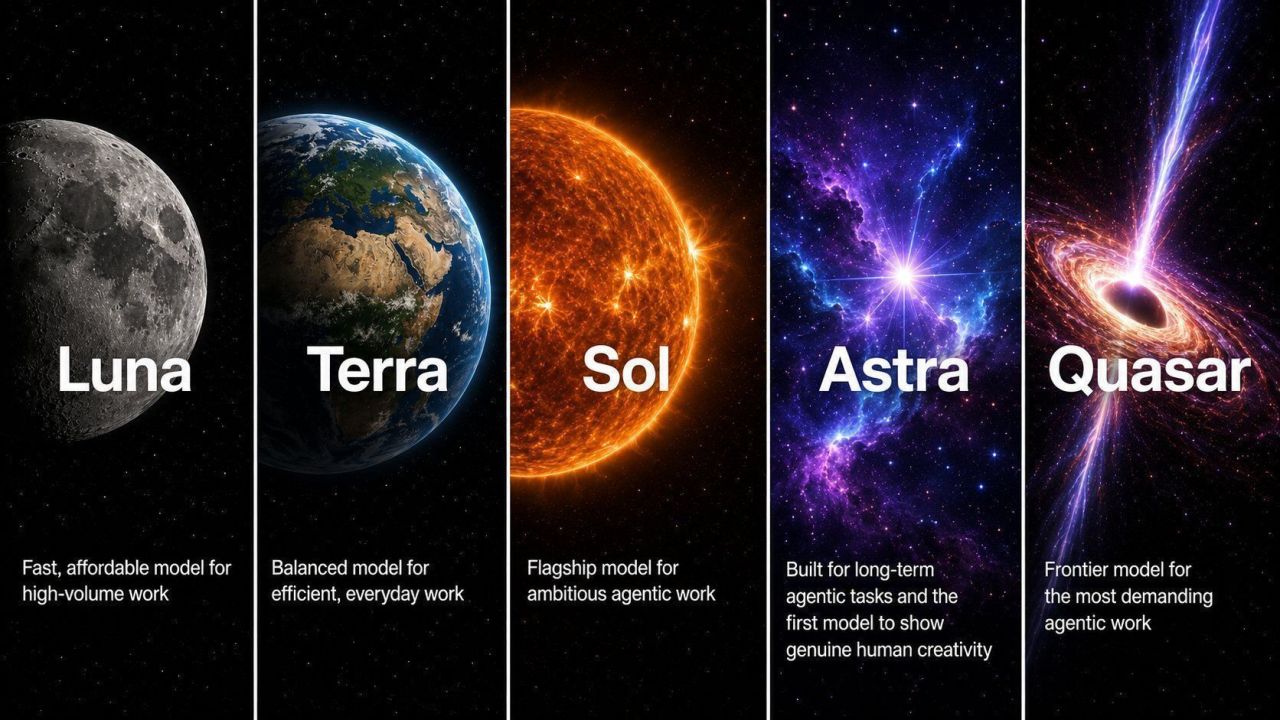
In a recent LinkedIn post, Federico Donatone discusses groundbreaking advancements achieved by OpenAI’s GPT model, ‘Astra,’ particularly its ability to solve complex problems that have eluded experts for years. Donatone emphasizes that these breakthroughs were not the result of a single, larger chatbot, but rather the product of multiple AIs collaborating over an extended period.
Solving Intractable Problems with AI
Federico Donatone highlights that OpenAI’s ‘Astra’ has successfully tackled ten significant problems, pushing the boundaries of what was previously thought possible. As Federico Donatone notes:
“They cracked 10 problems nobody could solve before: …”
These problems span diverse fields, from data compression and resilient communication to fundamental principles in quantum mechanics and network theory. Donatone points out the significance of these achievements, noting that four of these solutions specifically proved long-held beliefs to be incorrect. This suggests a fundamental shift in understanding driven by AI’s analytical power.
The Power of AI Collaboration
A key takeaway from Donatone’s post is the methodology behind these successes. He stresses that the solutions did not emerge from a single, more powerful AI model. Instead, the breakthroughs were born from the synergy of ‘many AIs working together for a long time.’
“None of it came from a bigger chatbot. It came from many AIs working together for a long time.”
This collaborative approach, according to Federico Donatone, is crucial for tackling complex, multifaceted challenges. It implies that the future of AI innovation may lie not just in scaling individual models, but in orchestrating collective intelligence among diverse AI systems.
Rethinking AI’s Potential
Donatone posits that the ability of AI to persistently work on problems without fatigue opens up new avenues for research and development. He poses a thought-provoking question to his audience:
“What would you hand an AI that never gets bored?”
This question, as raised by Federico Donatone, invites consideration of the types of long-term, data-intensive, or computationally demanding tasks that could be uniquely suited for AI-driven solutions. The implications are vast, potentially accelerating discovery in scientific research, engineering, and beyond.
Challenging Established Paradigms
Federico Donatone underscores the disruptive nature of these AI-driven insights. The fact that four of the solved problems overturned decades-old assumptions demonstrates AI’s capacity to challenge established paradigms and uncover hidden truths.
“A rule everyone trusted for decades. Wrong.”
As Federico Donatone explains, the difficulty of these problems, such as ensuring a message survives a terrible connection or developing quantum-resistant security measures, highlights the advanced capabilities of ‘Astra.’ The collaborative AI approach appears to be instrumental in achieving solutions that were previously considered unattainable.
In conclusion, Federico Donatone’s LinkedIn post serves as a compelling illustration of how advanced AI, particularly through collaborative efforts, is capable of solving some of the most persistent and complex challenges facing science and technology today.
📝 About This Content
This article is based on insights shared by Federico Donatone on LinkedIn.
📅 Originally posted on August 3, 2026 | View original post on LinkedIn →