
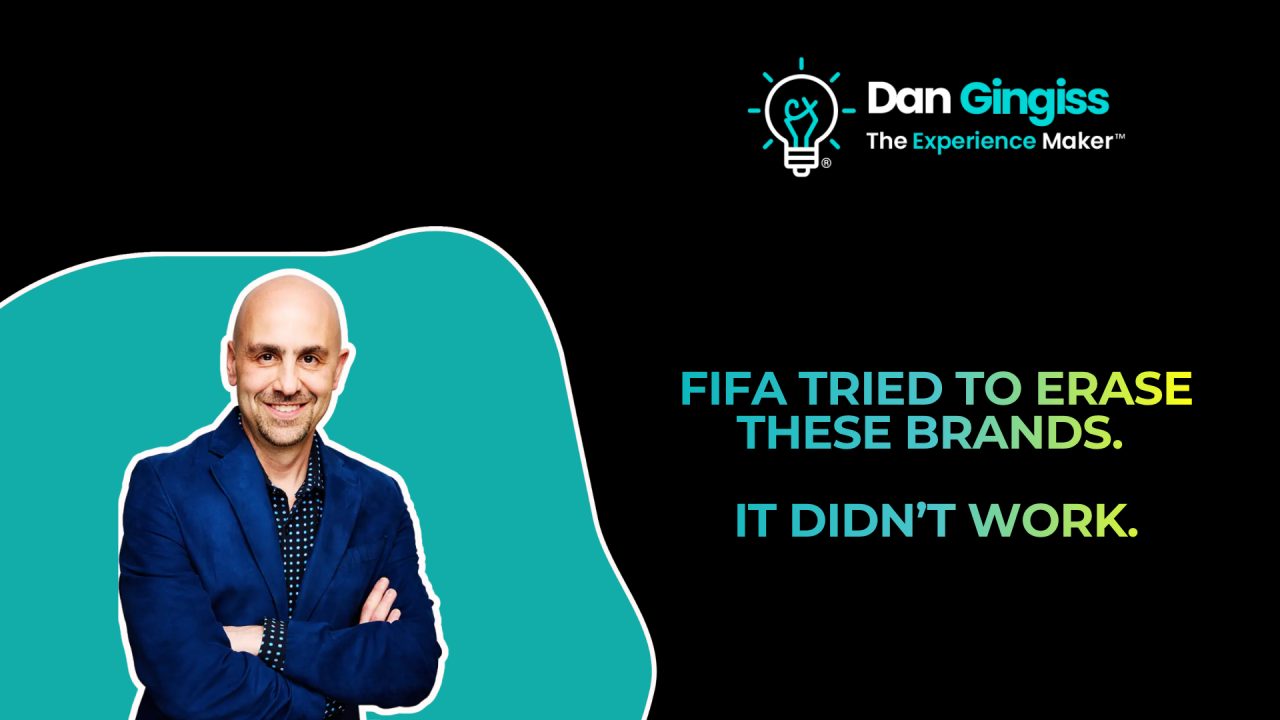
In a recent LinkedIn post, Dan Gingiss, CSP discusses the unintended consequences of FIFA’s attempts to suppress non-sponsor brands during the World Cup, highlighting how these actions inadvertently amplified the visibility of companies like Levi’s, Heinz, and Beats.
Gingiss, a recognized expert in customer experience, points out the irony in FIFA’s strategy. The organization tried to enforce exclusivity for its official sponsors by making it difficult for other brands to be seen. However, this visible suppression backfired spectacularly.
“FIFA tried to make Levi’s, Heinz, and Beats disappear from the World Cup. It didn’t exactly go as planned.”
As Gingiss, CSP explains, the internet’s reaction turned FIFA’s suppression tactic into a story of its own. Instead of brands vanishing, their efforts to hide logos and tape over labels became the focal point of online discussion.
The Streisand Effect in Action
Gingiss, CSP draws a parallel to the Streisand Effect, a phenomenon where attempts to hide, remove, or censor information have the unintended consequence of publicizing the information more widely. He notes that FIFA’s heavy-handed approach created the perfect environment for the non-sponsor brands to respond creatively.
“Logos were covered, labels were taped over, branding was hidden. And then the internet did what the internet does: it made the hidden brands the story,” Gingiss, CSP writes.
This strategy, according to Gingiss, CSP, allowed Levi’s, Heinz, and Beats to engage in brilliant counter-marketing. By highlighting the absurdity of the situation, these brands captured attention that FIFA was trying to prevent.
Control vs. Connection
The core lesson Dan Gingiss, CSP distills from this event is a critical distinction for all businesses: control is not the same as connection. FIFA sought control over brand visibility, but in doing so, it missed an opportunity for genuine connection with a wider audience.
“The lesson for every business: Control is not the same as connection,” Gingiss, CSP argues. He elaborates that while controlling brand presence might seem like a way to protect official partnerships, it can alienate consumers and create backlash when done too overtly.
Gingiss, CSP suggests that the most effective brand strategies foster genuine engagement rather than attempting to rigidly dictate visibility. The success of Levi’s, Heinz, and Beats in this scenario serves as a powerful case study for marketers and business leaders.
Learning from the World Cup Brand Battle
The author concludes by posing a question to his audience, inviting them to consider which brand ultimately handled the moment best, further engaging his readers in the analysis. He points out that the narrative surrounding the hidden brands became more compelling than FIFA’s intended message.
Ultimately, Gingiss, CSP’s analysis underscores the importance of understanding audience dynamics and the power of organic storytelling in today’s digital landscape. He emphasizes that genuine connection, often fostered by authenticity and clever responses to challenging situations, can be far more impactful than strict control.
The post, which Gingiss, CSP also expanded upon in his newsletter, serves as a valuable reminder for businesses to be mindful of how their actions might be perceived and how the public, especially with the internet’s amplification, can turn even the most restrictive measures into opportunities for others.
📝 About This Content
This article is based on insights shared by Dan Gingiss, CSP on LinkedIn.
📅 Originally posted on July 9, 2026 | View original post on LinkedIn →