
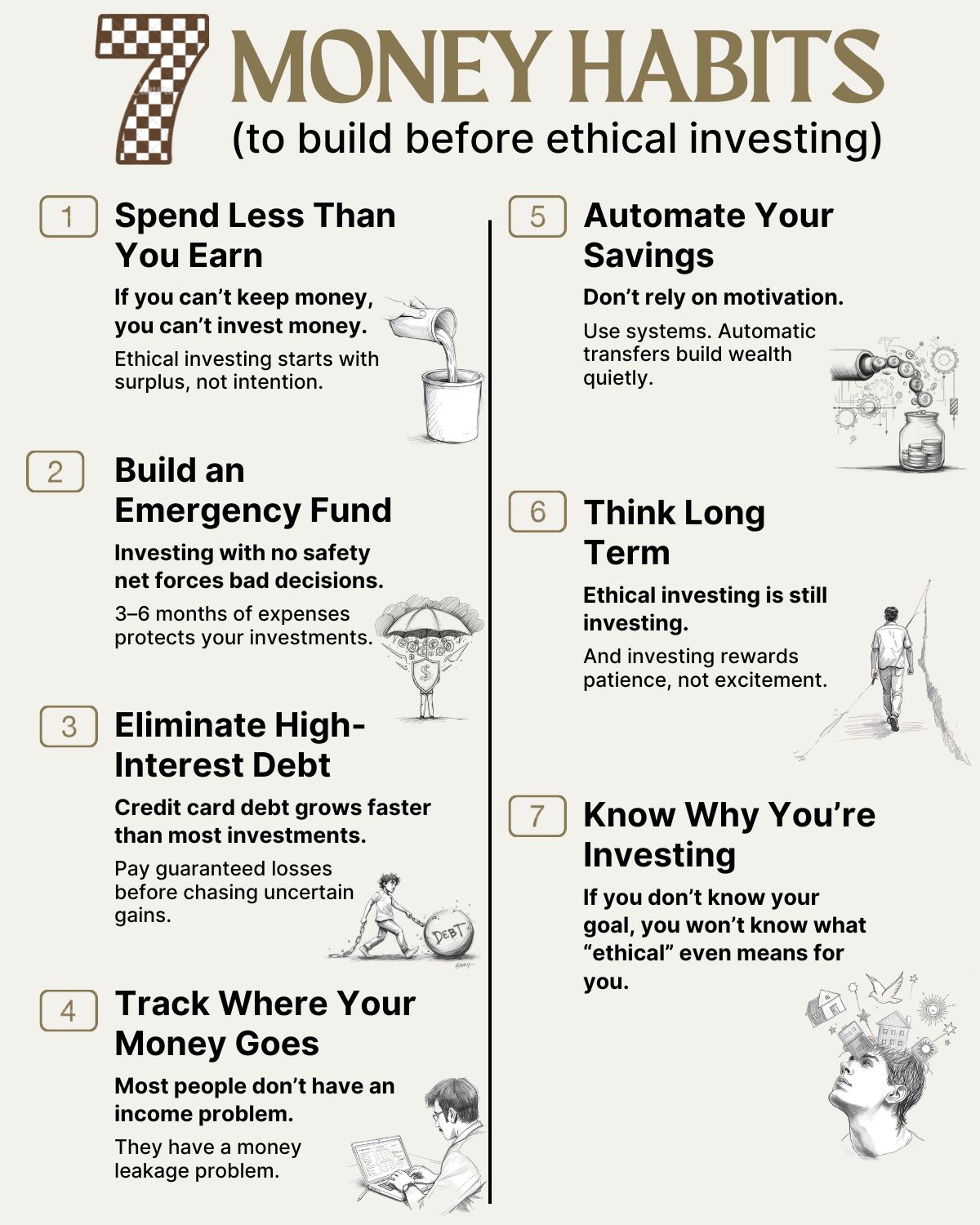
In a recent LinkedIn post, Michael Merlin delves into the often-overlooked foundational elements required for successful ethical investing. While the concept of aligning investments with personal values is gaining traction, Merlin emphasizes that robust personal finance habits must precede any ethical investment strategy. He asserts that true ethical investing is not merely about selecting the right funds, but about having a sound financial structure in place first.
Merlin lays out a clear hierarchy for financial priorities, stating:
Money first. Values second. Strategy third. You can’t invest ethically if you’re not financially stable first.
This framing suggests that without a solid financial base, the noble intentions behind ethical investing can be undermined by practical financial instability.
The Prerequisite of Sound Money Habits
Merlin highlights seven critical money habits that individuals should cultivate before turning their attention to ethical investing. He argues that these habits form the bedrock upon which any investment, ethical or otherwise, can be built successfully. A core tenet of his advice is the fundamental principle of spending less than one earns.
As Merlin points out:
Spend less than you earn → If you can’t keep money, you can’t invest it. Surplus comes before intention.
This principle underscores the idea that the ability to generate a surplus is a prerequisite for investment. Without this surplus, intentions, however noble, cannot translate into action.
Building a Safety Net and Managing Debt
Further elaborating on the foundational habits, Merlin stresses the importance of an emergency fund and the elimination of high-interest debt. He explains that an emergency fund acts as a crucial buffer, protecting investments from being liquidated during unexpected financial emergencies.
“3–6 months of expenses protects your investments,” Merlin writes, adding that “Safety nets prevent bad decisions.” This perspective emphasizes the psychological and practical benefits of having a financial cushion.
Moreover, Merlin addresses the corrosive effect of high-interest debt, particularly from credit cards. He argues that the guaranteed losses from such debt far outweigh the potential, uncertain gains from investments.
Eliminate high-interest debt → Credit card debt grows faster than most investments. Pay guaranteed losses before chasing uncertain gains.
This advice positions debt management not just as a financial chore, but as a strategic move to free up capital and avoid financial pitfalls that could derail investment goals.
The Role of Awareness and Automation
Merlin also champions the habit of tracking expenses, suggesting that many individuals face a “money leakage problem” rather than an income deficit.
“Most people don’t have an income problem. They have a money leakage problem,” he notes. This observation encourages a deeper look into spending patterns, identifying areas where money might be unintentionally lost.
To combat this and other financial challenges, Merlin advocates for automation.
Automate your savings → Don’t rely on motivation. Automatic transfers grow wealth quietly.
By automating savings and other financial processes, individuals can build wealth consistently without needing constant willpower, which can be unreliable.
Long-Term Vision and Clear Goals
The final two habits Merlin emphasizes are thinking long-term and understanding the ‘why’ behind investing. He reiterates that investing, regardless of its ethical orientation, requires patience and a long-term perspective.
“Investing rewards patience, not excitement. Ethical investing still follows the same rules,” Merlin states. This reinforces the idea that fundamental investment principles remain constant.
Ultimately, Merlin connects these habits to the purpose of ethical investing:
Know why you’re investing → Without clear goals, ethical choices are meaningless. Values align with strategy only after stability.
He concludes that financial stability is the essential precursor to making meaningful ethical investment choices, guiding readers toward a more stable and values-aligned financial future.
📝 About This Content
This article is based on insights shared by Michael Merlin on LinkedIn.
📅 Originally posted on July 20, 2026 | View original post on LinkedIn →