
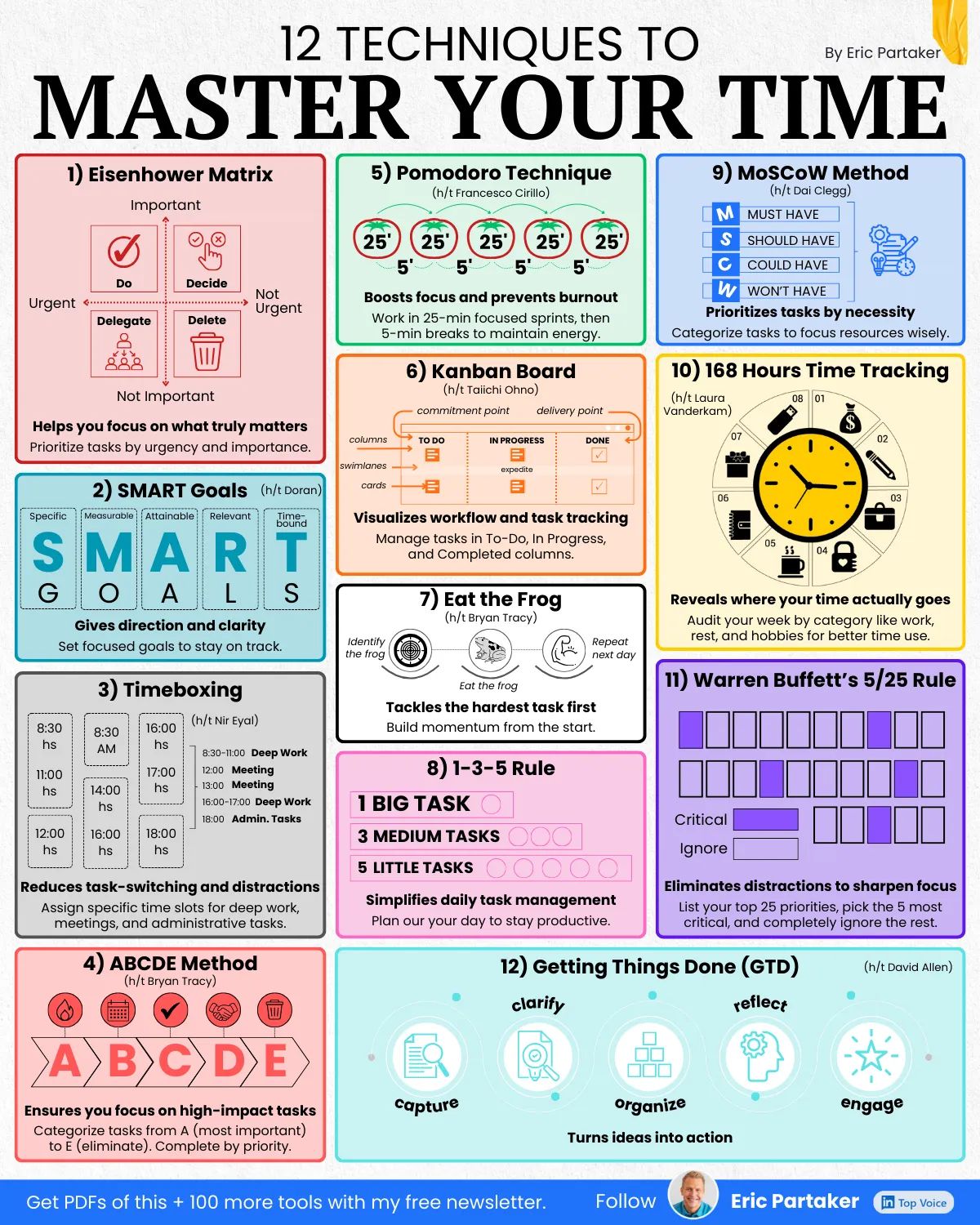
In a recent LinkedIn post, Eric Partaker shares a pivotal moment that redefined his understanding of productivity, shifting from a badge of honor in being “busy” to a focus on actual accomplishment. Partaker recounts how a simple question from his mentor – “Are you actually getting anything done?” – forced him to confront the stark difference between being occupied and being effective.
This realization, as Partaker describes, led him to understand that true leadership isn’t about working longer or harder, but about strategic time management. He emphasizes that the most successful leaders “guard their time, Focus on high-impact work, [and] Eliminate nearly everything else.” This core principle forms the foundation of his advice on mastering time, a resource he likens to a pilot controlling their own flight path.
The Distinction Between Busyness and Productivity
Partaker’s post highlights a common trap many professionals fall into: mistaking a packed schedule for meaningful output. He illustrates this by stating, “I was busy. But I wasn’t productive. I was working on everything. But accomplishing nothing important.” This personal anecdote serves as a relatable entry point for readers who may feel overwhelmed by their workload yet lack tangible results.
12 Techniques for Mastering Time
To help others escape the “busywork” cycle, Partaker outlines twelve proven techniques. These methods, drawn from successful business practices, offer actionable strategies for anyone looking to improve their time management and focus on what truly matters. He clarifies that adopting all twelve is unnecessary; the key is to identify and implement even one that resonates.
Key Methodologies for Enhanced Focus
Among the techniques detailed are the Eisenhower Matrix, which helps differentiate between urgent and important tasks, and the Pomodoro Technique, advocating for focused work sprints. Partaker also introduces the ABCDE Method for prioritizing tasks and the Kanban Board for visualizing workflow. He points out the effectiveness of “Eat the Frog,” a strategy to tackle the most challenging task first thing in the morning.
“If everything is a priority, nothing is.”
This quote, related to the ABCDE Method, encapsulates Partaker’s argument that a lack of clear prioritization leads to diluted effort and minimal progress. He suggests assigning tasks an order from A to E, ensuring that time is not wasted on less critical items.
Another powerful concept introduced is Warren Buffett’s 5/25 Rule, where individuals list 25 goals, intensely focus on the top 5, and consciously disregard the remaining 20. This method underscores Partaker’s central theme: strategic elimination is as crucial as focused execution.
“You can’t scale your impact if you’re drowning in busywork.”
This statement powerfully summarizes the core message of Partaker’s post. He argues that sustainable growth and significant impact are impossible if one is constantly bogged down by non-essential activities. The advice is practical, encouraging readers to implement small shifts that can lead to “massive changes in your results.”
Actionable Steps for Leaders
Partaker concludes by reinforcing that while time is finite, individuals have control over how they allocate it. He encourages readers to identify their favorite time management tool and to start implementing changes. The post also includes promotional information for workshops and accelerator programs, offering further avenues for professional development in sales growth and leadership scaling.
“The good news? You’re the pilot.”
This optimistic closing thought from Partaker serves as a call to action, empowering readers to take the reins of their time and, consequently, their professional trajectory. The emphasis is on agency and the transformative power of conscious time management.
📝 About This Content
This article is based on insights shared by Eric Partaker on LinkedIn.
📅 Originally posted on December 11, 2025 | View original post on LinkedIn →