
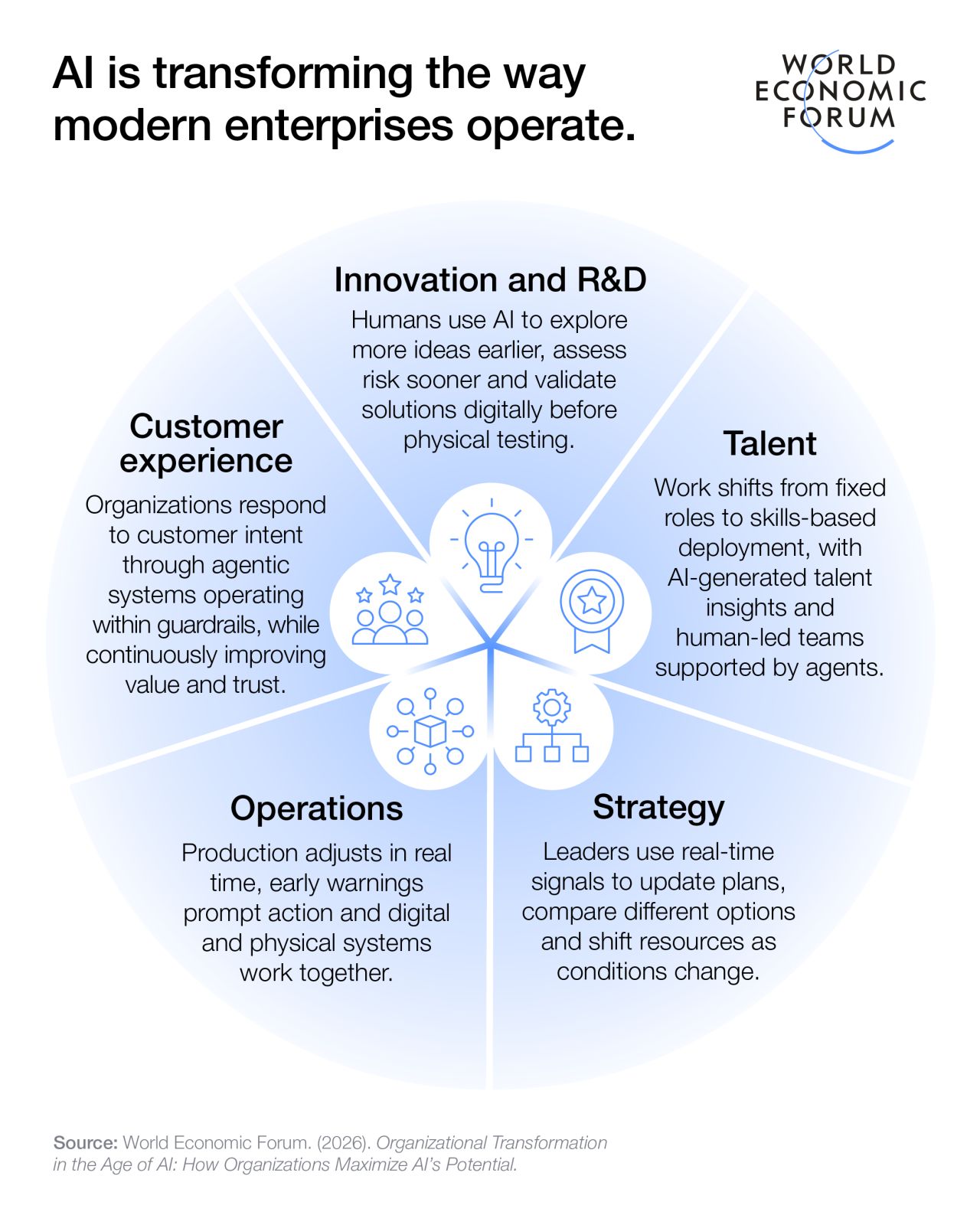
In a recent LinkedIn post, Nicki Allitt discusses a significant evolution in how business leaders are approaching Artificial Intelligence (AI). Allitt observes that the conversation has moved beyond the basic efficacy of AI to a more complex challenge: how organizations can fundamentally redesign themselves to harness its full potential.
Allitt highlights the shift in leadership queries, noting:
“A few years ago, many leaders were asking a simple question about AI: Does it work? In 2026, that question has changed. Now it’s: How do we redesign our organizations to truly capture its value?”
This transition, according to Allitt, signifies that AI is no longer confined to experimental pilot projects. Instead, it is becoming deeply integrated into core business functions, influencing decision-making processes, shaping customer interactions, driving research and development, and transforming talent management.
The Strategic Imperative of AI Integration
Nicki Allitt points to the World Economic Forum’s new report, “Organizational Transformation in the Age of AI: How Organizations Maximize AI’s Potential,” as a key indicator of this broader industry trend. This report, which synthesizes insights from over 450 executives within the WEF’s AI Transformation of Industries community, underscores a fundamental change in organizational strategy.
Allitt argues that forward-thinking leaders are not merely focused on automating existing tasks. Instead, they are actively re-imagining their operating models to unlock new forms of human value at scale. This strategic reorientation is crucial for organizations aiming to lead in the AI-driven future.
“The leaders pulling ahead aren’t just automating tasks, they’re rethinking operating models to create human value at scale.”
Key Principles for AI-Powered Transformation
The post further elaborates on the foundational principles that distinguish organizations effectively leveraging AI. Allitt identifies five critical pillars that are emerging as essential for maximizing AI’s potential:
1. Human Accountability
Ensuring that human oversight and responsibility remain central, even as AI systems become more autonomous.
2. End-to-End Redesign
Moving beyond incremental changes to a holistic reimagining of business processes and structures to fully accommodate AI.
3. Scalable Talent Systems
Developing workforce strategies and systems that can adapt and grow alongside AI capabilities.
4. Transparency-Driven Trust
Building confidence in AI systems through clear communication and understanding of their operations.
5. Disciplined Experimentation
Adopting a structured approach to testing and implementing AI solutions to foster innovation while managing risks.
As Nicki Allitt concludes, the next phase of AI adoption is not about the technology itself, but about the profound organizational transformation it necessitates.
“The next chapter of AI isn’t about tools. It’s about transformation.”
This perspective from Nicki Allitt emphasizes that true AI success lies in a strategic, human-centric redesign of the organization, rather than simply adopting new technologies.
📝 About This Content
This article is based on insights shared by Nicki Allitt on LinkedIn.
📅 Originally posted on March 16, 2026 | View original post on LinkedIn →