
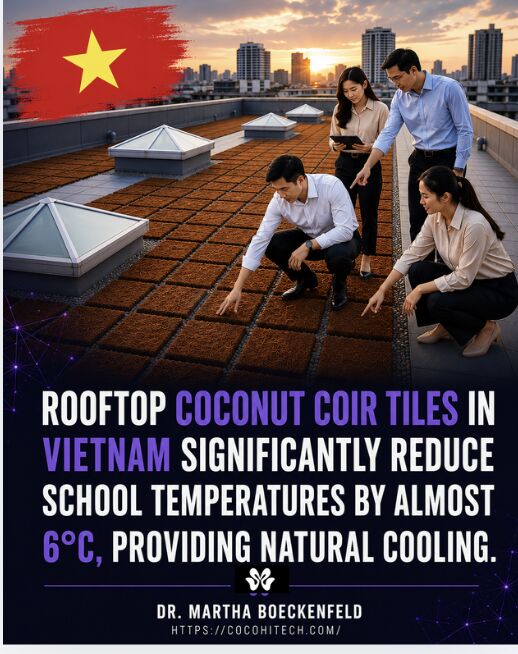
In a recent LinkedIn post, Dr. Martha Boeckenfeld highlights an innovative solution to extreme classroom heat in Vietnam, demonstrating how agricultural waste can be transformed into effective building materials. Dr. Martha Boeckenfeld shares the story of a six-year-old student struggling to learn in a 40°C classroom, illustrating the immediate impact of rising temperatures on education.
The core of the innovation, as detailed by Dr. Martha Boeckenfeld, lies in repurposing Vietnam’s abundant coconut husks, which were previously burned or dumped, creating environmental problems. Local engineers and waste processors developed a method to compress these husks into dense tiles filled with air pockets.
Repurposing Agricultural Waste for Climate Resilience
Dr. Martha Boeckenfeld explains that these coconut coir tiles are placed on top of existing roofs to slow heat transfer. This approach offers a sustainable and affordable alternative to conventional insulation, particularly for schools that cannot afford imported synthetic materials. The post emphasizes the tangible benefits observed after the implementation of this insulation.
“Local engineers and waste processors saw another use for them: roof insulation.
They compressed coconut coir into dense tiles filled with tiny air pockets. Placed on top of existing roofs, the tiles slow heat transfer before it reaches the classroom.”
The results, as presented by Dr. Martha Boeckenfeld, are significant. The initiative led to a nearly 6°C drop in indoor temperatures, eliminating the need for electricity-powered cooling. Furthermore, the natural properties of coconut coir proved advantageous, with its high lignin content offering water resistance during monsoon seasons and the tiles being fully biodegradable at the end of their lifecycle. Dr. Martha Boeckenfeld points out the economic advantages, noting that these tiles cost considerably less than synthetic alternatives and can be installed and maintained by local workers.
Community Impact and Educational Benefits
The positive effects extend beyond temperature reduction. Dr. Martha Boeckenfeld highlights the improved student engagement and attendance during hotter months. The initiative also created a new revenue stream for local farmers, who can now sell their coconut husks instead of incurring costs or environmental damage from disposal. This circular economy approach benefits the entire community, from farmers to processors to students.
“A pile of agricultural waste became a roof material that helped children stay in school.”
Dr. Martha Boeckenfeld uses this case study to prompt reflection on the impact of environmental conditions on cognitive function:
“When was the last time the temperature of a room changed how well you could think?”
This practical application of waste repurposing, as shared by Dr. Martha Boeckenfeld, underscores the potential for sustainable innovation to address pressing environmental and educational challenges. The article concludes by encouraging readers to follow Dr. Martha Boeckenfeld for more insights on navigating the future with AI while maintaining human-centric leadership.
📝 About This Content
This article is based on insights shared by Dr. Martha Boeckenfeld on LinkedIn.
📅 Originally posted on July 24, 2026 | View original post on LinkedIn →