
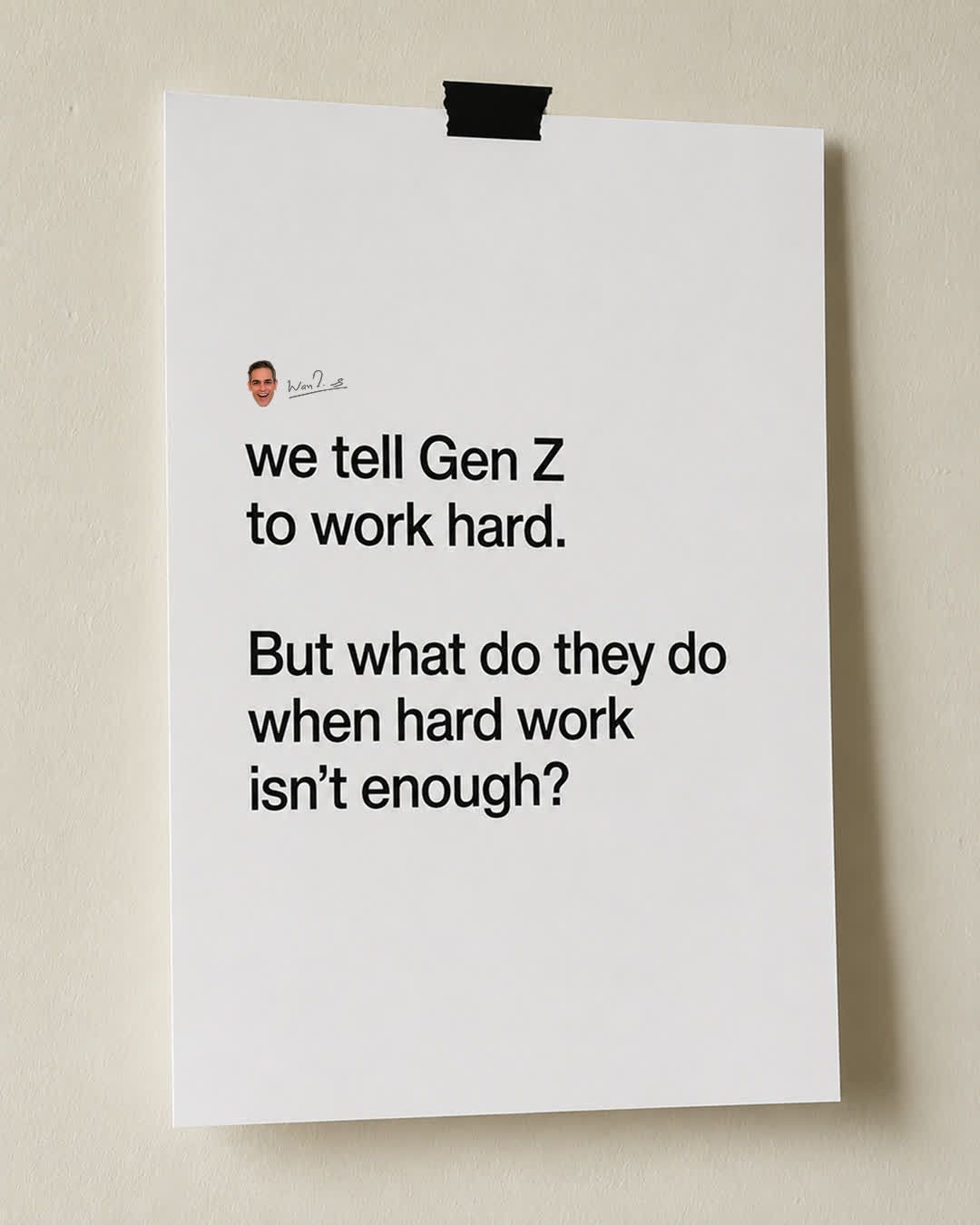
In a recent LinkedIn post, Ankur Warikoo delves into the perceived reluctance of Gen Z to work, offering a stark generational comparison that highlights economic and societal shifts. Warikoo frames the issue not as a failing of the younger generation, but as a logical response to vastly different life circumstances compared to their parents.
The post begins by directly addressing the sentiment, stating:
Gen Z isn’t wrong when they say they don’t want to work.
Warikoo then contrasts the experiences of previous generations with those of Gen Z, painting a picture of increasing economic hardship and competition for the latter. He details the perceived stability and achievements of his parents’ generation, who he suggests:
– They bought a house at 35.
– Supported a family on a ₹35,000 salary.
– Worked 40 hours a week.
– Had a peaceful retirement.
According to Warikoo, this picture of upward mobility and financial security stands in sharp contrast to the realities faced by Gen Z. He outlines several key challenges confronting this generation:
The Modern Economic Gauntlet for Gen Z
Warikoo highlights the intense competition and financial pressures that define the early careers of young professionals today. He points out the paradoxical demand for experience in entry-level roles:
Gen Z, on the other hand:
– Competes with 10,000 people for a fresher’s job that still asks for 3 years of experience.
Furthermore, Warikoo discusses the significant financial investment required for education and its often underwhelming return. He notes the disparity between the cost of degrees and the starting salaries they yield:
Education vs. Earning Potential
As Ankur Warikoo argues, the economic equation for education has dramatically shifted. He illustrates this by detailing the financial burden of degrees:
– Has to spend ₹5-10 lakhs on a degree that gets a CTC of ₹3.5 lakh.
This financial strain is compounded by the escalating cost of living, particularly housing. Warikoo emphasizes how homeownership, once attainable, has become a distant dream for many in Gen Z:
– Gets a house that once cost ₹15 lakhs at ₹3 crore, even with a loan.
The cumulative effect of these economic pressures, Warikoo suggests, is a pervasive sense of instability and a compromised quality of life. He concludes his comparison by stating:
– Has no work-life balance, and lives hand to mouth every month.
A Generational Reckoning
Warikoo’s analysis suggests that the frustration and perceived lack of drive among Gen Z are not inherent traits but rather a product of their environment. He posits that the system itself has created these challenges, leading to widespread discontent.
Concluding his post, Warikoo prompts reflection by asking:
What are your thoughts?
His insights offer a critical perspective on the economic pressures shaping younger generations and challenge the conventional narratives surrounding work ethic.
📝 About This Content
This article is based on insights shared by Ankur Warikoo on LinkedIn.
📅 Originally posted on July 20, 2026 | View original post on LinkedIn →