
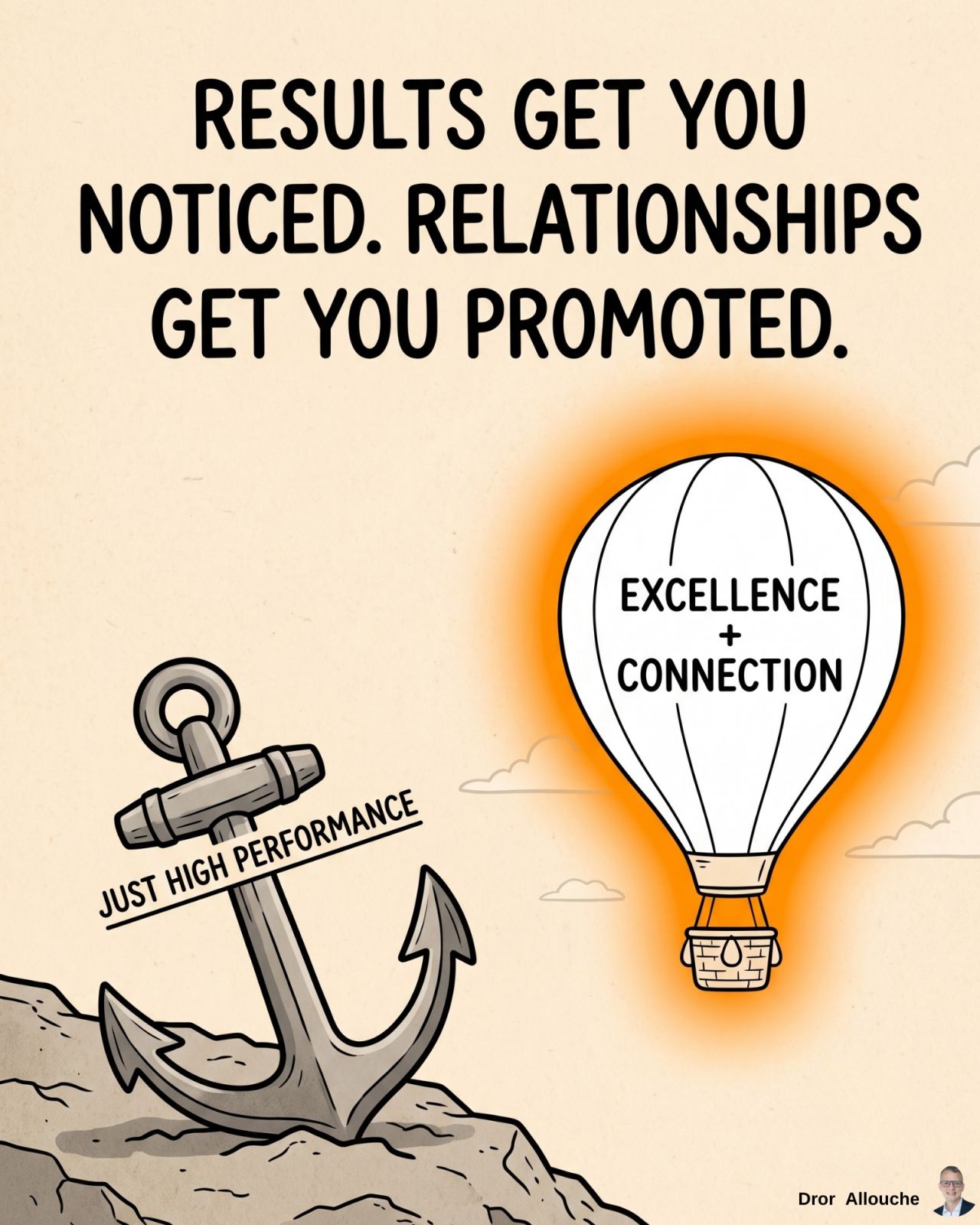
In a recent LinkedIn post, Dror Allouche offers a compelling perspective on career advancement, arguing that while high performance is crucial, it’s the cultivation of strong relationships that truly paves the way for promotion. Allouche challenges the common focus on individual achievement, suggesting that true career acceleration comes from a blend of delivering results and being a valued collaborator.
The post highlights a key distinction: “Your high performance is killing your career,” Allouche begins, immediately setting a provocative tone. He elaborates that the focus on being a “high performer” can sometimes overshadow the equally important aspect of being someone others genuinely want to work with. According to Allouche, “People who build excellence AND relationships are the ones who get promoted.” This dual focus, he posits, is the differentiator for those who ascend the corporate ladder.
The Differentiators of Promotable Professionals
Allouche breaks down the strategies employed by individuals who successfully navigate their careers by balancing performance with interpersonal skills. He identifies several key behaviors that set these professionals apart.
Focusing on Essentials and Understanding Stakeholders
One of the primary strategies Allouche points out is starting with the end in mind, a principle that helps individuals focus on the most critical aspects of their work. He notes that this approach helps to recenter efforts on what truly matters. Furthermore, Allouche emphasizes the importance of active listening, stating that effective professionals “listen to understand, not to respond.” This approach, he argues, moves beyond simply being right and instead fosters an environment where the best solutions emerge. As he puts it:
“They help us recenter on the important.”
Cultivating Deep Relationships and Navigating Crises
Building genuine connections is another cornerstone of career growth, according to Allouche. He suggests that professionals who “succeed by helping others succeed” create a positive and collaborative environment. This involves sharing knowledge freely and celebrating the achievements of colleagues as if they were their own. In times of difficulty, Allouche observes that these individuals demonstrate resilience and a solution-oriented mindset. He describes their approach during challenging times:
“They’re the calm in the storm.”
This ability to remain composed and focused on solutions, rather than blame, is a critical factor in maintaining trust and effectiveness during high-pressure situations.
Energizing Teams and Owning Mistakes
Allouche also identifies the impact these professionals have on team dynamics. They are described as individuals who “energize the room” by bringing solutions rather than complaints, and by lifting others during tough times. Their presence makes meetings more productive, as Allouche succinctly states:
“Meetings are better when they’re in there.”
Moreover, a profound sense of accountability is highlighted. These individuals own their mistakes without making excuses, focusing instead on finding solutions. This honesty, Allouche points out, is fundamental in building trust.
Reliability and Follow-Through
Finally, Allouche underscores the importance of reliability and consistent follow-through. While cautioning against overcommitting, he stresses that when a commitment is made, the expectation is that it will be exceeded. The principle here is simple yet powerful:
“If they said they’ll do it, it’s done.”
This unwavering commitment to seeing tasks through to completion, not just identifying problems, ensures that their contributions are consistently impactful and build a strong reputation for dependability.
In conclusion, Dror Allouche’s insights on LinkedIn serve as a valuable reminder that while exceptional results gain attention, it is the consistent cultivation of strong, trust-based relationships that ultimately drives significant career advancement.
📝 About This Content
This article is based on insights shared by Dror Allouche on LinkedIn.
📅 Originally posted on June 28, 2026 | View original post on LinkedIn →