
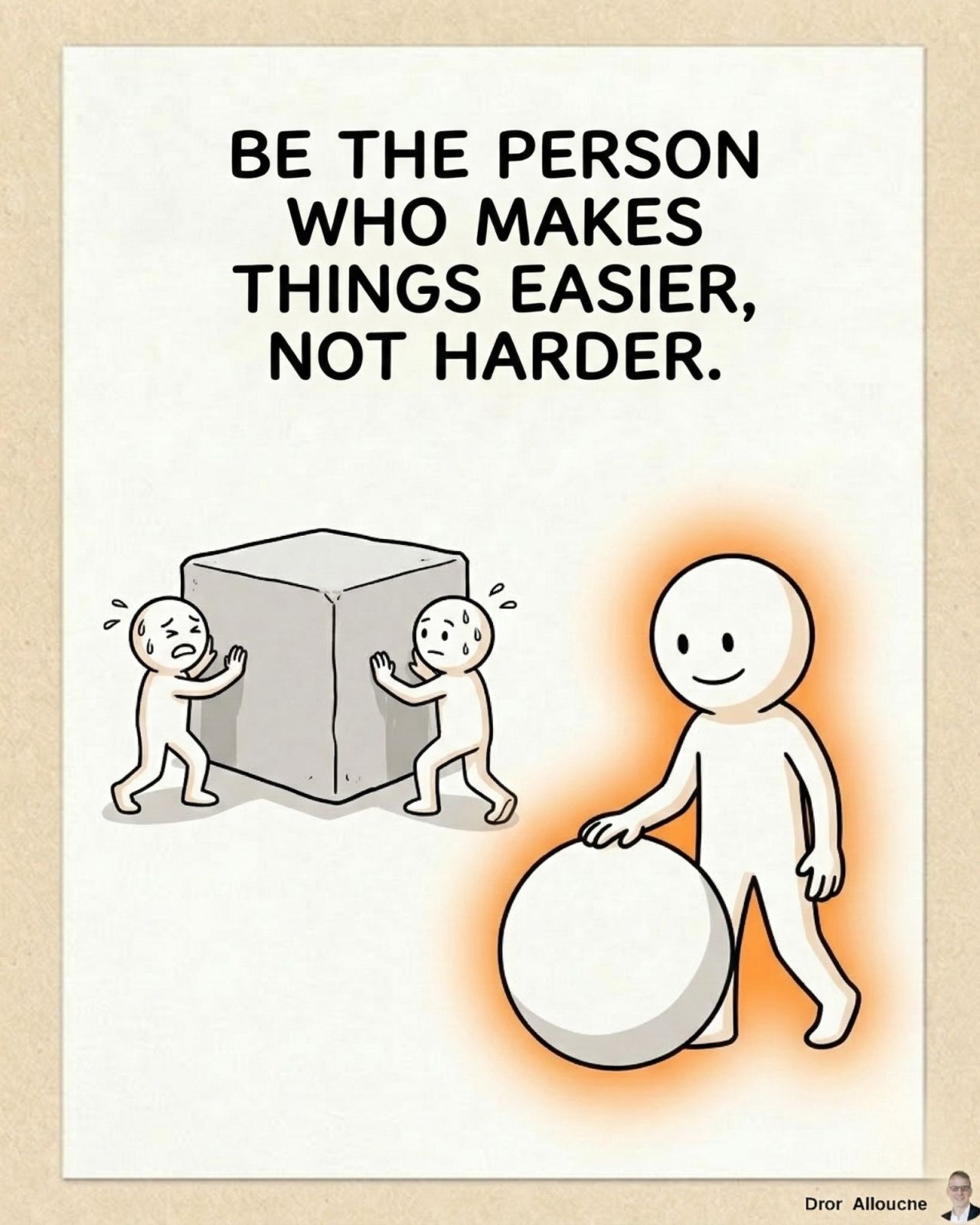
In a recent LinkedIn post, Dror Allouche explores a common paradox in professional development: how an excessive focus on high performance can inadvertently hinder career advancement. Allouche argues that while strong results get individuals noticed, it is the ability to cultivate robust relationships and become a desirable colleague that truly drives promotions and long-term success.
The core of Dror Allouche’s message is that excelling in one’s tasks is only half the equation. The other, often overlooked, half involves being the type of person others actively want to collaborate with. As Allouche puts it:
“We focus so hard on being a ‘high performer’ that we forget to be the person people WANT to work with.”
This emphasis on relational capital, according to Allouche, is what distinguishes those who merely perform well from those who accelerate their careers. Allouche outlines several key behaviors adopted by individuals who successfully balance excellence with strong interpersonal skills.
The Foundation of Relational Excellence
Dror Allouche identifies eight distinct strategies that high-achievers who are also well-regarded by their peers employ. These strategies move beyond mere task completion to focus on how individuals interact and contribute to the broader team dynamic.
Strategic Focus and Clarity
One of the first points Allouche highlights is the importance of having a clear objective. Individuals who excel in this area “start with the end in mind,” ensuring their efforts are directed towards essential goals and reducing extraneous noise. This clarity, as Dror Allouche notes, helps teams “recenter on the important.”
Active Listening and Collaboration
Allouche also stresses the power of listening to understand, rather than simply to reply. This approach, according to the post, shifts the focus from being ‘right’ to finding the optimal solution. This collaborative mindset is key, as Dror Allouche observes, because such individuals “bring out the best options from stakeholders.”
“Meetings are better when they are there.”
This quote encapsulates the positive impact these individuals have on team dynamics. They contribute constructively, offer solutions rather than just problems, and uplift colleagues during challenging times. Allouche suggests that their presence inherently improves the collaborative environment.
Resilience and Trust-Building
Furthermore, Dror Allouche points to the ability to remain calm and solution-oriented during crises as a critical differentiator. Instead of assigning blame, these individuals “lower their voice when others raise theirs,” becoming “the calm in the storm.” This composure, coupled with taking ownership of mistakes without excuses, builds significant trust.
“They build trust through honesty.”
This honesty and accountability are foundational to creating reliable professional relationships. Allouche emphasizes that these individuals don’t just identify problems; they commit to seeing solutions through, demonstrating reliability and a strong work ethic.
Shared Success and Energy
Finally, Allouche touches upon the importance of fostering a supportive environment. This includes celebrating the successes of others as if they were their own, embodying the principle that “They succeed by helping others succeed.” This generosity and positive energy contribute to a more cohesive and motivated team.
In conclusion, Dror Allouche’s insights suggest that while high performance is a prerequisite for career progression, it is the cultivation of strong, positive relationships and a collaborative spirit that truly unlocks promotion potential and long-term career acceleration.
📝 About This Content
This article is based on insights shared by Dror Allouche on LinkedIn.
📅 Originally posted on March 5, 2026 | View original post on LinkedIn →