
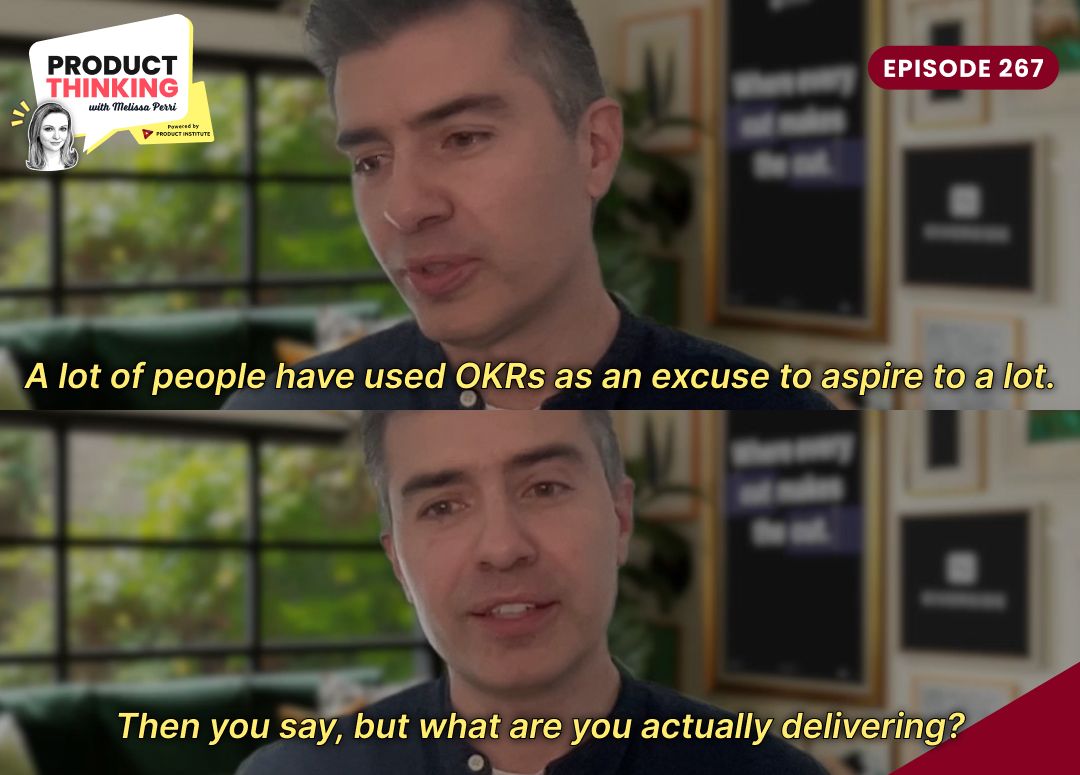
In a recent LinkedIn post, Melissa Perri discusses a common pitfall in setting and achieving Objectives and Key Results (OKRs): the risk of shipping valuable products even when numerical targets are met. Perri highlights how teams can meticulously hit their OKR metrics while still delivering a disjointed and ultimately unvaluable product, a phenomenon she refers to as a “Frankenstein’s monster.” This observation stems from a discussion on the “Product Thinking with Melissa Perri” compilation episode, featuring insights from other product leaders like Hugo Froes, Jeff Gothelf, Joshua Seiden, and Anish Bhimani.
Perri points out a fundamental misunderstanding of OKRs, where teams often treat them as a simple target to hit rather than a strategic guide. “Teams treat OKRs as permission to aspire,” Perri shared in her post, referencing the discussion. “They hit the metrics they set. But the thing they shipped doesn’t hang together, and the long-term value is broken.” This suggests that a focus solely on quantitative outcomes can obscure the qualitative assessment of whether the shipped product actually solves a user problem or drives meaningful business impact.
The Disconnect Between Metrics and Value
Melissa Perri’s analysis underscores a critical challenge in product development: the potential for metrics to become detached from genuine value creation. As Perri argues, achieving a specific number, such as a 10% increase in user engagement, does not automatically equate to a successful product. The underlying work that led to that 10% might have been rushed, poorly conceived, or misaligned with broader strategic goals.
According to Perri, the core issue lies in the interpretation and application of OKRs. “Hitting your numbers doesn’t tell you if what you shipped is actually worth anything,” she stated, emphasizing that the true measure of success should be the tangible value delivered to users and the business, not just the attainment of predefined metrics. This perspective challenges the common practice of optimizing for OKR achievement above all else.
Rethinking OKR Success
The conversation, as Perri relays it, suggests a need for a more holistic approach to setting and evaluating OKRs. Instead of viewing them as a rigid set of targets, Perri advocates for their use as a tool to foster strategic alignment and encourage meaningful aspirations, provided they are coupled with a robust understanding of product value. The discussion implied that while hitting OKR numbers might be a necessary condition for success, it is far from a sufficient one.
Perri concludes her post by posing a question to her audience, inviting reflection on their own experiences: “What’s one OKR your team hit last quarter that you’re not sure actually mattered?” This prompts further dialogue on how to ensure that the pursuit of OKRs leads to genuinely impactful product outcomes, rather than just the appearance of progress.
The full conversation, featuring Perri alongside Froes, Gothelf, Seiden, and Bhimani, is available on various podcast platforms, offering deeper insights into navigating the complexities of OKRs and product strategy.
📝 About This Content
This article is based on insights shared by Melissa Perri on LinkedIn.
📅 Originally posted on May 1, 2026 | View original post on LinkedIn →