
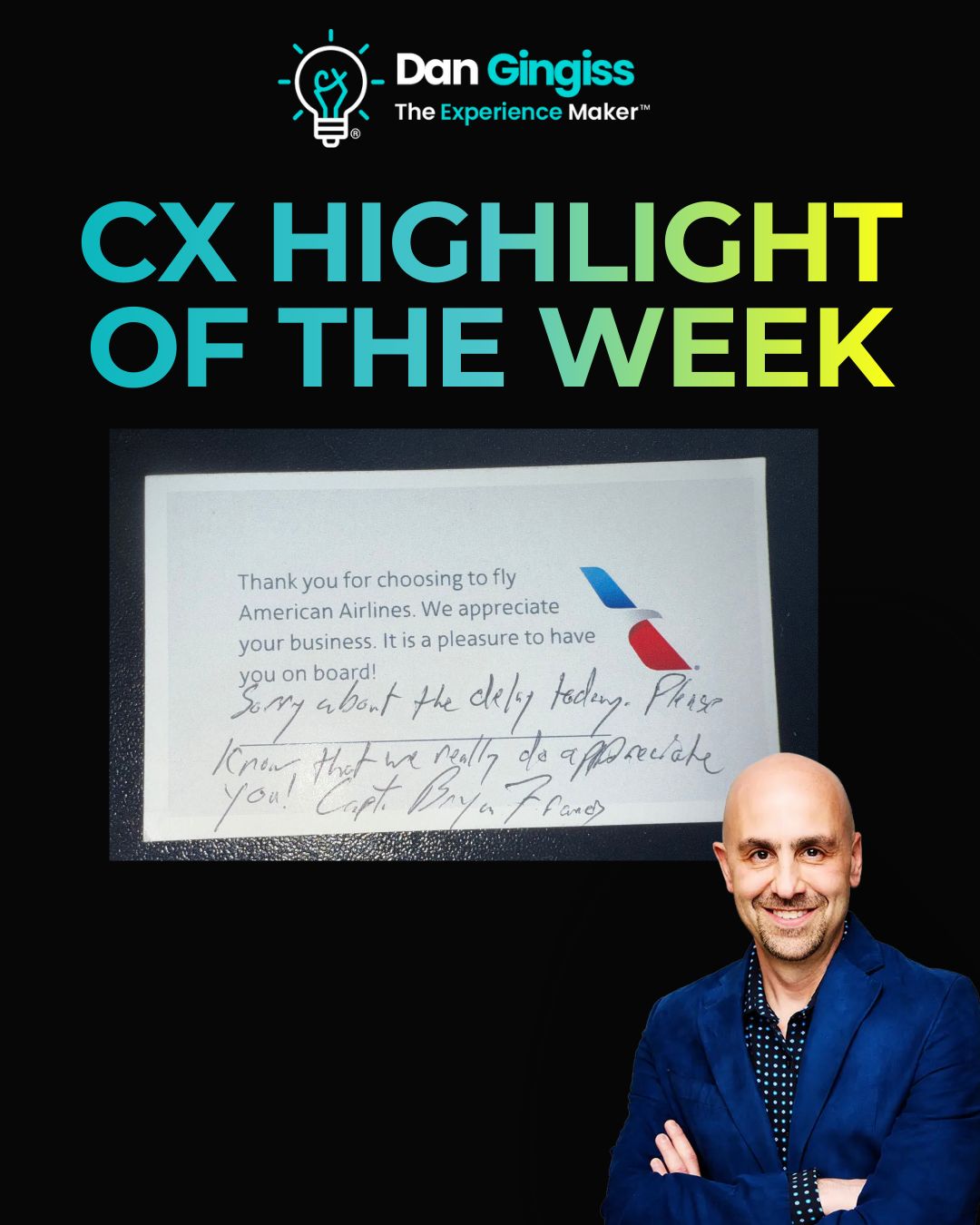
In a recent LinkedIn post, Dan Gingiss, CSP, a recognized expert in customer experience, highlights how a seemingly small gesture by American Airlines transformed a potentially negative travel experience into a memorable lesson in customer care. Gingiss, who shared his encounter with his professional network, emphasizes the power of human connection and sincere acknowledgment in managing customer frustration.
The incident occurred during a flight delay, a situation universally understood to be a source of passenger irritation. However, upon boarding, Gingiss found a handwritten note on his seat. This note, signed by the captain, offered a direct apology for the delay and expressed genuine appreciation for the passengers’ patience.
“Sorry about the delay today. Please know that we really do appreciate you!”
Gingiss explains that this simple, personal touch had a profound impact on the customer experience, even before the flight took off. He breaks down the effectiveness of this approach into three key components:
Acknowledging the Pain Point
According to Gingiss, the handwritten note and the captain’s subsequent in-cabin announcement served as a crucial first step: acknowledging the customer’s discomfort without resorting to corporate jargon. This directness, as Gingiss points out, is essential for building rapport.
Creating a Human Connection
The act of a handwritten signature and the captain personally addressing the passengers created a vital human connection. Gingiss argues that this personal ownership by a real person, rather than a scripted announcement, makes the apology feel more authentic and less like a perfunctory corporate response. As Gingiss notes, “a real person took ownership.”
Rebuilding Trust Through Sincerity
Ultimately, the sincerity of the gesture was key to rebuilding trust. In a world often dominated by automated messages and impersonal service, a handwritten note and a personal apology stand out. Gingiss highlights that this approach effectively countered the frustration of the delay by demonstrating genuine care. He states, “It rebuilt trust (because it felt sincere, not scripted).”
The Controllable Aspect of Customer Experience
Gingiss uses this experience to underscore a fundamental principle in customer service: while companies cannot always control the problems that arise, they have complete control over how those problems are handled. He poses a thought-provoking question to his audience, suggesting that businesses should consider their own customer journeys.
“That’s the point: You can’t always control the problem. You can control the experience.”
He encourages leaders to identify moments within their customer interactions where a small, personal touch could significantly alter a customer’s perception, potentially turning a negative or neutral experience into one that fosters loyalty. This, in Gingiss’s view, is the essence of exceptional customer experience strategy.
“Where in your customer journey could one small, personal touch turn frustration into loyalty?”
The takeaway from Gingiss’s post is clear: in an era of advanced technology, the most effective customer experience strategies often involve simple, human-centered actions that demonstrate empathy and genuine appreciation.
📝 About This Content
This article is based on insights shared by Dan Gingiss, CSP on LinkedIn.
📅 Originally posted on January 30, 2026 | View original post on LinkedIn →