
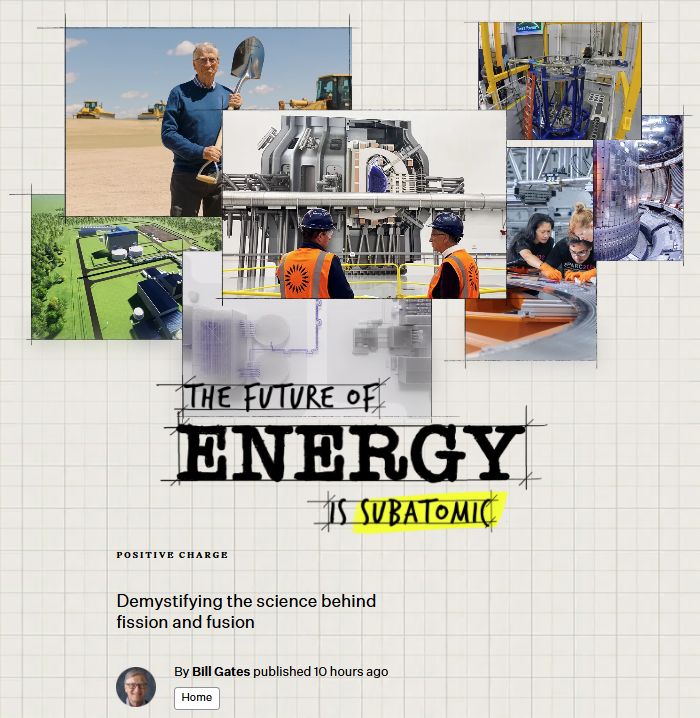
The Unseen Barrier: Why Affordable Electricity is Key to Global Progress
In today’s interconnected world, access to reliable and affordable electricity is not just a convenience; it’s a fundamental requirement for economic growth and societal advancement. Bill Gates, a prominent figure in technology and philanthropy, recently highlighted a critical bottleneck that is holding back progress across virtually every sector of the global economy: the lack of widespread access to affordable energy. He posits that overcoming this limitation could be as profoundly transformative as the invention of the steam engine, which heralded the dawn of the Industrial Revolution.
The Power of Electrification: A Catalyst for Change
Imagine a world where every community, every business, and every individual has access to abundant, clean, and affordable electricity. The implications are staggering. For developing nations, it means powering schools, hospitals, and businesses, enabling them to participate fully in the global economy. For industries, it means greater efficiency, lower operating costs, and the ability to innovate without energy constraints. For individuals, it means improved quality of life, access to information, and opportunities for education and employment.
Gates draws a powerful parallel between the potential of future energy technologies and the impact of the steam engine. The steam engine revolutionized manufacturing, transportation, and agriculture, fundamentally reshaping society and ushering in an era of unprecedented growth. Similarly, a future powered by advanced forms of nuclear energy, such as fission and fusion, holds the promise of delivering the kind of energy breakthrough needed to unlock new levels of global prosperity.
The Promise of Fission and Fusion
While traditional energy sources have powered our progress thus far, they come with significant environmental and sustainability challenges. Advanced nuclear power, encompassing both fission and fusion technologies, offers a compelling alternative. These technologies have the potential to provide:
- Abundant Energy: Nuclear reactions can generate vast amounts of energy from relatively small amounts of fuel.
- Clean Power: Unlike fossil fuels, nuclear power does not produce greenhouse gas emissions during operation, making it a critical tool in the fight against climate change.
- Reliability: Nuclear power plants can operate continuously for long periods, providing a stable and reliable baseload power source, unlike intermittent renewable sources.
The development of next-generation fission reactors and the pursuit of controlled nuclear fusion represent significant scientific and engineering challenges. However, the potential rewards—a world free from energy limitations—make these endeavors crucial. As Gates suggests, achieving this level of energy breakthrough could indeed spark a new era of innovation and progress, comparable in scale to the industrial transformations of the past.
Looking Ahead
The path to a future powered by advanced nuclear energy is complex, requiring continued research, development, and investment. However, the fundamental insight remains: removing the limits imposed by energy scarcity is paramount to unlocking human potential and driving global economic development. The vision of a world transformed by abundant, affordable, and clean energy is a powerful one, and advanced nuclear technologies may very well be the key to realizing it.
This article was inspired by insights shared by Bill Gates on LinkedIn.
📝 About This Content
This article is based on insights shared by Bill Gates on LinkedIn.
📅 Originally posted on October 2, 2025 | View original post on LinkedIn →