
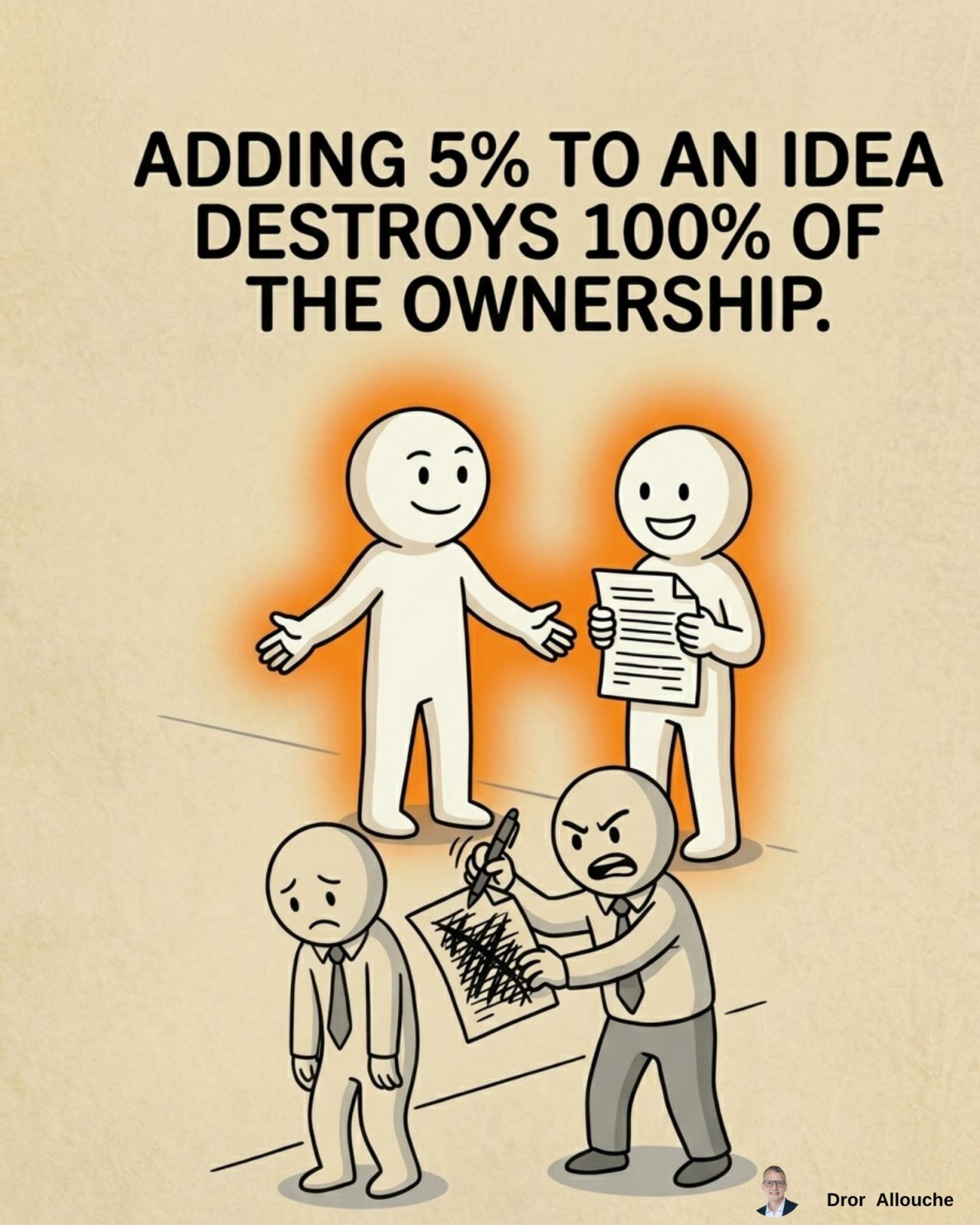
In a recent LinkedIn post, Drorallouche explores a common workplace dynamic: the urge to help that can inadvertently stifle team ownership and individual initiative. Drorallouche argues that while the intention behind offering assistance might be positive, the execution can often lead to unintended negative consequences for the team’s sense of responsibility and commitment.
The core of Drorallouche’s message centers on the idea that over-involvement, even with good intentions, can erode an individual’s sense of ownership over their work. “We possess an urge to contribute,” Drorallouche states. “A colleague presents a project. We love the ideas. But we can’t resist adding a little something extra. Not for their success, but to satisfy our ego. We think we are adding value. In reality, we are destroying their ownership.” This highlights a critical distinction between genuine support and ego-driven intervention.
The Execution Equation: Protecting Commitment
Drorallouche introduces the concept of the “Execution Equation,” emphasizing that results are directly tied to commitment. According to Drorallouche, altering a strategy, even with minor additions, can significantly reduce the creator’s commitment to their original vision. The proposed action is to approve plans that meet the standard and to withhold personal additions, allowing the creator to execute their vision fully.
This leads to a probing question for leaders: “Where do you sacrifice team commitment to satisfy your urge to contribute?” Drorallouche suggests that leaders must consciously manage their own impulses to contribute to safeguard their team’s dedication.
The Intervention Threshold: Measuring Impact
To provide a more objective framework for intervention, Drorallouche outlines the “Intervention Threshold.” This principle suggests that interventions should only occur when they are likely to have a substantial impact on the outcome. Drorallouche proposes a “30% rule,” meaning intervention is warranted only when a contribution is expected to alter the outcome by 30% or more.
This approach aims to prevent minor adjustments that, while seemingly helpful, chip away at the original owner’s sense of control and responsibility. As Drorallouche points out, “Interventions require a standard. Adjustments of 5% damage ownership.” The author prompts leaders to consider, “How do you measure the impact of your interventions?”
The Boardroom Application: Governance vs. Execution
Finally, Drorallouche addresses the role of leadership in a boardroom context, distinguishing between the roles of directors and operators. “Directors advise. Operators execute,” is the clear delineation provided.
Instead of directly executing or modifying, Drorallouche recommends addressing gaps with questions. An example action is to state, “I see a gap in the timeline. Walk me through your plan to close it.” This method encourages the operator to problem-solve and maintain ownership of the solution. The post concludes with a question designed to foster self-reflection among leaders: “What mechanisms keep your focus on governance over execution?”
Ultimately, Drorallouche’s insights call for a more mindful approach to leadership, advocating for the cultivation of team capacity and the protection of individual ideas to foster genuine ownership and drive sustainable results.
📝 About This Content
This article is based on insights shared by Drorallouche on LinkedIn.
📅 Originally posted on May 27, 2026 | View original post on LinkedIn →