
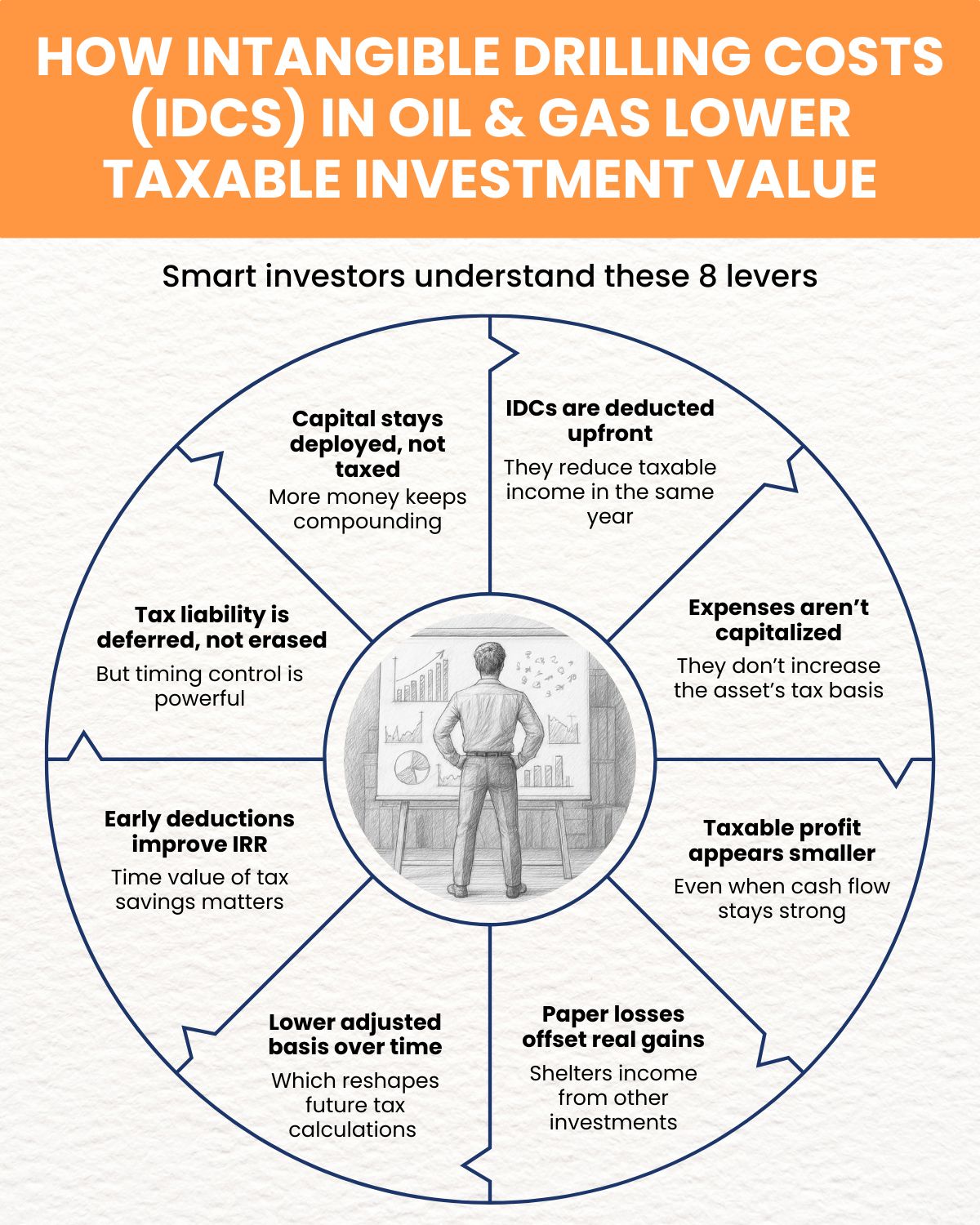
In a recent LinkedIn post, Marc Henn illuminates the often-overlooked impact of Intangible Drilling Costs (IDCs) on the taxable value of oil and gas investments. Henn, a licensed Investment Adviser with Harvest Financial Advisors, argues that smart investors look beyond immediate returns to understand how value is measured for tax purposes, and IDCs play a crucial role in this assessment.
Henn highlights that IDCs significantly reshape taxable outcomes by offering immediate benefits and altering the long-term financial picture of an investment. He emphasizes that these costs are not merely an expense but a strategic element that influences tax liabilities and investment reporting.
“Smart investors don’t just look at returns. They look at how value is measured for tax purposes.”
The Mechanics of IDC Impact on Taxable Value
Marc Henn details eight specific ways IDCs influence taxable investment value. A key point is their nature as upfront deductions, allowing them to be deducted in the same year they are incurred. This immediate deduction directly lowers taxable income for the investor.
Furthermore, Henn points out that IDCs do not require capitalization. This means these expenses do not increase the asset’s basis, thereby lowering the reported investment value. This distinction is critical for tax calculations and reporting.
Reshaping Profitability and Tax Efficiency
According to Marc Henn, the effect of IDCs extends to the appearance of profitability. While cash flow may remain strong, the taxable profit is reported as smaller on paper. This can be a strategic advantage, as Henn notes:
“Paper losses offset real gains. Losses shelter income elsewhere. Improves overall tax efficiency.”
This ability to offset real gains with paper losses enhances the overall tax efficiency of an investment portfolio. Henn also explains that IDCs lead to a lower adjusted basis over time, as the basis declines faster. This impacts future tax calculations and can defer tax liabilities, shifting them forward in time.
Strategic Implications for Investors
Marc Henn argues that the strategic use of IDCs can improve an investor’s Internal Rate of Return (IRR) due to the impact of early deductions. The time value of these tax savings compounds, offering a significant benefit over the investment’s lifecycle.
He further elaborates on the concept of deferred taxes, stating:
“Deferred, not eliminated taxes. Liability shifts forward in time. Control over timing creates leverage.”
This control over the timing of tax liabilities provides investors with leverage, allowing them to manage their financial obligations more effectively. Ultimately, Henn concludes that IDCs ensure capital remains deployed rather than being drawn out early for tax payments, allowing for continued compounding of returns.
In summary, Marc Henn’s analysis on LinkedIn underscores that IDCs do more than just reduce taxes; they fundamentally alter how investment value is experienced and reported, offering sophisticated investors a powerful tool for tax and financial management.
📝 About This Content
This article is based on insights shared by Marc Henn on LinkedIn.
📅 Originally posted on March 3, 2026 | View original post on LinkedIn →