
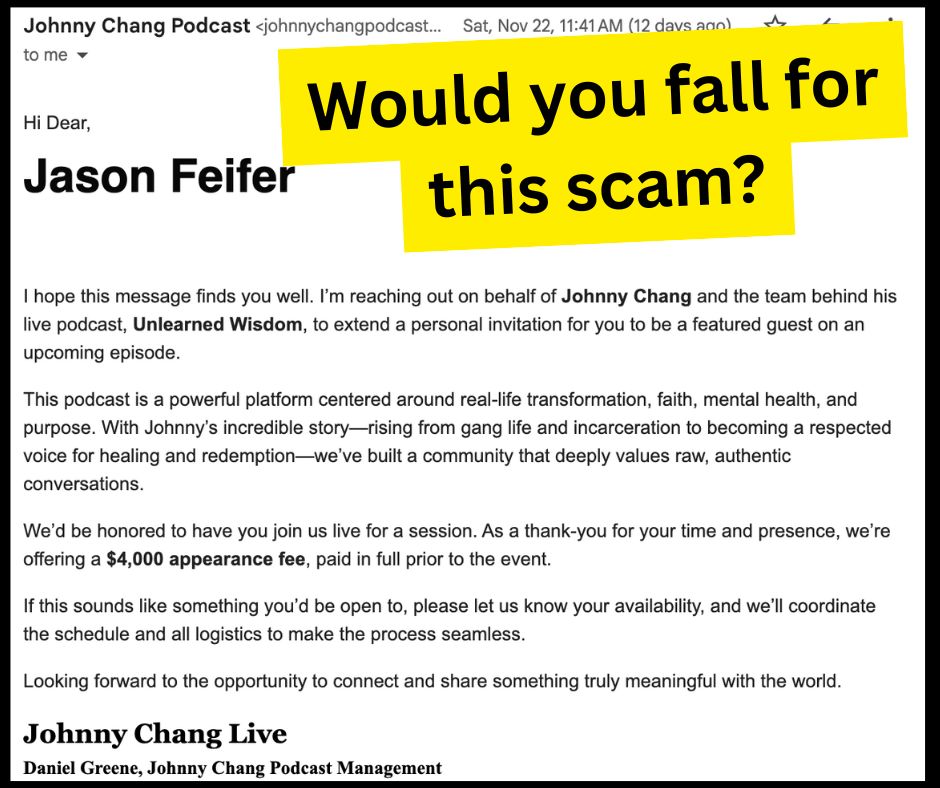
In a recent LinkedIn post, entrepreneur and host of the Build for Tomorrow podcast, Jason Feifer, details a near-miss with a sophisticated scam that targeted him via email, highlighting the evolving tactics used by fraudsters and the importance of trusting one’s instincts.
Feifer recounts how he was initially enticed by an offer of $4,000 to appear on a livestream with a purported producer for a religious influencer. Having participated in similar events before, the offer seemed plausible. However, the situation quickly escalated through a series of red flags during a preparatory Zoom call.
“He never turned on his camera — first red flag.”
The supposed producer then guided Feifer through a process involving Meta Business Suite, instructing him to add his own email address to his ‘People list’ to grant administrative access. This step, Feifer explains, was presented as a necessary setup for the live event.
The “Meta Business Suite” Maneuver and the TinyURL Trick
When Feifer attempted to follow the instructions, he received an error message from Meta indicating he was already a member. The scammer, unfazed, attributed this to a common issue with overly long URLs and suggested using TinyURL.com to shorten the link. This suggestion immediately triggered Feifer’s heightened suspicion.
As Feifer notes, this was the critical turning point. “Now my alarms really go off,” he writes, describing how he stopped sharing his screen and questioned the nonsensical step. The scammer’s dismissive and condescending response further solidified Feifer’s decision to disengage.
“Out of an abundance of caution, I don’t think I should share that.”
Feifer’s refusal to continue sharing his screen led to the scammer abruptly ending the call, citing another appointment. It was only later that Feifer understood the full scope of the attempted fraud.
Unpacking the Scam’s Mechanics
Feifer explains the underlying mechanism of the scam: the lengthy Meta invite URL contained a hidden key to his account. While too long for the scammer to easily copy or replicate during a screenshare, shortening it via TinyURL would have made it manageable. Once shortened, the scammer could have potentially used the link to gain unauthorized administrative control over Feifer’s Meta Business Suite account.
According to Feifer, the scam was designed to exploit a user’s trust and a desire to complete a seemingly legitimate task. He emphasizes that even experienced individuals can be caught off guard.
“People always say, ‘I’d never fall for something like that — until I did.’ Same here. I saw plenty of red flags, but kept going… until the last moment.”
The incident serves as a stark reminder for professionals navigating the digital landscape. Feifer concludes his post with a crucial piece of advice for his audience:
“So here’s the reminder: If something feels even slightly off, STOP. Trust the instinct. It’s there to protect you.”
Feifer’s account underscores the necessity of maintaining a high level of digital vigilance, especially when dealing with unexpected offers or instructions that seem unusual, even if they originate from seemingly credible sources or involve well-known platforms.
📝 About This Content
This article is based on insights shared by Jason Feifer on LinkedIn.
📅 Originally posted on December 4, 2025 | View original post on LinkedIn →