
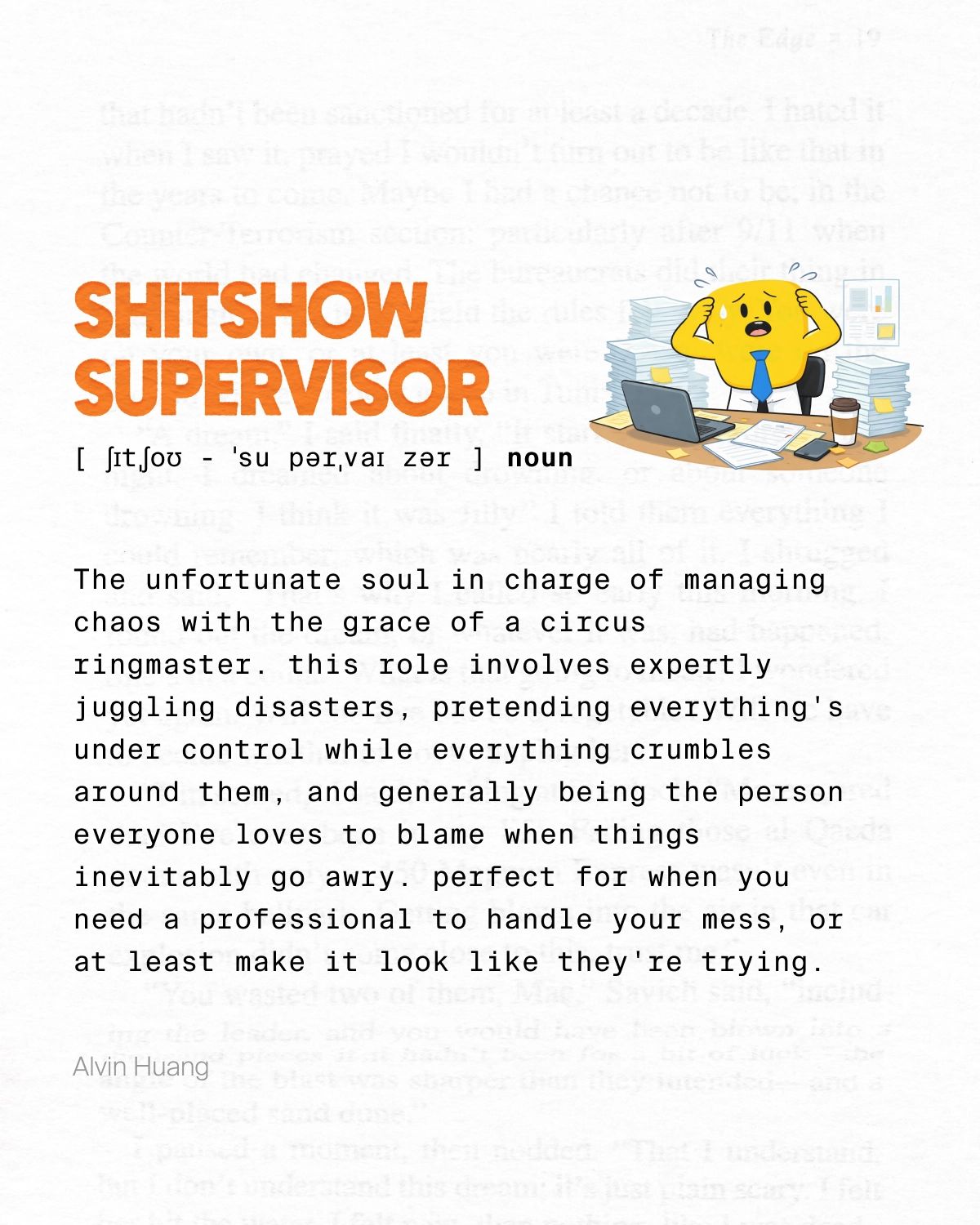
In a recent LinkedIn post, Alvin Huang discusses the common leadership pitfall of becoming the “Sh*tshow Supervisor,” a role that no one actively seeks but many leaders find themselves in. Huang clarifies that this position is not a reflection of poor leadership skills or personality but rather a symptom of underdeveloped or absent systems within an organization. He emphasizes that the rapid pace of business and the constant influx of problems can gradually assign this role to a leader, often without them realizing it.
Huang begins by acknowledging the often humorous, yet relatable, nature of this leadership trap. He states:
“Jokes all you want… Some of you are living this right now. Jokes aside, nobody applies for this role. It just slowly becomes yours.”
According to Huang, the core issue stems from a lack of foundational systems designed to prevent chaos. He outlines a strategic approach for leaders to steer clear of this undesirable position and ensure it remains a joke rather than a job description.
Establishing Clear Ownership and Accountability
A key strategy Huang proposes is making ownership non-negotiable. He argues that every task, project, and decision must have a single, clearly defined owner. Huang points out the fallacy of shared ownership, stating, “Shared ownership is no ownership.” This approach ensures that responsibility is never diffused, preventing tasks from falling through the cracks.
Implementing Systems for Early Problem Detection
Huang highlights the importance of building robust systems, including leveraging AI, to identify potential problems before they escalate. He notes that most organizational chaos is predictable and can be flagged early. Huang advocates for cultivating a culture where raising issues promptly is normalized, rather than perceived as a weakness. He suggests that AI-powered dashboards can be invaluable tools, providing data-driven alerts that can inform leaders and their teams about developing issues.
“Most chaos is predictable. It just never gets flagged until it’s too late.”
Empowering Teams to Solve Problems
Another critical piece of advice from Huang is to stop being the sole source of answers for the team. He explains that leaders who consistently provide solutions may inadvertently train their teams to bring problems without potential remedies. Huang encourages leaders to shift their approach by asking, “what do you think we should do?” before offering their own input. This fosters critical thinking and problem-solving skills within the team.
Defining and Documenting Standards
Huang also stresses the value of documenting what success looks like. He asserts that Standard Operating Procedures (SOPs) are not mere bureaucracy but essential tools for preventing recurring issues. By clearly defining standards at the outset, leaders can ensure consistency and quality, stopping the same problems from surfacing repeatedly.
“SOPs aren’t bureaucracy. They’re the thing that stops the same problem from happening twice.”
Delegating Effectively and Stepping Back from Execution
Finally, Huang advises leaders to “Get off the tools.” He argues that if a leader is engaged in straightforward tasks that could be delegated, they are not leading effectively but are acting as an “expensive executor.” True leadership, in Huang’s view, involves focusing on higher-level strategic activities rather than getting bogged down in operational execution.
In conclusion, Alvin Huang’s insights on LinkedIn underscore that while no leader aspires to be the “sh*tshow supervisor,” the absence of proper systems and leadership infrastructure can lead them down that path. By focusing on clear ownership, proactive problem-solving systems, team empowerment, documented standards, and effective delegation, leaders can avoid this common trap and build more resilient, efficient organizations.
📝 About This Content
This article is based on insights shared by Alvin Huang on LinkedIn.
📅 Originally posted on April 20, 2026 | View original post on LinkedIn →