
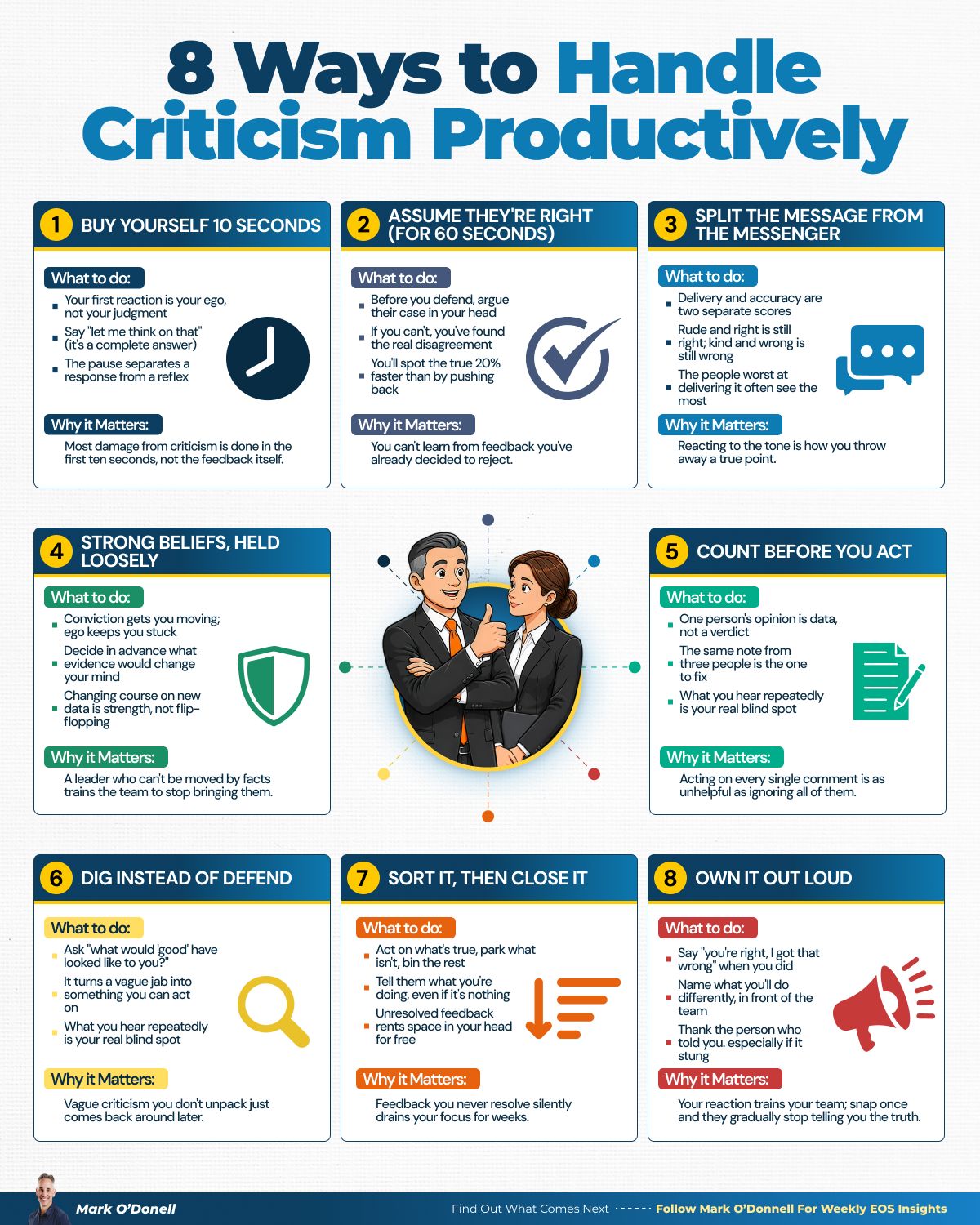
In a recent LinkedIn post, Mark O’Donnell explores the critical skill of receiving feedback, particularly for leaders. He dissects the common, often counterproductive, initial reactions to criticism and offers a structured approach for extracting value from it. O’Donnell emphasizes that the immediate emotional response to feedback is often driven by ego and judgment, which can obscure the valuable information contained within the critique.
As Mark O’Donnell notes:
“Your first reaction to feedback is your ego… Your second one is your judgment. Watch most leaders get a piece of hard feedback and they’ll do one of two things: 1. They’ll get defensive and wave it off. 2. Or they’ll over-absorb it and spin out for a week. Both throw away the important information within it.”
O’Donnell argues that the more productive path for leaders is to consciously separate the message from the delivery and the issue from their personal ego. He proposes a series of actionable steps to achieve this, transforming a potentially negative interaction into a growth opportunity.
The ‘Grown-Up Move’: Separating Message from Delivery
A core theme in O’Donnell’s post is the importance of de-personalizing feedback. He suggests that even if feedback is delivered harshly or clumsily, the underlying message may still hold significant truth. Separating the accuracy of the information from the manner in which it was conveyed is crucial for objective assessment.
Mark O’Donnell highlights this distinction, stating:
“Split the message from the messenger. Delivery and accuracy are two separate scores. Rude and right is still right. Kind and wrong is still wrong. The people clumsiest at saying it often see the most.”
This perspective encourages leaders to look beyond the delivery method and focus on the substance of the critique, recognizing that valuable insights can come from unexpected sources and in imperfect packages.
Strategies for Constructive Feedback Processing
O’Donnell outlines eight specific strategies for leaders to effectively process feedback. These range from immediate, instinctive reactions to more deliberate, analytical approaches.
Key Strategies for Leaders
- Buying Time: O’Donnell advises leaders to resist immediate responses, suggesting a simple pause or the phrase “Let me sit with that” can turn an instinctual reaction into a thoughtful consideration.
- Assuming Positive Intent (Initially): He recommends trying to understand the feedback giver’s perspective first, as this can help identify the genuine points of disagreement or misunderstanding more quickly than immediate defensiveness.
- Seeking Clarity: Instead of becoming defensive, O’Donnell suggests asking clarifying questions like, “What would great have looked like to you?” This shifts the focus from a personal attack to a solvable problem.
- Considering Multiple Sources: He points out that feedback from one person is an opinion, but consistent feedback from multiple sources often signals a genuine blind spot that needs attention.
- Owning and Acting: Finally, O’Donnell stresses the importance of acknowledging valid feedback, stating what will be done differently, and thanking the person who provided it, especially when it was difficult to hear.
According to Mark O’Donnell:
“Unresolved feedback rents space in your head for free.”
By implementing these strategies, leaders can foster an environment of honesty and continuous improvement within their teams. O’Donnell concludes that how leaders handle criticism directly impacts the candor and effectiveness of their teams, ultimately influencing the organization’s ability to avoid bottlenecks and maintain open communication.
📝 About This Content
This article is based on insights shared by Mark O'Donnell on LinkedIn.
📅 Originally posted on July 8, 2026 | View original post on LinkedIn →