
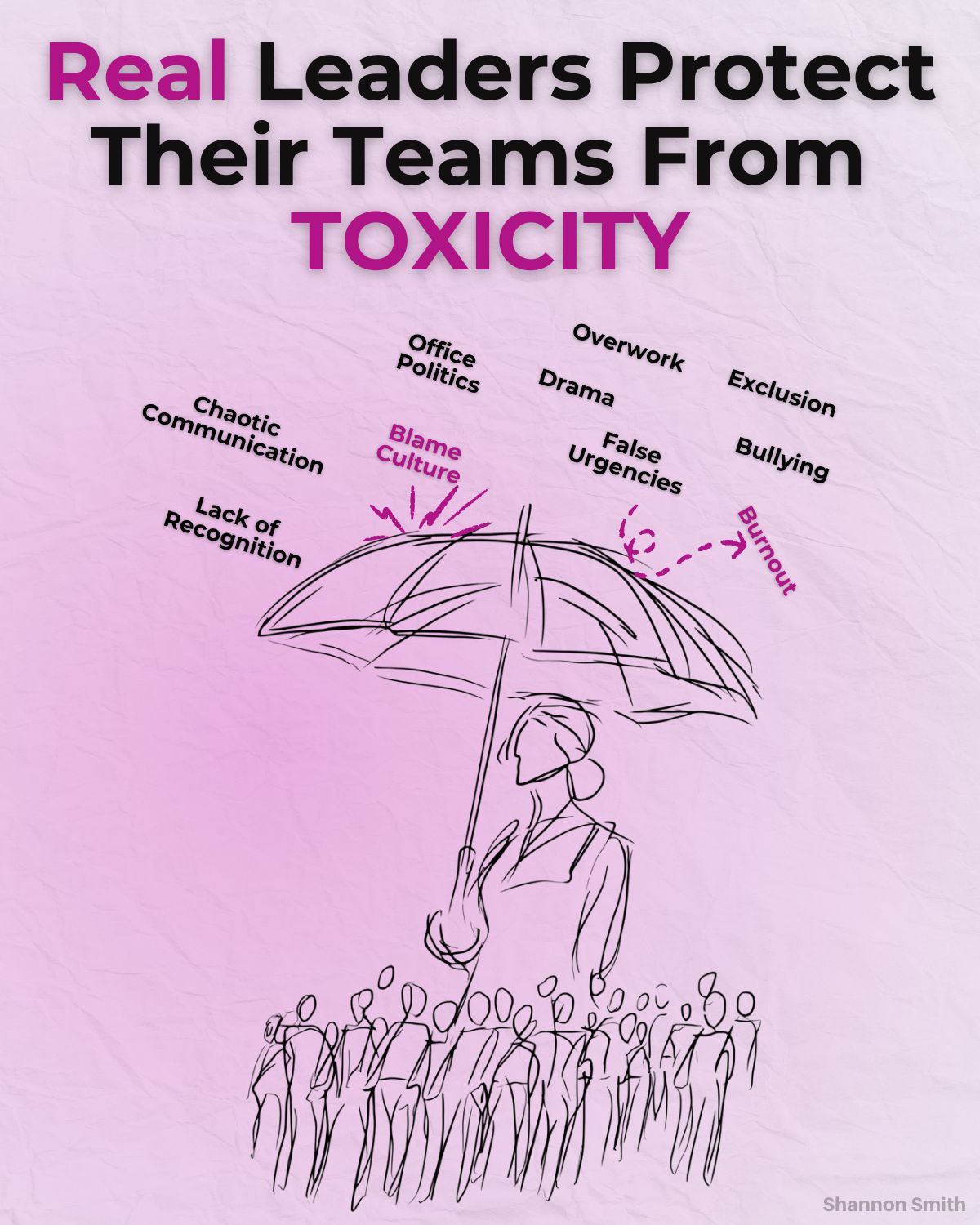
In a recent LinkedIn post, Shannon Smith, J.D., M.S. highlights the critical role leaders play in protecting their teams from workplace toxicity, arguing that such environments fundamentally alter employees’ cognitive functions.
Shannon Smith, J.D., M.S. posits that toxicity is not merely a cultural inconvenience but a direct impediment to performance. The post details how common issues like office politics, blame, false urgency, exclusion, bullying, chaotic communication, and constant overwork can trigger a stress response in employees.
“When employees expect criticism, conflict or unpredictability, the brain starts allocating more resources to threat detection. That means less capacity for: Creativity. Problem-solving. Working memory. Collaboration. Good decision-making.”
The Cognitive Impact of Toxicity
According to Shannon Smith, J.D., M.S., this heightened state of vigilance, driven by a perceived threat, diverts essential mental resources away from productive tasks. “People can’t consistently do their best work while constantly bracing for impact,” the post explains, underscoring the direct link between a leader’s actions and an employee’s ability to perform at their peak.
Strategies for Protecting Your Team
Shannon Smith, J.D., M.S. outlines several actionable strategies for leaders aiming to foster a healthier work environment. These strategies focus on filtering out unnecessary chaos, actively dismantling a culture of blame, and directly protecting individuals within the team.
Filtering the Chaos
Shannon Smith, J.D., M.S. advises leaders to act as a buffer against non-critical emergencies. This involves discerning between genuine urgency and the panic of others, and providing teams with clear priorities rather than subjecting them to constant adrenaline rushes. As Shannon Smith, J.D., M.S. notes, not every perceived crisis needs to cascade down to the team level.
Combating Blame
A key point raised by Shannon Smith, J.D., M.S. is the importance of shifting the focus from individual fault to systemic issues when problems arise. Instead of asking “Who screwed this up?”, leaders are encouraged to inquire, “What happened in the system?”.
“Fear makes people hide information. Safety helps you actually solve the problem.”
This approach, according to Shannon Smith, J.D., M.S., fosters an environment of psychological safety where issues can be addressed openly, rather than being concealed due to fear of reprisal.
Shielding Individuals
Furthermore, Shannon Smith, J.D., M.S. emphasizes the leader’s role in actively protecting individuals within the team. This includes intervening when disrespect is observed, reintegrating excluded voices into discussions, giving public credit, and addressing negative behavior privately and directly.
“Leadership is creating an environment where people’s brains can perform.”
In essence, Shannon Smith, J.D., M.S. argues that effective leadership is defined by the ability to create and maintain an environment where employees’ cognitive resources are available for innovation and problem-solving, rather than being consumed by managing workplace toxicity. The post concludes with the assertion that the most effective leaders are those who prevent unnecessary storms from reaching their teams.
📝 About This Content
This article is based on insights shared by Shannon Smith, J.D., M.S. on LinkedIn.
📅 Originally posted on September 11, 2026 | View original post on LinkedIn →