
In a recent LinkedIn post, Dr. Rachna Jain illuminates a common yet often overlooked root cause of leadership challenges: capacity. Dr. Rachna Jain argues that many issues perceived as people problems actually stem from a leader’s insufficient bandwidth.
The post begins by laying out a clear progression of how a leader’s capacity can become strained. As Dr. Rachna Jain notes:
A leader becomes overloaded. Responses get shorter. Decisions become reactive.
This initial overload, according to Dr. Rachna Jain, has a cascading effect. When a leader’s capacity is depleted, their ability to engage effectively with their team and their responsibilities diminishes. This can manifest in various ways, but Dr. Rachna Jain emphasizes that the underlying issue is often not a deficiency in the leader’s people skills or management style, but rather a simple lack of available time and mental energy.
The Bandwidth Bottleneck
Dr. Rachna Jain highlights that conversations requiring careful attention are frequently postponed when a leader is overburdened. This postponement, while seemingly a minor consequence, can lead to significant interpersonal and operational issues down the line. In Dr. Rachna Jain’s view:
Conversations that needed attention get postponed.
This postponement can erode trust, create misunderstandings, and leave team members feeling unheard or undervalued. Dr. Rachna Jain suggests that leaders, and those observing leadership dynamics, should first consider the leader’s capacity before diagnosing a ‘people issue’. The implication is that addressing the capacity problem could preemptively solve or mitigate the subsequent people-related challenges.
Capacity as the Foundational Element
The core of Dr. Rachna Jain’s argument is that bandwidth is foundational to effective leadership. When a leader is operating at or beyond their capacity, their effectiveness across all areas of leadership is compromised. According to Dr. Rachna Jain:
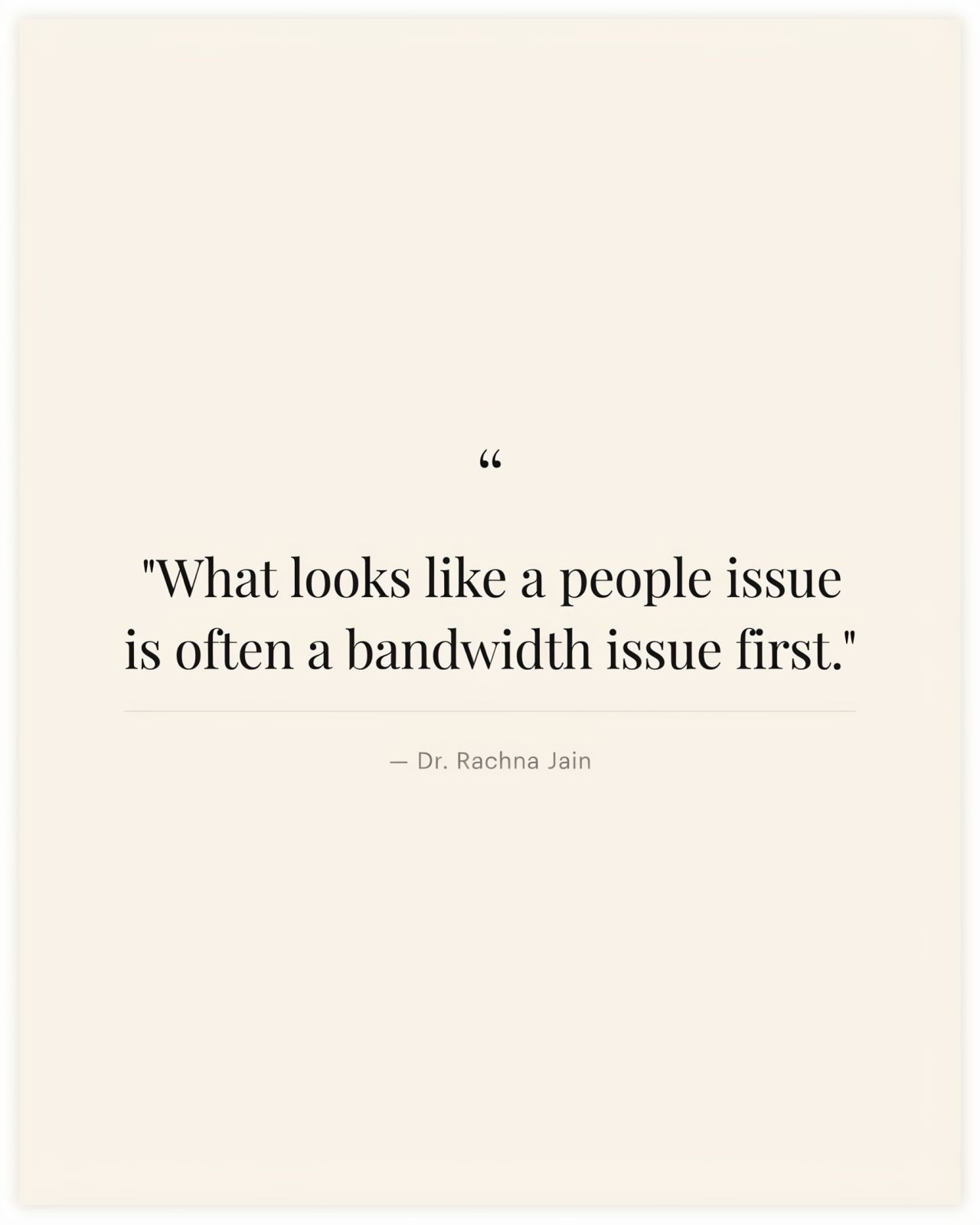
What looks like a people issue is often a bandwidth issue first.
This perspective offers a practical lens for diagnosing and addressing leadership friction. Instead of immediately focusing on behavioral changes or interpersonal dynamics, Dr. Rachna Jain encourages a look at the leader’s workload and schedule. The insight suggests that ensuring leaders have adequate capacity is not just about preventing burnout, but is a critical strategy for fostering a healthy and productive team environment. Dr. Rachna Jain also provides a link for further exploration of the concept of capacity.
📝 About This Content
This article is based on insights shared by Dr. Rachna Jain on LinkedIn.
📅 Originally posted on July 2, 2026 | View original post on LinkedIn →